


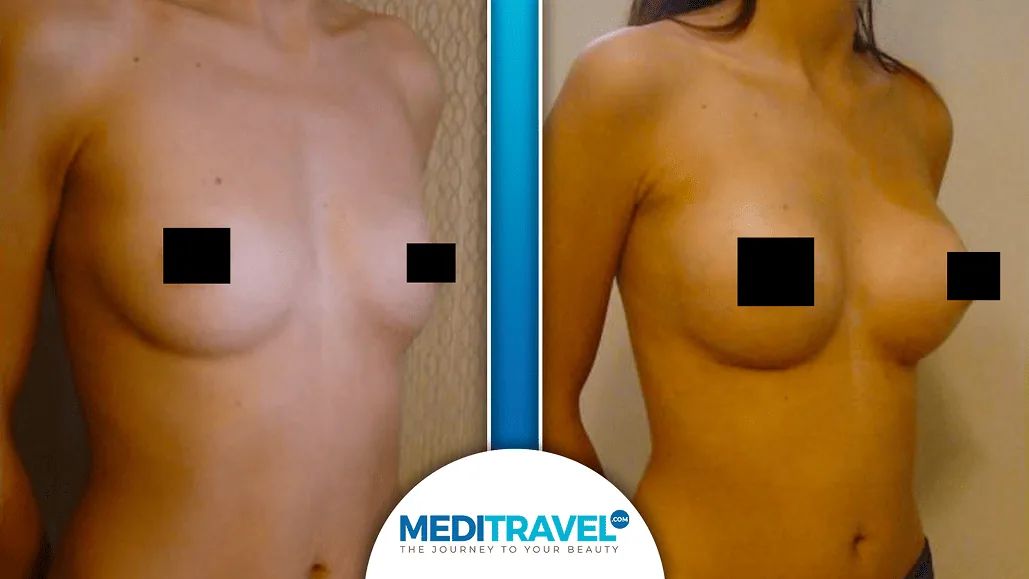
Breast Augmentation
Istanbul Aesthetic Centre
Breast Surgeries

 3,200 $13,800 $
From
To
 Trusted by10,000+Save up to70%Renowned ClinicsPersonal SupportFull organisation12 Months Aftercare
With Meditravel you will findyour ideal clinic - worldwide
 Trusted by10,000+Save up to70%Renowned ClinicsPersonal SupportFull organisation12 Months Aftercare
From
To
Benefits of Breast Surgery:
Breast surgery improves the shape, size and overall appearance of the breasts to better match your goals and body proportions.
Benefits of Breast Surgery:
Breast surgery improves
the shape, size and
overall appearance of
the breasts to better
match your goals and
body proportions.
From your arrival at the clinic to
your recovery, you will be supported
throughout your journey.

Your surgery is carefully planned around
your body and goals, using modern
technology and proven techniques.
Breast Augmentation
Istanbul Aesthetic Centre
Breast Augmentation
Istanbul Aesthetic Centre
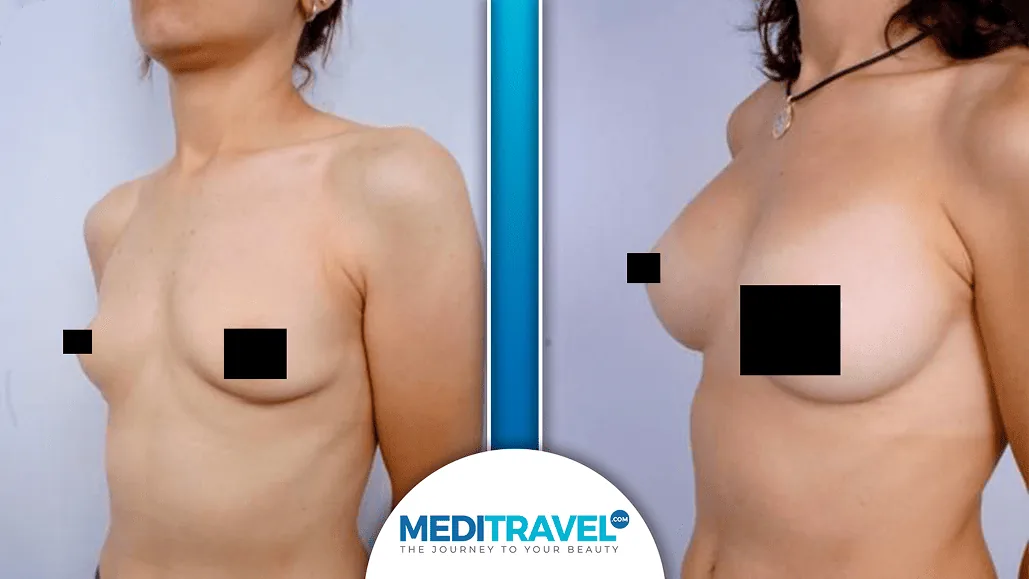
Breast Augmentation
Istanbul Aesthetic Centre
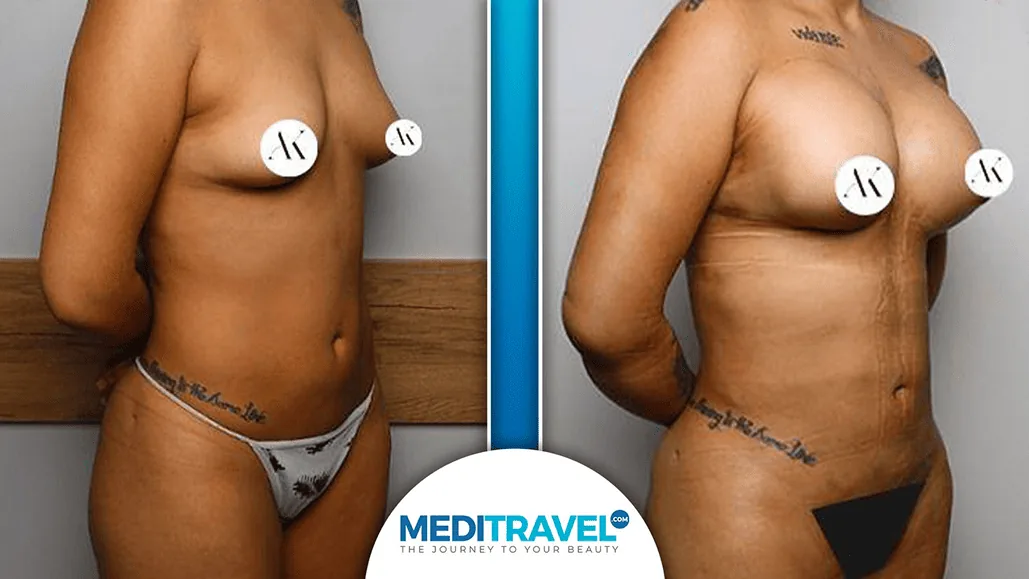
Breast Augmentation
AK Clinic
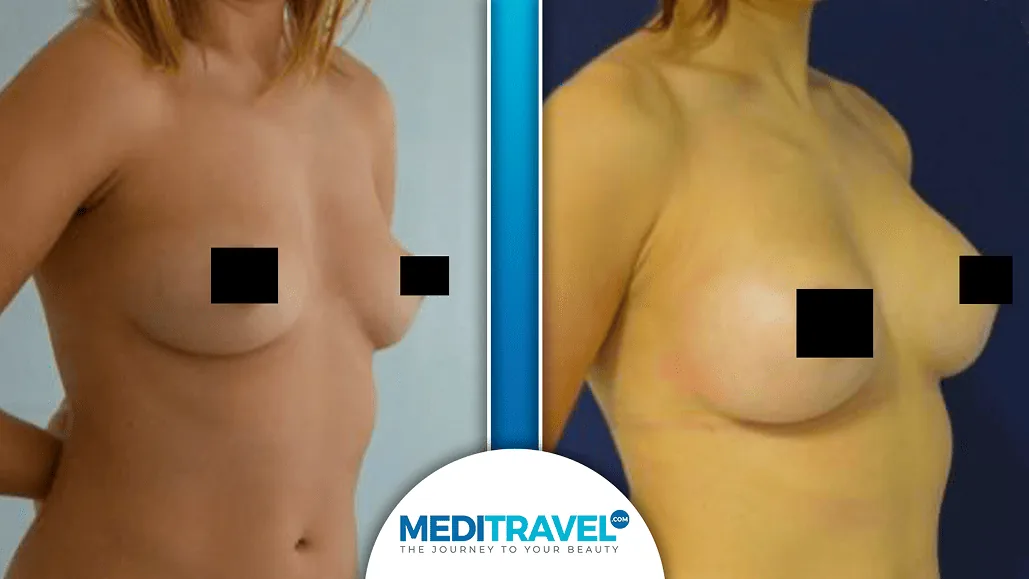
Breast Augmentation
Istanbul Aesthetic Centre
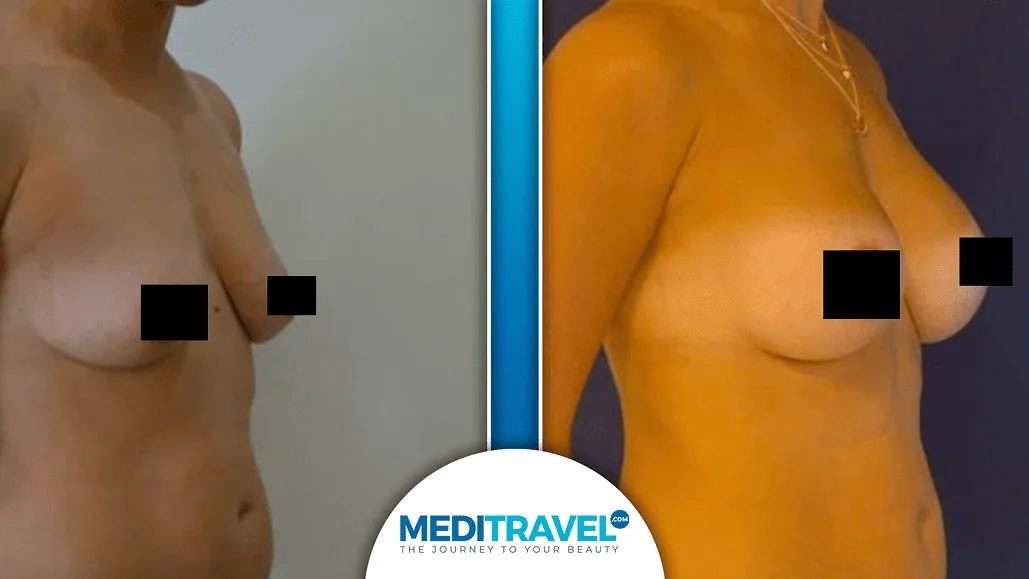
Breast Augmentation
Istanbul Aesthetic Centre
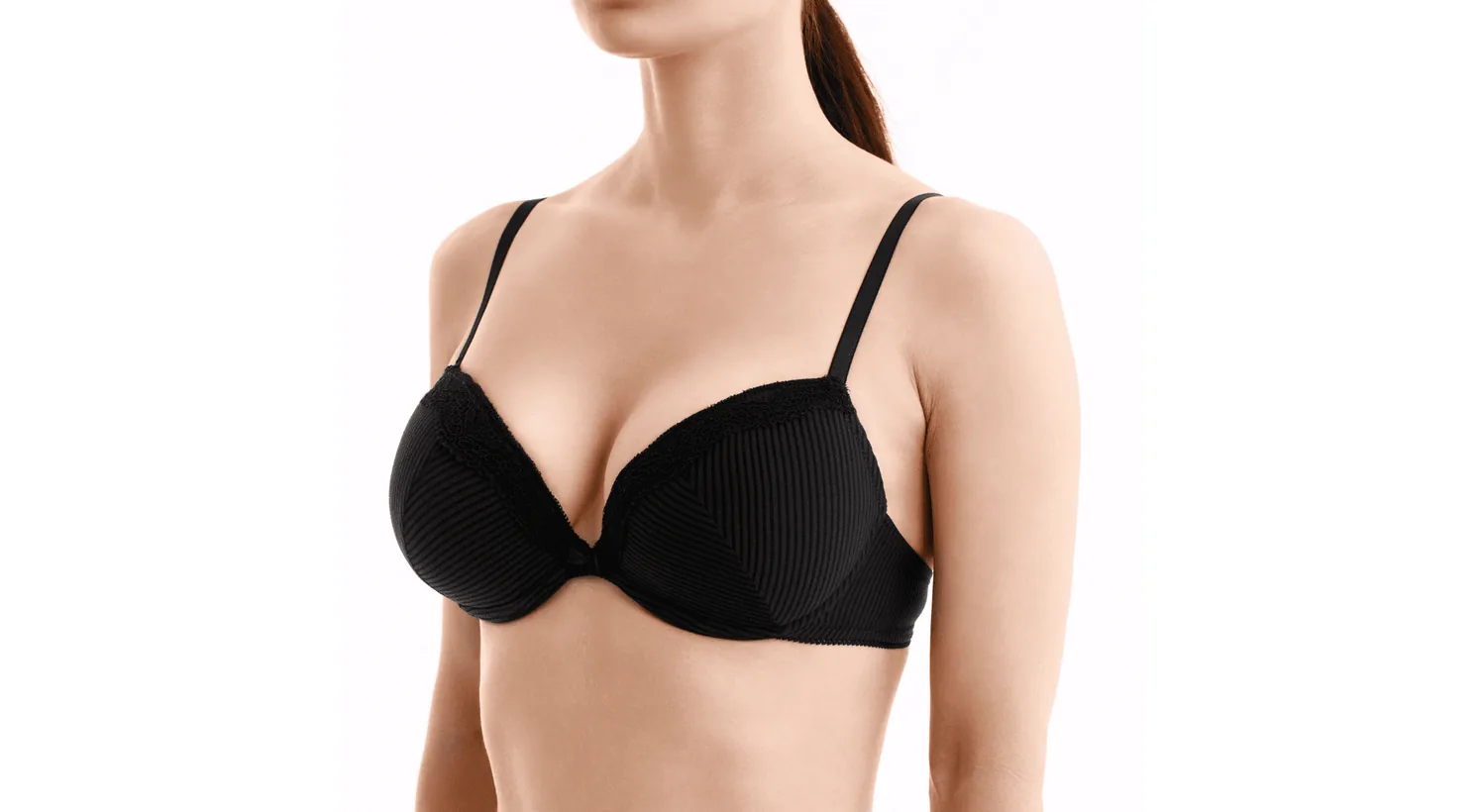
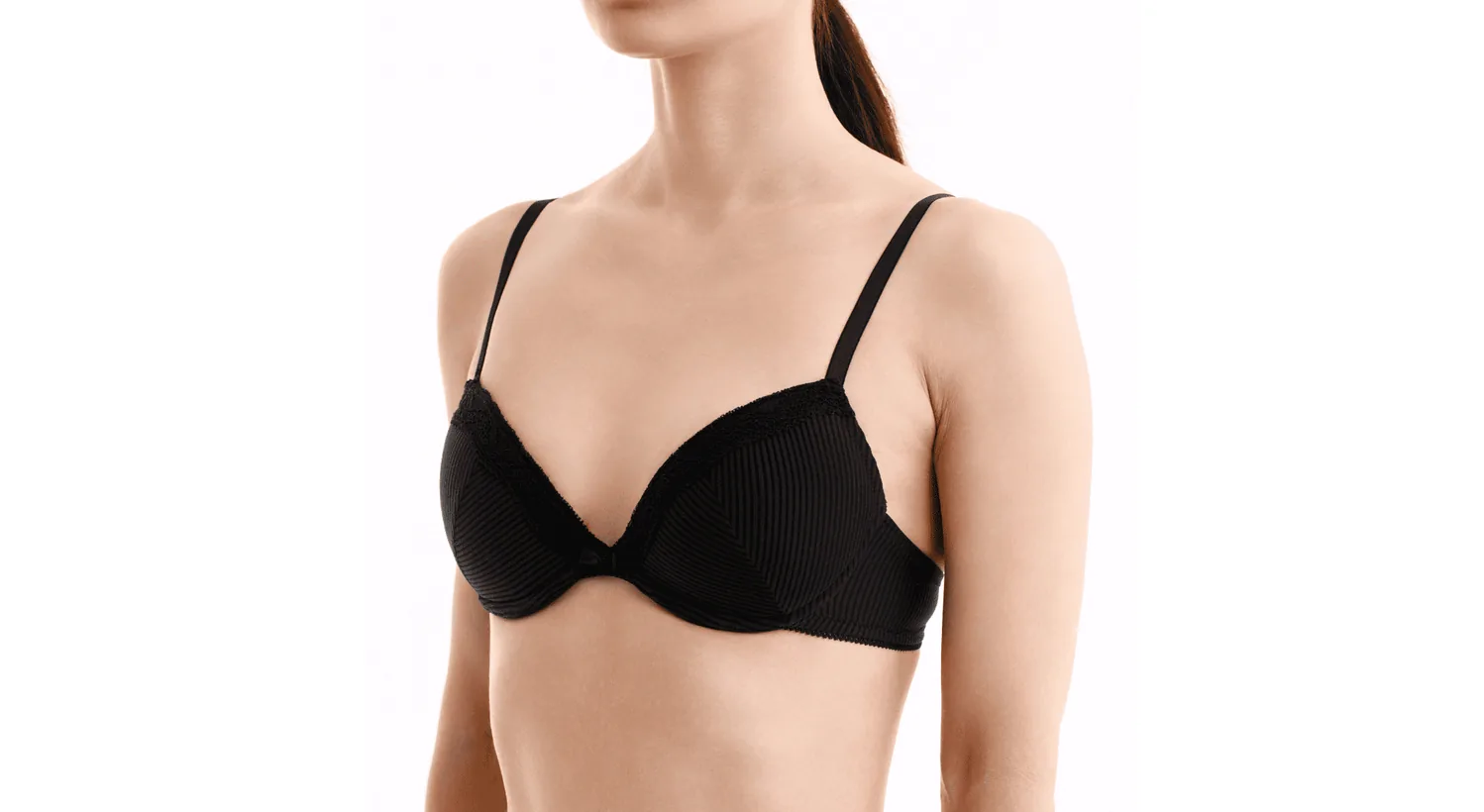
See the Difference
Our Offers
*Prices vary by country and clinic
 Breast SurgeryTranslator1-2 nights in the clinicCompression GarmentsDrugs / MedicationBlood TestPersonal AftercareQuality CertificateLuxurious HotelTransfersFlight Tickets
Our Offers
*Prices vary by country and clinic
Discounts
Friends - come with a friend

Students
*people below 25 years

Influencers

Group trips

Discounts
Friends - come with a friend

Students
*people below 25 years

Influencers

Group trips

Whether health insurance covers the costs, either fully or partially, depends on the medical necessity of the breast surgery. Patients should contact their health insurance prior to their breast surgery.

Covered
Breast reconstruction after mastectomy (following breast cancer treatment) are often covered by health insurance.
Not Covered
Breast surgeries for purely aesthetic reasons are generally not covered by health insurance.

Whether health insurance covers the costs, either fully or partially, depends on the medical necessity of the breast surgery. Patients should contact their health insurance prior to their breast surgery.
Covered
Breast reconstruction after mastectomy (following breast cancer treatment) are often covered by health insurance.
Not Covered
Breast surgeries for purely aesthetic reasons are generally not covered by health insurance.
Excellent
Based on 1217 reviews
4.8
average rating

Olimpia bb
2026-10-09

I had my nose job with Dr. Yavuz and I wholeheartedly recommend him! He's a wonderful specialist with extensive experience and a keen eye for aesthetics, and the results are incredibly natural. I'd also like to thank Meditravel for the overall organization of the trip. Everything was taken care of down to the last detail, and the on-site care was top-notch, making me feel completely safe and comfortable from start to finish. I wholeheartedly recommend both Dr. Yavuz and working with Meditravel.

Patryk Ławniczek
2026-10-09
I'm satisfied with Meditravel's services. The communication and the entire organization are top-notch. If anyone is still hesitant about a hair transplant, I highly recommend them! The hotel is of a high standard, and the clinic where I had the procedure exceeded my expectations; it's clear that the specialists work there. I'm a few days after my procedure and it's healing beautifully. I can't wait to see the results! :)

krzysiu Studzinski
2026-10-08
What can I say, I'm happy that first of all I gave it, otherwise I went under the knife to Omar, I wouldn't go to anyone else, and above all, I'm very grateful to Meditravel, first of all, because there's no other way to get to you, so I'm happy, what can I say, and I heartily recommend it to everyone, efficiently, and the effect is as you can see in the photo.

Kornel Bosakowski
2026-10-08
Before signing the contract, a response is provided the same day. After signing the contract, you'll wait a few days for a response to any questions related to the upcoming procedure. Overall, this is a positive.

Maciej Sardakowski
2026-10-08
I would wholeheartedly recommend MediTravel to anyone considering getting their teeth done in Turkey. I'm truly EXTREMELY pleased with the overall result! Honestly, I didn't expect such a dramatic effect. My teeth turned out beautifully, and the final result exceeded my expectations. I'm truly impressed! The doctors are of the highest standard – complete professionalism, meticulous attention to detail, and a great approach to patients. The clinic is perfect, modern, and everything is organized to the highest standard. The service also deserves huge praise. From the very beginning, everything ran smoothly, professionally, and in a very pleasant atmosphere. You truly feel cared for. The entire stay and the teeth restoration process were fantastic. I'm very happy I chose MediTravel. The end result is a huge, positive surprise for me. Thank you to the entire MediTravel team for their professionalism, excellent care, and beautiful smile! I'm extremely satisfied and can wholeheartedly recommend you! ⭐⭐⭐⭐⭐

Michał Jurkiewicz
2026-10-07
The stay and care are 100/10. I recommend it to everyone, you won't find better!!!

Damian Tylutki
2026-10-03
High-quality consultation and advice. Thank you.

Mehmet Seyfettin Atılğan
2026-10-02
Good

Rafał Wyroslak
2026-10-01
Everything is at a very high level

BartoszRo
2026-09-30
I wholeheartedly recommend Meditravel! ❤️ From start to finish, everything was perfectly organized and planned. Everything was top-notch. I felt well-cared for throughout the entire trip; contact and assistance were always available when I needed them. The procedure itself went very smoothly, the staff was professional, friendly, and explained everything calmly. I've already had the procedure and have returned home—I feel very good, everything is fine, and I'm truly happy I chose Meditravel. I thank the entire team for their care, approach, and excellent organization. Now all I have to do is wait for the results 😊 I definitely recommend them to everyone wholeheartedly ❤️ ⭐⭐⭐⭐⭐
Excellent
Based on 1217 reviews
4.8
average rating
Olimpia bb
2026-10-09
I had my nose job with Dr. Yavuz and I wholeheartedly recommend him! He's a wonderful specialist with extensive experience and a keen eye for aesthetics, and the results are incredibly natural. I'd also like to thank Meditravel for the overall organization of the trip. Everything was taken care of down to the last detail, and the on-site care was top-notch, making me feel completely safe and comfortable from start to finish. I wholeheartedly recommend both Dr. Yavuz and working with Meditravel.
Patryk Ławniczek
2026-10-09
I'm satisfied with Meditravel's services. The communication and the entire organization are top-notch. If anyone is still hesitant about a hair transplant, I highly recommend them! The hotel is of a high standard, and the clinic where I had the procedure exceeded my expectations; it's clear that the specialists work there. I'm a few days after my procedure and it's healing beautifully. I can't wait to see the results! :)
krzysiu Studzinski
2026-10-08
What can I say, I'm happy that first of all I gave it, otherwise I went under the knife to Omar, I wouldn't go to anyone else, and above all, I'm very grateful to Meditravel, first of all, because there's no other way to get to you, so I'm happy, what can I say, and I heartily recommend it to everyone, efficiently, and the effect is as you can see in the photo.
Kornel Bosakowski
2026-10-08
Before signing the contract, a response is provided the same day. After signing the contract, you'll wait a few days for a response to any questions related to the upcoming procedure. Overall, this is a positive.
Maciej Sardakowski
2026-10-08
I would wholeheartedly recommend MediTravel to anyone considering getting their teeth done in Turkey. I'm truly EXTREMELY pleased with the overall result! Honestly, I didn't expect such a dramatic effect. My teeth turned out beautifully, and the final result exceeded my expectations. I'm truly impressed! The doctors are of the highest standard – complete professionalism, meticulous attention to detail, and a great approach to patients. The clinic is perfect, modern, and everything is organized to the highest standard. The service also deserves huge praise. From the very beginning, everything ran smoothly, professionally, and in a very pleasant atmosphere. You truly feel cared for. The entire stay and the teeth restoration process were fantastic. I'm very happy I chose MediTravel. The end result is a huge, positive surprise for me. Thank you to the entire MediTravel team for their professionalism, excellent care, and beautiful smile! I'm extremely satisfied and can wholeheartedly recommend you! ⭐⭐⭐⭐⭐
Michał Jurkiewicz
2026-10-07
The stay and care are 100/10. I recommend it to everyone, you won't find better!!!
Damian Tylutki
2026-10-03
High-quality consultation and advice. Thank you.
Mehmet Seyfettin Atılğan
2026-10-02
Good
Rafał Wyroslak
2026-10-01
Everything is at a very high level
BartoszRo
2026-09-30
I wholeheartedly recommend Meditravel! ❤️ From start to finish, everything was perfectly organized and planned. Everything was top-notch. I felt well-cared for throughout the entire trip; contact and assistance were always available when I needed them. The procedure itself went very smoothly, the staff was professional, friendly, and explained everything calmly. I've already had the procedure and have returned home—I feel very good, everything is fine, and I'm truly happy I chose Meditravel. I thank the entire team for their care, approach, and excellent organization. Now all I have to do is wait for the results 😊 I definitely recommend them to everyone wholeheartedly ❤️ ⭐⭐⭐⭐⭐

“I am so happy to have finally full hair.”
“Great team and smooth journey!”
“Everything was organized perfectly.”
“Highly recommend Meditravel.”
“The clinic choice was ideal.”
“Highly recommend Meditravel.”
“The clinic choice was ideal.”
“Highly recommend Meditravel.”
“The clinic choice was ideal.”
What our customers say
“I am so happy to have finally full hair.”

Don’t miss any exclusive offers!
Join our Newsletter:
Myths about Breast Surgeries
Myth 1
Breast implants need to be replaced every 10 years.
Reality: Modern breast implants don’t have a strict expiration date. They only need replacement if there’s a complication or if the patient desires an implant change.
Myth 2
You can’t breastfeed after a breast augmentation.
Reality: Most women can still breastfeed after breast augmentation or reduction, especially if the nipple and milk ducts are not significantly disrupted.
Myth 3
Breast implants cause breast cancer.
Reality: There is no proven connection between breast cancer and standard breast implants.
Myth 4
Breast implants look and feel fake.
Reality: Depending on the patient’s goals, modern breast implants can closely mimic the feel and softness of natural breast tissue.
Myth 5
Recovery is extremely painful and long.
Reality: While discomfort is expected, most patients return to light activities after a few days. Although recovery depends on the extent of the surgery and individual healing capacity.
Myth 6
Breast augmentation will fix sagging breasts.
Reality: Breast implants add volume but don’t lift sagging tissue. A breast lift is usually needed to correct sagging breasts. It is also possible to combine a breast lift with implants.
Myth 7
Silicone implants are unsafe.
Reality: Silicone implants are considered safe by health authorities. Ruptures of modern implants no longer lead to leakage and are detected via MRI or ultrasound.
Myth 8
Breast surgeries leave no scars.
Reality: All surgeries leave some form of scarring. However, incisions are typically placed in discreet areas and scars often fade with time and care.
Myth 9
Bigger implants are always better.
Reality: Choosing the right implant size is a personal decision and should be based on body proportions, lifestyle, and long-term goals.
Myth 10
Breast surgery is only for cosmetic reasons.
Reality: Breast surgeries can also be medically necessary—for example, after mastectomy, to relieve back pain from large breasts, or to correct congenital asymmetry or deformities.
Myth 11
With breast implants you can’t have a mammogram.
Reality: Mammograms are still possible but may require special techniques and additional views. It’s important to inform your doctor beforehand.
Myth 12
Breast implants last forever.
Reality: Although modern implants are designed to last a lifetime, they are often replaced or removed due to aging, rupture, or personal preferences.
Ready for your Breast Surgery?
Breast Surgeries
Breast Augmentation
with Breast Implants
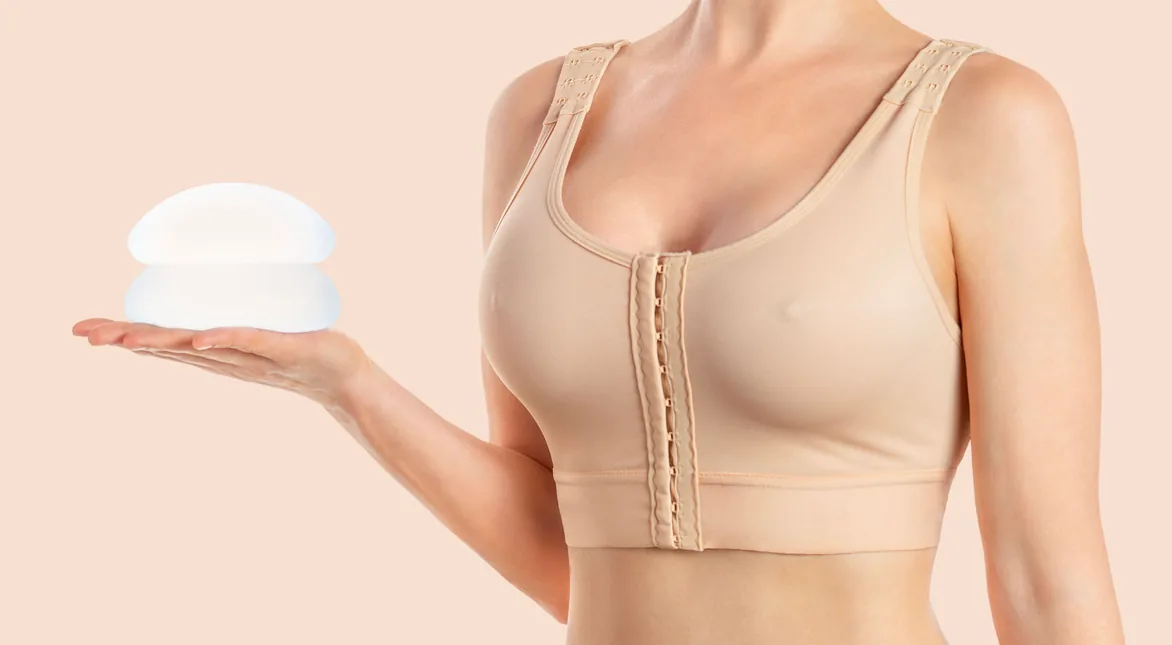
Breast Augmentation
with Fat Transfer
Breast Lift
Breast Lift
with Breast Implants
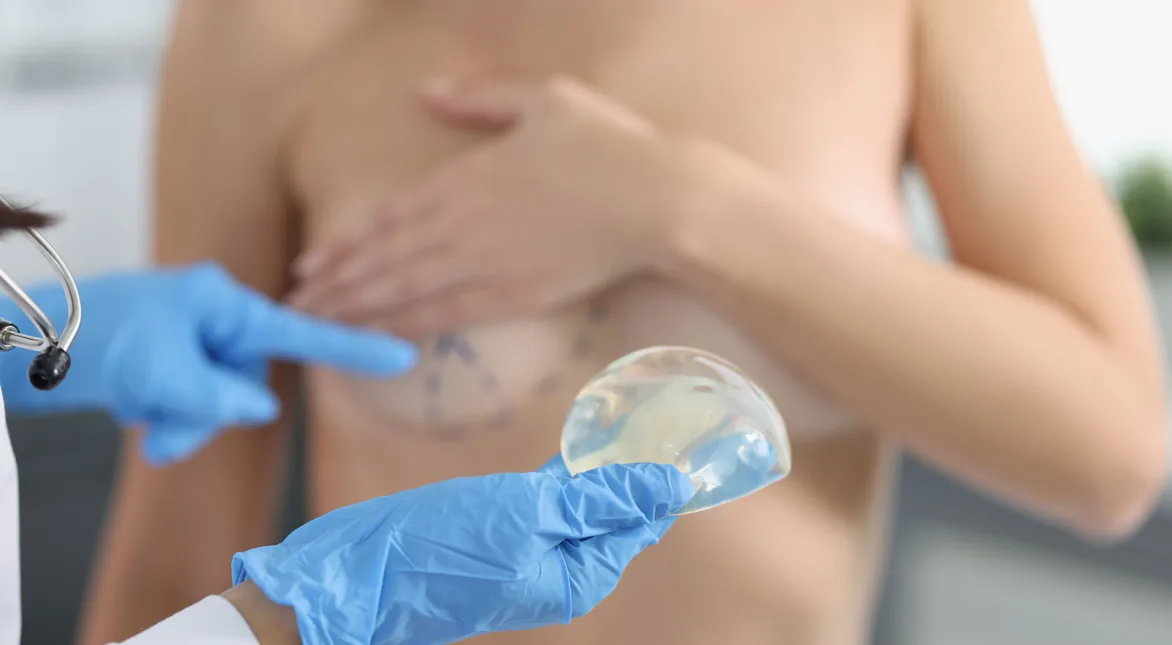
Breast Reduction
Revision Breast Surgery
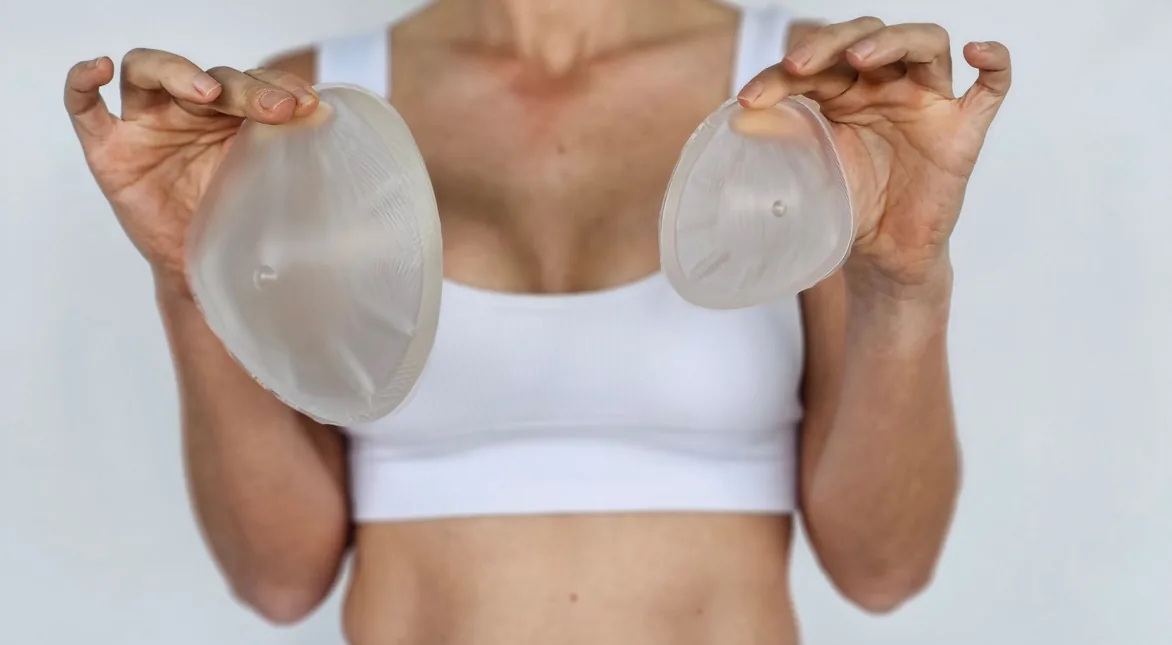
Breast Surgeries
Breast Surgeries
Plan your
Breast Surgery
Meditravel will find the right clinic and prepare you properly for your breast surgery.

Get your
Breast Surgery
Meditravel will organize your entire journey and support you at
each step.

Enjoy having
beautiful breasts
With Meditravel you will get the result you wish to have.



“Meditravel will give you extensive instructions for the preparation and after-care of your
breast surgery.”


Breast Surgeries
Breast Surgeries


Plan your
Breast Surgery
Meditravel will find the right clinic and prepare you properly for your breast surgery.

Get your
Breast Surgery
Meditravel will organize your entire journey and support you at each step.
Enjoy having
beautiful breasts
With Meditravel you will get the result you wish to have.
“Meditravel will give you extensive instructions for the preparation and after-care of your breast surgery.”


Breast Surgeries
Arrival Day
Flight to the country of the clinic
Pick-Up at the Airport

Blood-Test in the clinic

Drop-Off at the hotel

Free-time (Sight seeing)

Operation Day
Drive from hotel to clinic

Live Consultation

Operation

Giving of after-care products

Drive to the hotel
Check-Up Day
Drive from hotel to clinic
Check-Up

Drive to the hotel
Return Trip
Drive to the airport
Return Flight


Flight to the country of the clinic

Pick-Up at the Airport

Blood-Test in the clinic

Drop-Off at the hotel

Free-time (Sight seeing)
Breast Surgeries
Here is how to prepare for your Breast Surgery

Have a physical examination of your breasts (mammography or ultrasound).

Prepare loose, comfortable clothing that opens in the front.

Take all necessities down from upper cupboard compartments to avoid lifting your arms over your shoulders.

Prepare extra pillows to sleep slightly upright.

Have some ice packs in the freezer to reduce bruises.

Buy enough groceries for the first days after your surgery.

Wear comfortable clothing for your surgery (loose, front-opening).

Be well-rested before your breast operation.

Stop nicotine (smoking, vaping) at least 2 weeks before your breast operation to reduce healing complications.

Don’t drink any alcohol for 1 week prior to your breast operation.

Have your last coffee, tea or energy drink 24 hours before your breast surgery.

Don’t take any blood-thinning medication (e.g. Aspirin, Ibuprofen) for 10 days prior to your breast operation.

Avoid for 2 weeks supplements/herbs that may thin blood (Ginkgo, Ginseng, Garlic, Vitamin E or Omega-3s).

Organize a support person for the first 24–48 hours after your breast operation.

Fasting for at least 8 hours prior to your breast operation is important (no solid foods/drinks).

Drinking of water is allowed 2 to 8 hours prior to your breast operation.

Don’t use any lotions, creams, or deodorant before your surgery.
What to consider before Breast Surgery
Requirements

Minimum age of 18 (breasts should have fully developed).
Have stable reasons for the breast surgery.
Be realistic about the expected result.
Have emotional maturity.
Health
Inform your advisor or clinic about your medical history, past surgeries, and medications.
Be in good overall health, without any active infections or untreated illnesses.
Follow the Meditravel guidance on how to prepare your body for surgery (e.g. smoking, alcohol consumption).
Consider having a blood test and mammogram or ultrasound before traveling to ensure you’re healthy.
Research
Compare prices, but focus on quality over the lowest cost. It’s still a medical procedure.
Find the right clinic. Meditravel is specialized in helping you with this (for free).
Discuss your goals, expectations, and questions during your consultation.
Learn about preparation, recovery, and possible complications.
Planning
Plan the timing of your breast surgery properly (e.g. pregnancy, stressful times during work or studies).
Depending on your job, get enough time off work for proper recovery.
Consider travel requirements (e.g. Visa request).
Choose flight times that allow for relaxed travel. (Don’t arrive at the last minute)
Breast Surgeries
Here is how to prepare for your Breast Surgery


Have a physical examination of your breasts (mammography or ultrasound).
What to consider before
Breast Surgery
Minimum age of 18 (breasts should have fully developed).
Have stable reasons for the breast surgery.
Be realistic about the expected result.
Have emotional maturity.
If you have any questions regarding your recovery, contact anytime your Meditravel consultant.
The recovery process for breast surgeries varies by:
Individual healing capabilitiesAdherence to post-operative care instructionsExtent of the procedureDay 1-3:
1 week:
2-3 weeks:
4-6 weeks:
6 weeks - 3 months:
3-6 months:
6-12 months:

*For a proper recovery, it is important to follow all given instructions carefully.
Back to work
Normal desk work possible after 1 week
(ideally 2-3 weeks)
Support bra
2-3 months
Lifting arms overhead
After ~6–8 weeks
Breast Surgeries
If you have any questions regarding your recovery, contact anytime your Meditravel consultant.
The recovery process for
breast surgeries varies by:
Individual healing capabilitiesAdherence to post-operative care instructionsExtent of the procedureDay 1-3:
1 week:
2-3 weeks:
4-6 weeks:
6 weeks - 3 months:
3-6 months:
6-12 months:

*For a proper recovery, it is important to follow all given instructions carefully.
Back to work
Normal desk work possible after 1 week
(ideally 2-3 weeks)
Support bra
2-3 months
Lifting arms overhead
After ~6–8 weeks
Rest much to promote recovery. Especially directly after your operation.
Drink at least 2-3 liters of water daily to achieve optimal healing.
Follow a healthy and nutrient rich diet (Avoid processed food).
Avoid alcohol for at least 1-2 weeks.
Don’t smoke / vape for 4-6 weeks.
Take medications as prescribed.
Light walking is encouraged after a few days to promote blood circulation.
Wear a support bra as instructed (~2-3 months).
Sleep on your back to avoid pressure on the chest.
Keep incisions clean and dry, follow wound care instructions.
Avoid scratching or picking at healing scars.
Protect scars from direct sun light to prevent darkening.
Don’t lift heavy things too early.
Keep your weight stable.
Ready for your Breast Surgery?
Learn More
Breast Surgeries
Breast Surgeries
“Here you will learn everything about breast surgeries.”

Breast Surgeries
Augmentation Mammoplasty
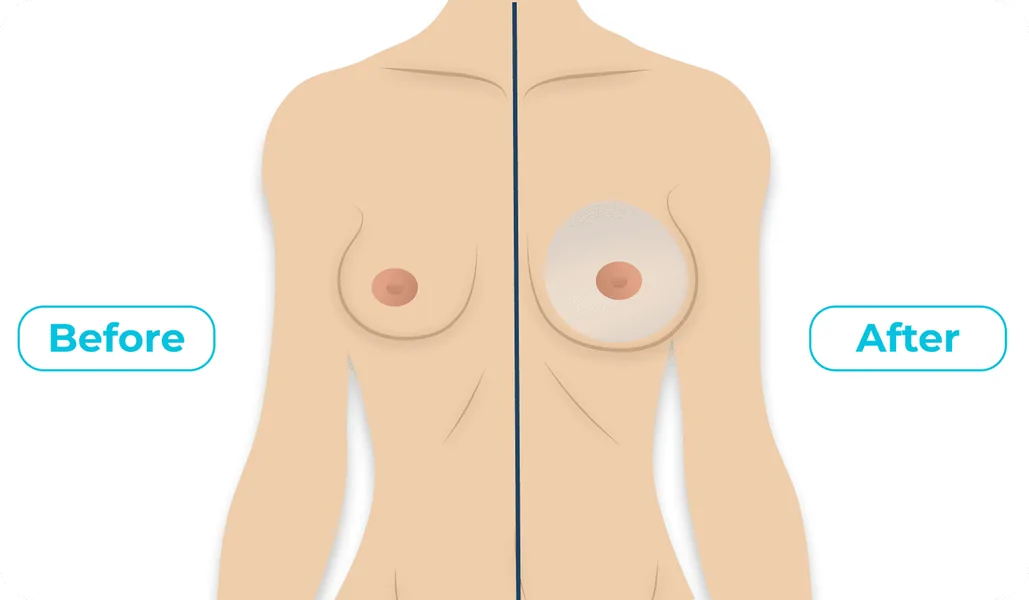
A breast augmentation with implants enhances breast size and shape using silicone or saline implants.
Ideal for: Women seeking fuller breasts or wishing to restore lost volume
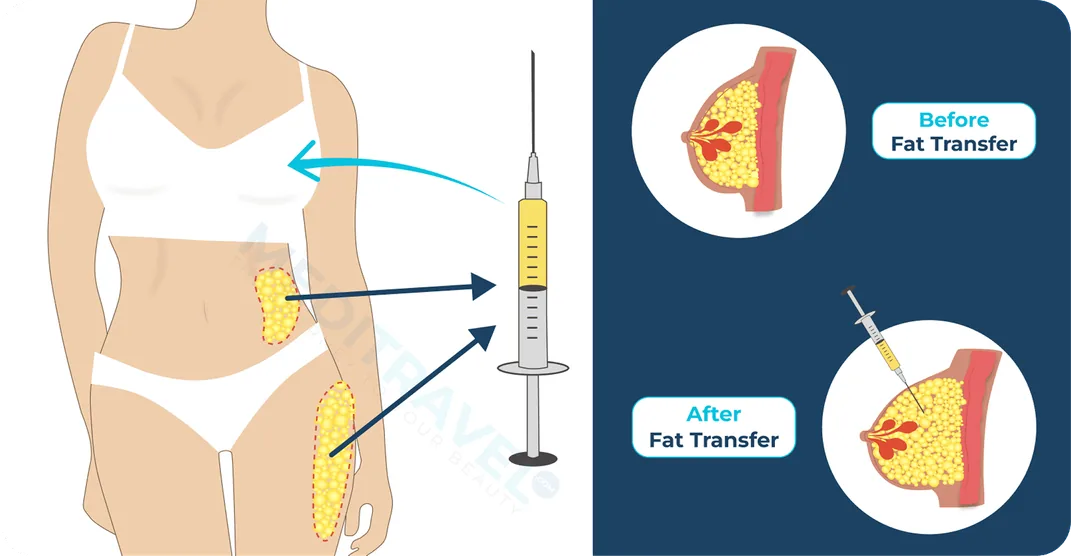
Lipomodelling
Body fat:
Fat is removed from other parts of the body via liposuction, which is then processed and injected into the breasts for augmentation.
Ideal for: Women seeking fuller breasts or wishing to restore lost volume
Mastopexy
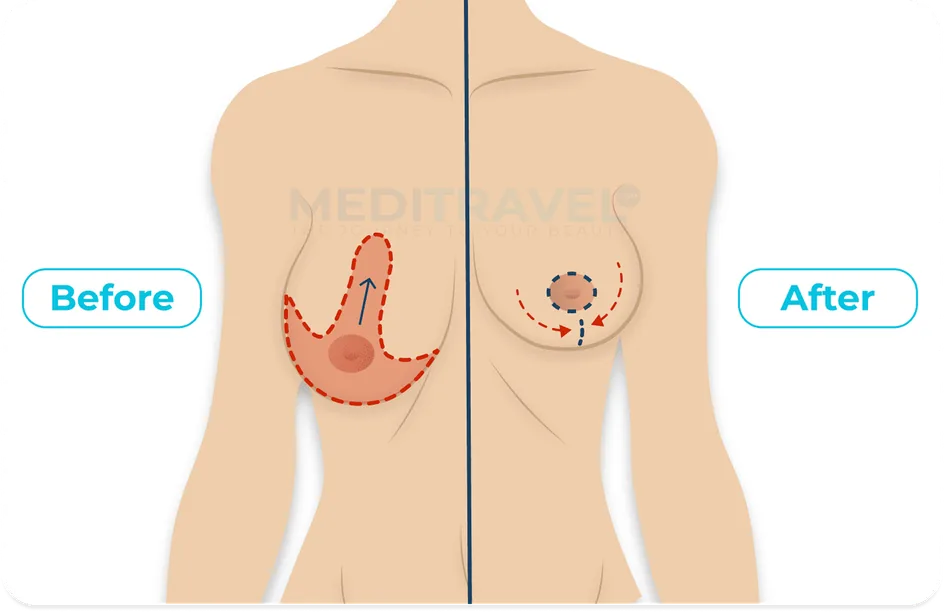
A breast lift raises and reshapes sagging breasts by removing excess skin and tightening the surrounding tissue. It creates a firmer, more youthful appearance without increasing breast size.
Ideal for: Women whose breasts have lost shape or firmness due to aging, pregnancy, weight changes, or gravity.
Augmentation Mastopexy
A breast lift with implants lifts sagging breasts while also adding volume. It creates a firmer, fuller, and more youthful breast shape.
Ideal for: People who have lost breast volume and firmness due to aging, pregnancy, weight changes, or genetics.
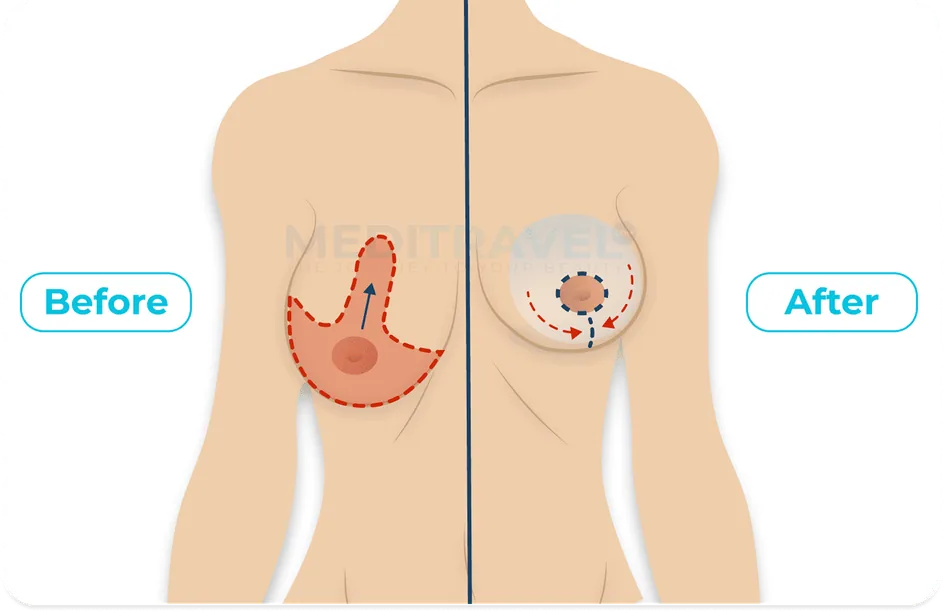
Reduction Mammoplasty
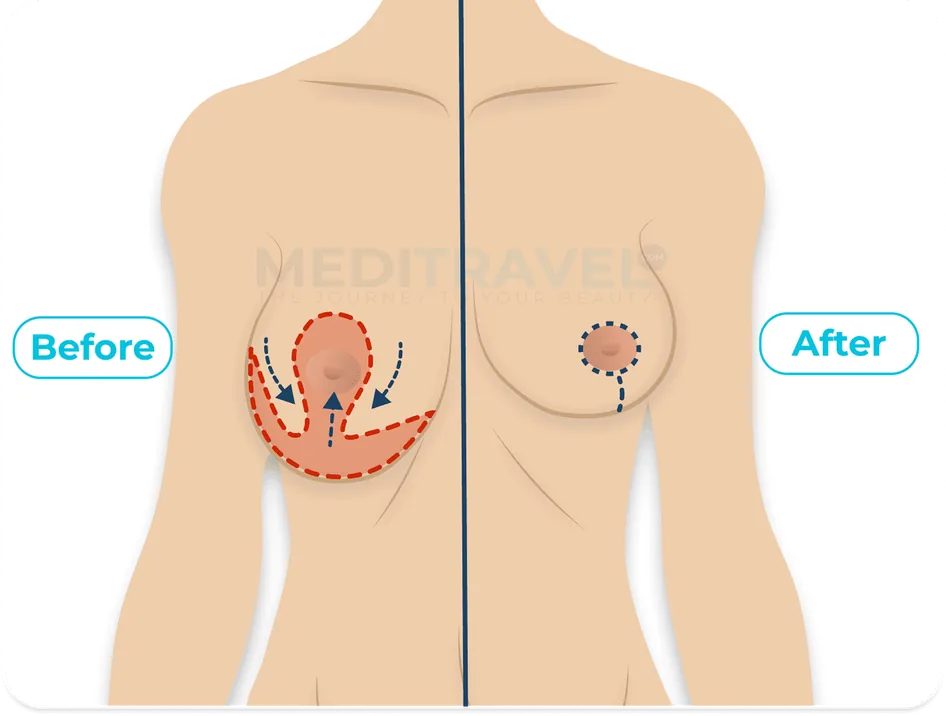
Breast reduction surgery removes excess breast tissue, fat, and skin to make the breasts smaller, lighter, and more proportional. It helps relieve physical discomfort and improves overall body balance.
Ideal for: People with overly large breasts who suffer from back, neck, or shoulder pain, skin irritation, or difficulty with sports and everyday activities.
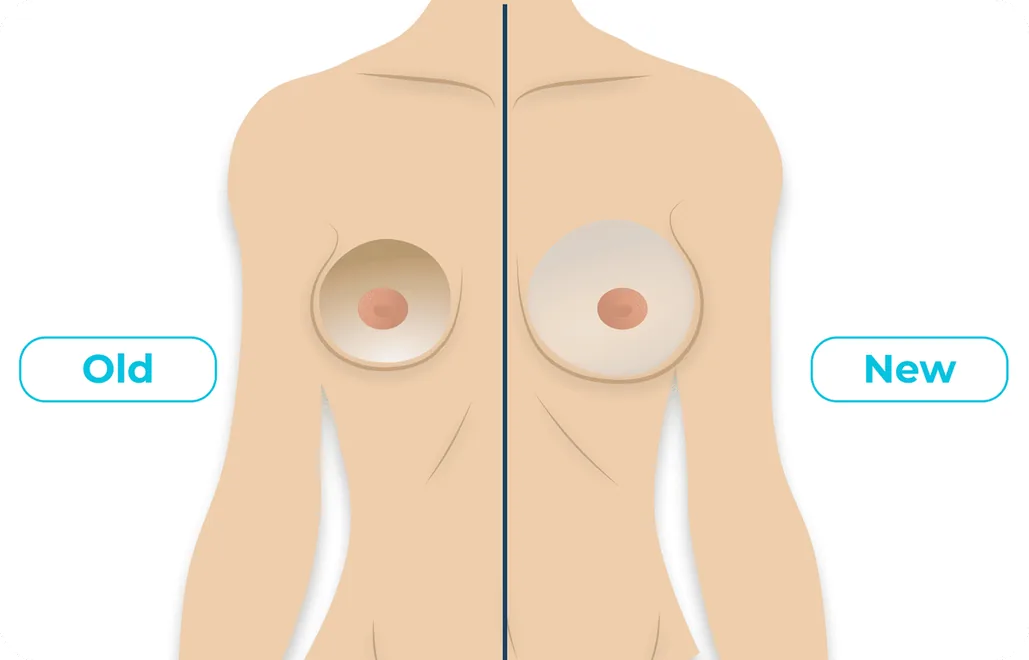
Revision breast surgery corrects the results of a previous breast surgery. It can improve shape, size, symmetry, implant position, or discomfort.
Ideal for: Women who are not satisfied with the outcome of a previous breast surgery, want to increase their breast size again, or experience complications.
Breast Surgeries
Augmentation Mammoplasty
A breast augmentation with implants enhances breast size and shape using silicone or saline implants.
Ideal for: Women seeking fuller breasts or wishing to restore lost volume
Lipomodelling
Body fat:
Fat is removed from other parts of the body via liposuction, which is then processed and injected into the breasts for augmentation.
Ideal for: Women seeking fuller breasts or wishing to restore lost volume
Mastopexy
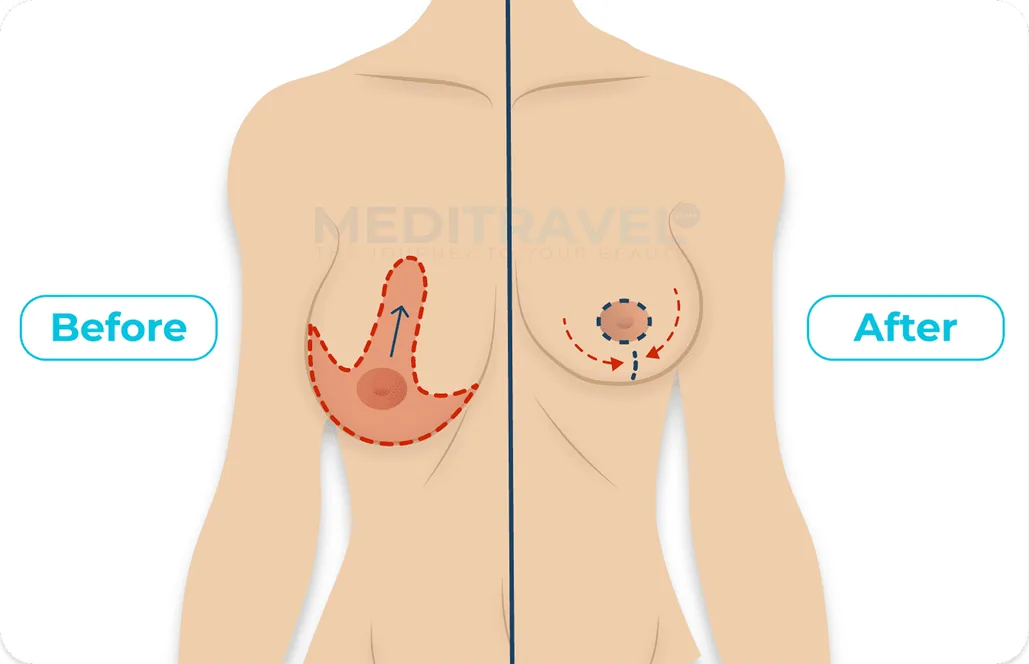
A breast lift raises and reshapes sagging breasts by removing excess skin and tightening the surrounding tissue. It creates a firmer, more youthful appearance without increasing breast size.
Ideal for: Women whose breasts have lost shape or firmness due to aging, pregnancy, weight changes, or gravity.
Augmentation Mastopexy
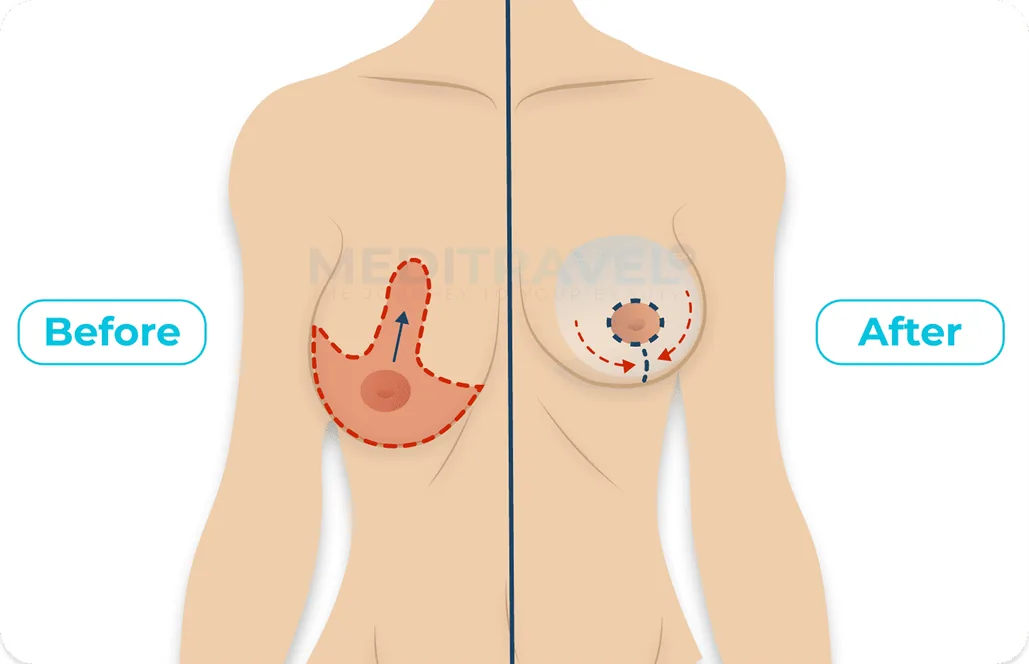
A breast lift with implants lifts sagging breasts while also adding volume. It creates a firmer, fuller, and more youthful breast shape.
Ideal for: People who have lost breast volume and firmness due to aging, pregnancy, weight changes, or genetics.
Reduction Mammoplasty
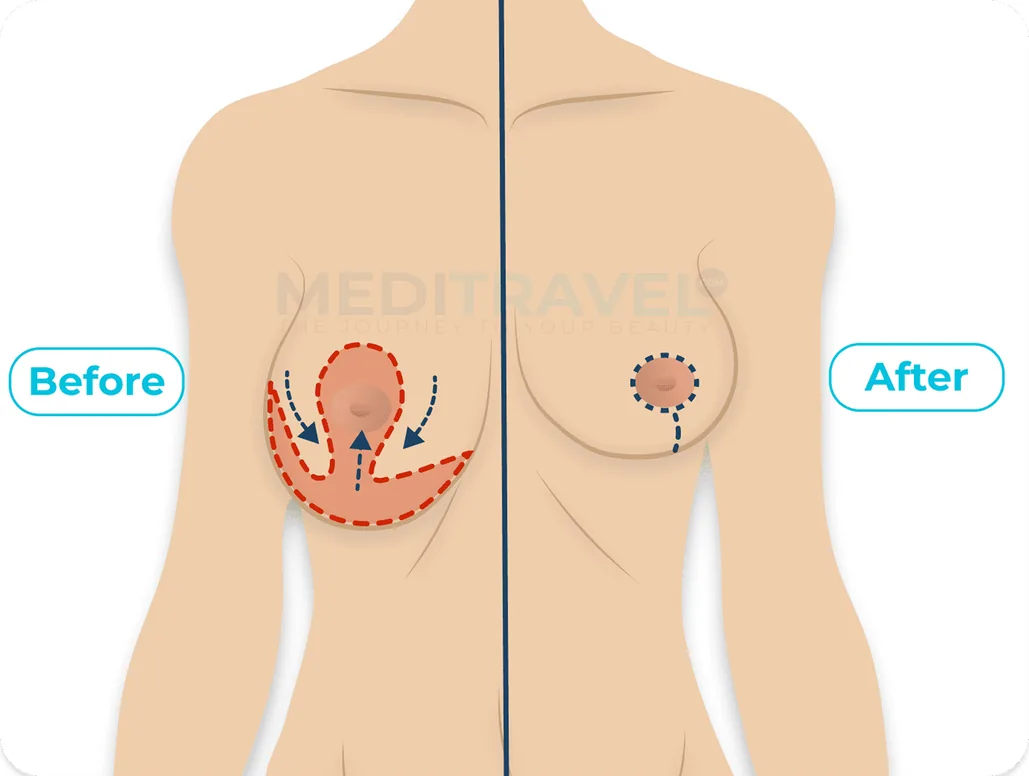
Breast reduction surgery removes excess breast tissue, fat, and skin to make the breasts smaller, lighter, and more proportional. It helps relieve physical discomfort and improves overall body balance.
Ideal for: People with overly large breasts who suffer from back, neck, or shoulder pain, skin irritation, or difficulty with sports and everyday activities.
Revision breast surgery corrects the results of a previous breast surgery. It can improve shape, size, symmetry, implant position, or discomfort.
Ideal for: Women who are not satisfied with the outcome of a previous breast surgery, want to increase their breast size again, or experience complications.
Ready for your Breast Surgery?
Ready for your Breast Surgery?
Breast Surgeries
Important: “It is important to get a clear vision of your desired result before the operation.”
Find your right breast size:
Step 1
Find some photos of celebrities or friends who have the result you desire. Bring these to the clinic or provide them during your initial consultation.
Step 2
Perform the following rice test. Repeat it until you find the implant size that feels good for you.
The final decision regarding the right implant size will be made with the surgeon at the clinic. With their expertise and experience, they will do their best to fulfill your desired outcome. To find an implant suitable for your body, factors such as your current breast size and shape, the tissue volume, chest width and body type are taken into consideration.
For this purpose, in the clinic you will try on implants of different sizes, which will be placed in a special bra. This will give you a good idea of the look and feel of your enhanced breasts.
Rice Test
A good way to get an idea and feeling for your future breast size is the so called rice test.
30 grams of rice
≈
30cc of silicone
150 grams of rice
≈
150cc implant
≈
1 cup size
Take two knee-length nylon stockings.
Fill them with rice and knot them. 150 grams of rice is equivalent to 1 cup size.
Place them in an unpadded or sports bra and wear it in your ordinary life for 1-2 days.
Alternate the amount of rice until you find your desired appearance. The amount of used rice per side is a good indicator for your implant size.
The amount of used rice per side is a good indicator for your implant size
Bra Size Calculator
Measure your current bra size
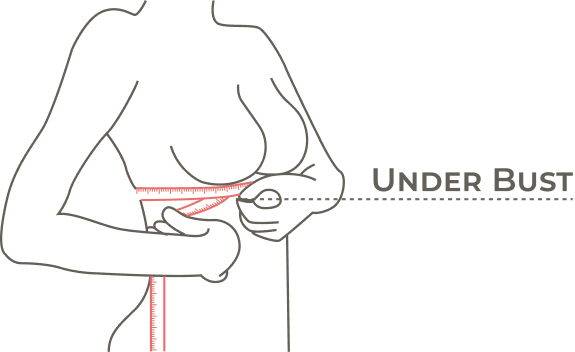
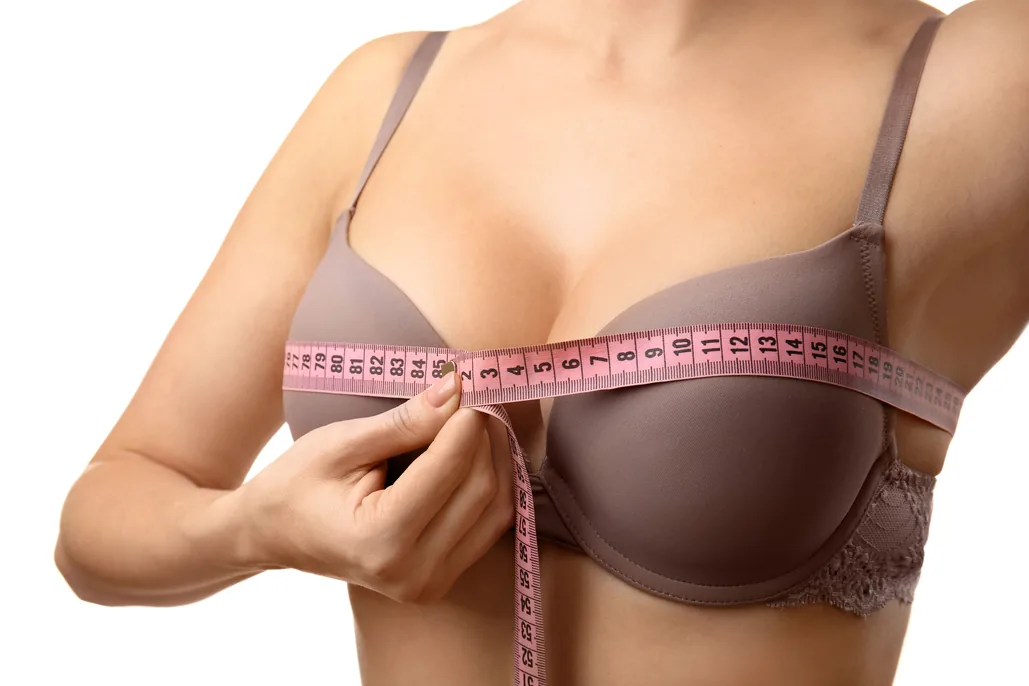
1. Measure your band size (underbust): Stand upright without a bra. Measure around the lowest edge directly under your bust.
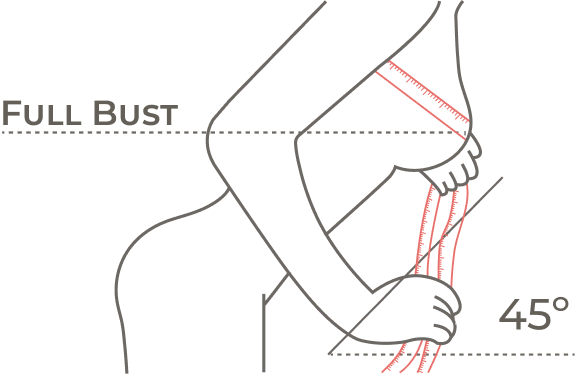
2. Measure your bust size: Lean 45° forward. Measure the fullest part of your bust.
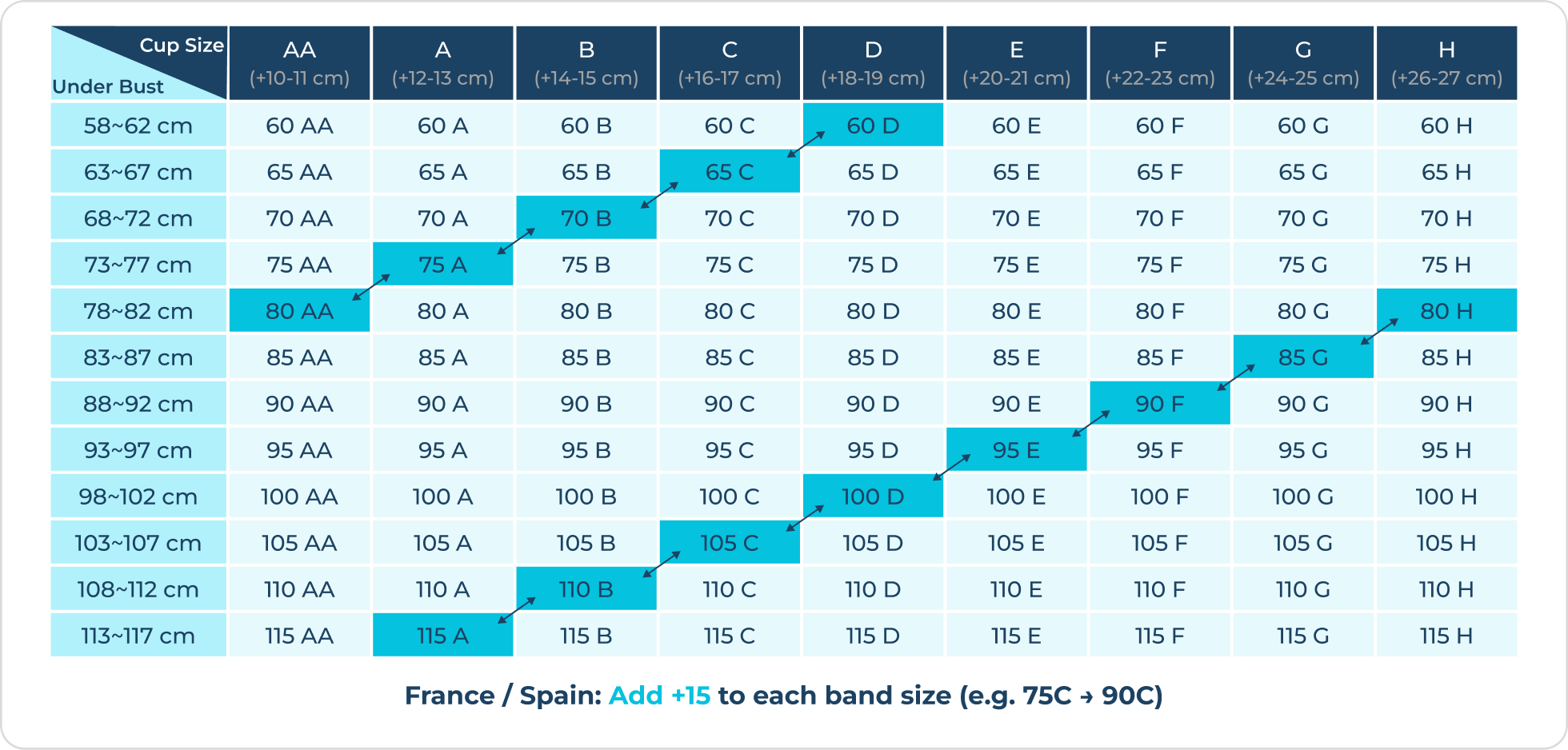
3. Bust size - band size = cup size
Subtract band size from full bust size
Bra Size Table
“Sister” Bra Sizes: Different bra sizes can have the same volume (e.g. 70 B = 65 C)
Breast Surgeries
Important:
“It is important to get a clear vision of your desired result before the operation.”

Find your right breast size:
Step 1
Find some photos of celebrities or friends who have the result you desire. Bring these to the clinic or provide them during your initial consultation.
Step 2
Perform the following rice test. Repeat it until you find the implant size that feels good for you.
The final decision regarding the right implant size will be made with the surgeon at the clinic. With their expertise and experience, they will do their best to fulfill your desired outcome. To find an implant suitable for your body, factors such as your current breast size and shape, the tissue volume, chest width and body type are taken into consideration.
For this purpose, in the clinic you will try on implants of different sizes, which will be placed in a special bra. This will give you a good idea of the look and feel of your enhanced breasts.
A good way to get an idea and feeling for your future breast size is the so called rice test.
30 grams of rice
≈
30cc of silicone
150 grams of rice
≈
150cc implant
≈
1 cup size
Take two knee-length nylon stockings.
Fill them with rice and knot them. 150 grams of rice is equivalent to 1 cup size.
Place them in an unpadded or sports bra and wear it in your ordinary life for 1-2 days.
Alternate the amount of rice until you find your desired appearance. The amount of used rice per side is a good indicator for your implant size.
The amount of used rice per side is a good indicator for your implant size
Measure your current bra size
First Step

Second Step
Third Step
Subtract band size from full bust size
Your cup size
AA
A
B
C
D
E / DD
F / DDD
G
H
By cm
10-11
12-13
14-15
16-17
18-19
20-21
22-23
24-25
26-27
By inch
4
5
6
7
8
9
10
11
12
“Sister” Bra Sizes: Different bra sizes can have the same volume (e.g. 70 B = 65 C)
 Cup SizeUnder Bust

Breast Augmentation
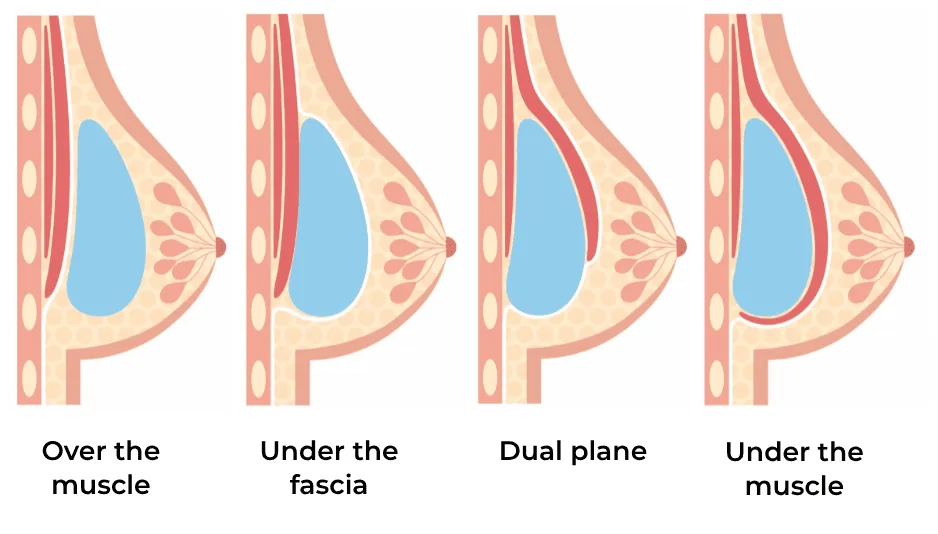
During breast augmentation with implants, there
are different ways to position the implant in relation
to the breast tissue, fascia, and chest muscle.
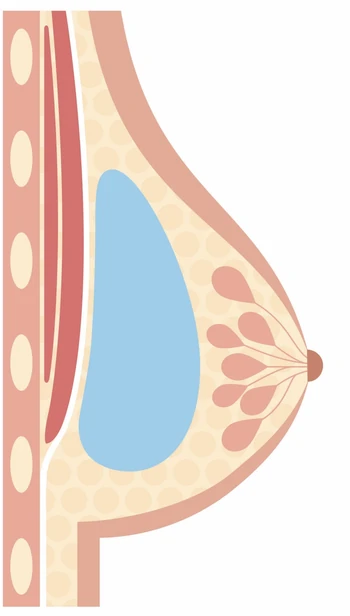
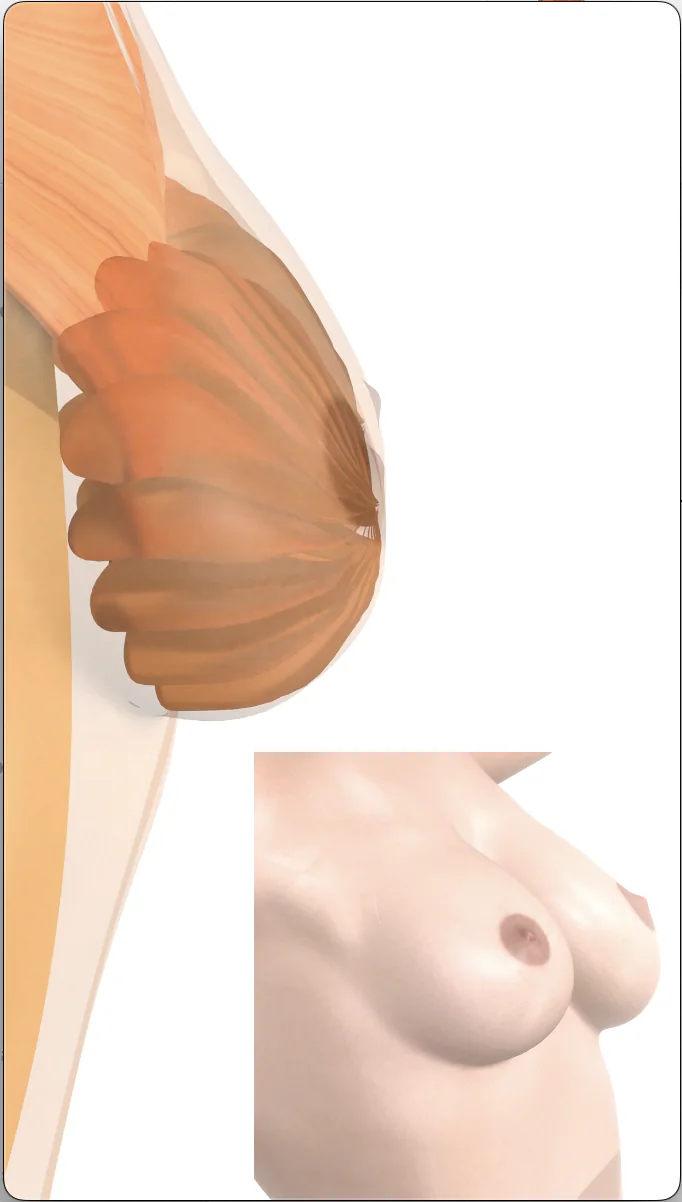
The breast implant is placed in front of the chest muscle (Pectoralis Major), but behind the natural breast tissue and mammary glands. This placement creates a fuller and rounder breast shape. It is usually more suitable for patients who already have enough natural breast tissue to cover the implant.
Breast Augmentation
During breast augmentation with implants, there are different ways to position the implant in relation to the breast tissue, fascia, and chest muscle.
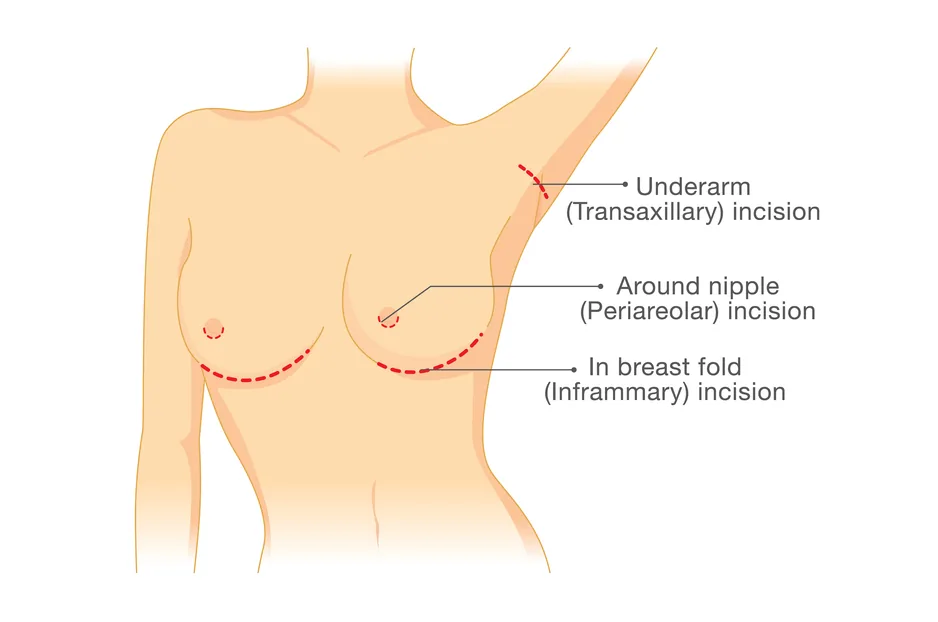
Breast implants can be placed through different incision types, each with its own advantages and considerations.
The best option depends on the implant type, patient’s anatomy, desired result, scar preference, and surgeon’s recommendation.
A 3-4cm long opening is made in the breast fold. Through this the implant is simply and securely pushed to its final position. As this incision type provides a very safe, easy and precise placement of the implants, this is the most common way to place the implants.
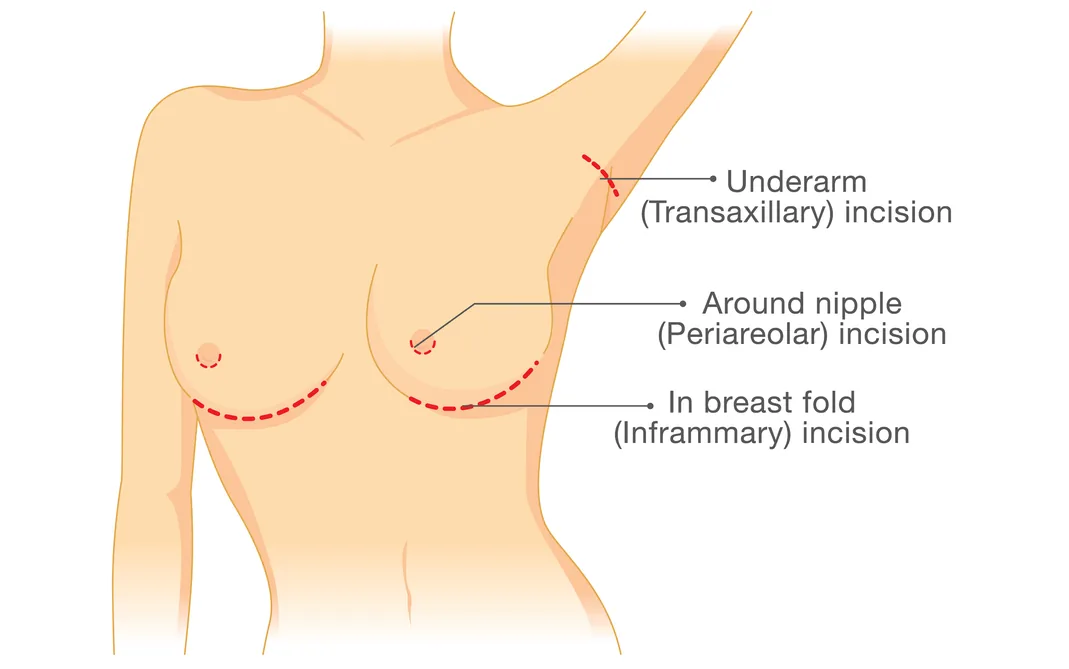
Breast implants can be placed through different incision types, each with its own advantages and considerations.
The best option depends on the implant type, patient’s anatomy, desired result,
scar preference, and surgeon’s recommendation.
Ready for your Breast Surgery?
Ready for your Breast Surgery?
Breast Implants
Silicone vs Saline Implants
Breast augmentation can be done by using silicone implants, saline implants or body fat. Each has its unique characteristics and considerations.

Silicone Implants

Silicone breast implants consist of a silicone outer shell filled with cohesive silicone gel. They closely resemble the feel of natural breast tissue and provide a natural look.
Advantages
 Silicone Implants are most popular.The silicone gel closely resembles human breast tissue, offering a more natural feel and look.Less likely to wrinkle or ripple compared to saline implants.
Disadvantages
 Requires a larger incision for insertion than saline implants.Regular monitoring with MRI or ultrasound is recommended.Implant leakage can have some risks.Limited to 800-1000 cc.
Saline Implants
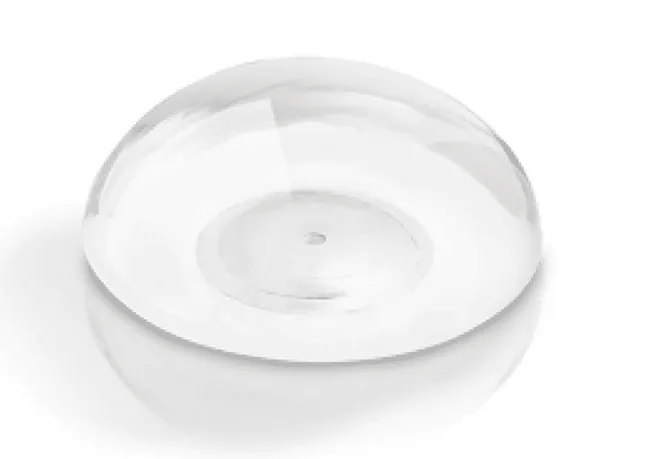
Saline breast implants are filled with a saline solution (sterile saltwater) surrounded by a silicone outer shell. Saline breast implants are inserted empty and then filled once they’re in place. This allows for a smaller incision and a more adjustable size.
Advantages
Smaller incisions, as the implant gets filled after placement.Adjustable size, as the implant gets filled after placement.In case of implant leakage, the saline solution gets absorbed by the body.Disadvantages
Firmer and less natural feel compared to silicone implants. Similar to a water balloon.Higher chance of rippling compared to silicone implants.Breast Implants
Breast augmentation can be done by using silicone implants, saline implants or body fat. Each has its unique characteristics and considerations.
Silicone breast implants consist of a silicone outer shell filled with cohesive silicone gel. They closely resemble the feel of natural breast tissue and provide a natural look.
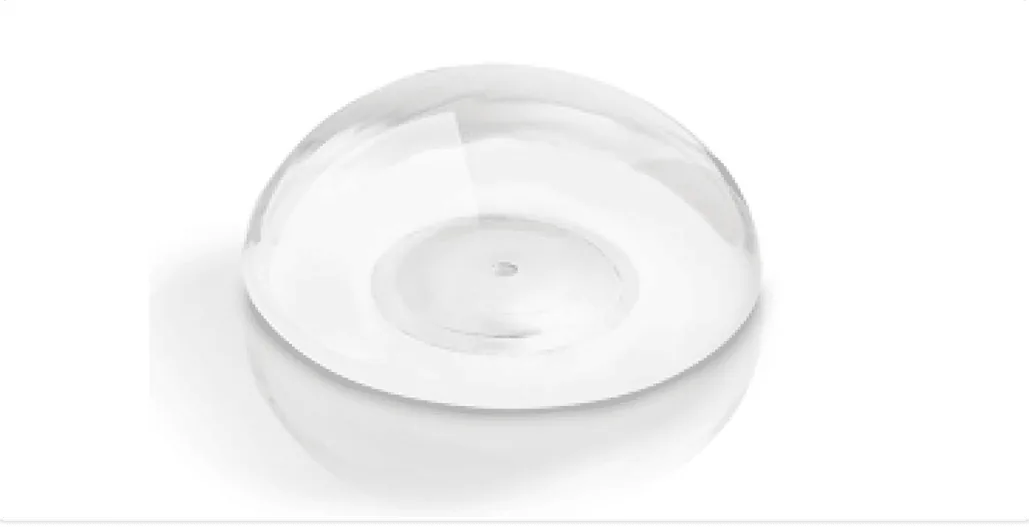
Saline breast implants are filled with a saline solution (sterile saltwater) surrounded by a silicone outer shell. Saline breast implants are inserted empty and then filled once they’re in place. This allows for a smaller incision and a more adjustable size.
Breast Implants

Diameter
The base width of a breast implant is the diameter or width of the implant’s base. This is the part that sits against the chest wall. The base width determines how an implant will fit to the patient’s chest width. Therefore it plays a crucial role in finding
the right breast implant.

The profile of a breast implant describes its height in relation to its base width. When standing, it determines how far the breast projects forward from the chest wall. For the same implant volume, higher profiles have a smaller base width.
Low Profile
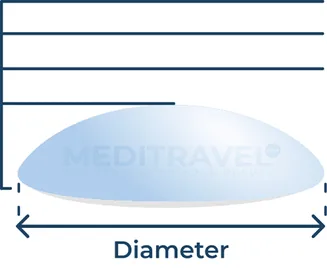
Minimal forward projection with a wider base. Creates a flatter, less noticeable look. Ideal for wider chests.
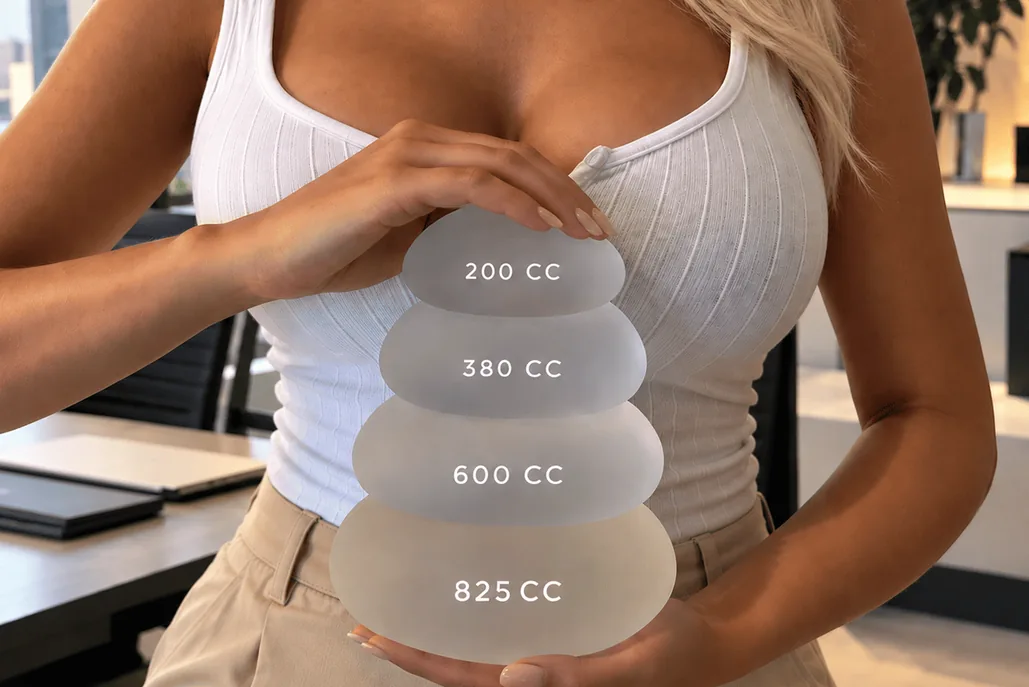
Breast implants are measured in volume, with the unit cubic centimetres (cc). The common usage of bra or cup sizes is not used in plastic surgery.
As most women are more familiar with cup or bra sizes, the following conversion can be used:
1 cup size
≈
150cc of silicone implant
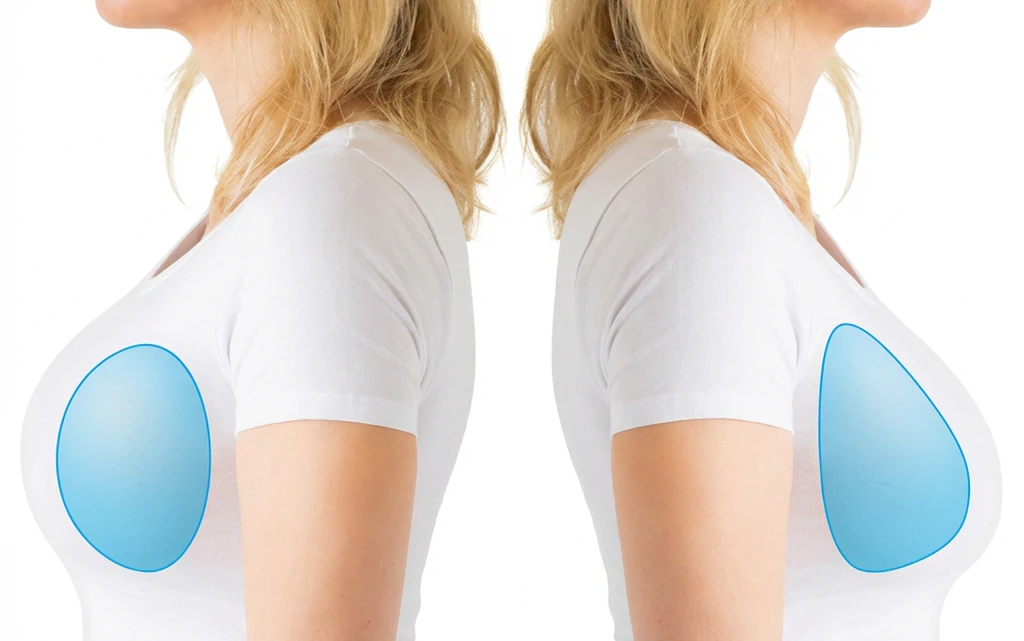
Breast implants come in two main shapes:
round and anatomical (teardrop).
Each creates a different breast shape and should be chosen based on the patient’s anatomy and aesthetic goals.
Round:
A round breast implant has a symmetrically round shape that adds volume and fullness to the breast. The upper portion of the breast gets a more pronounced profile.
Anatomical / Teardrop:
A teardrop shaped breast implant mimics the natural slope of the breast, with more volume at the bottom and a tapering towards the top. It creates a more subtly contoured, natural-looking silhouette.
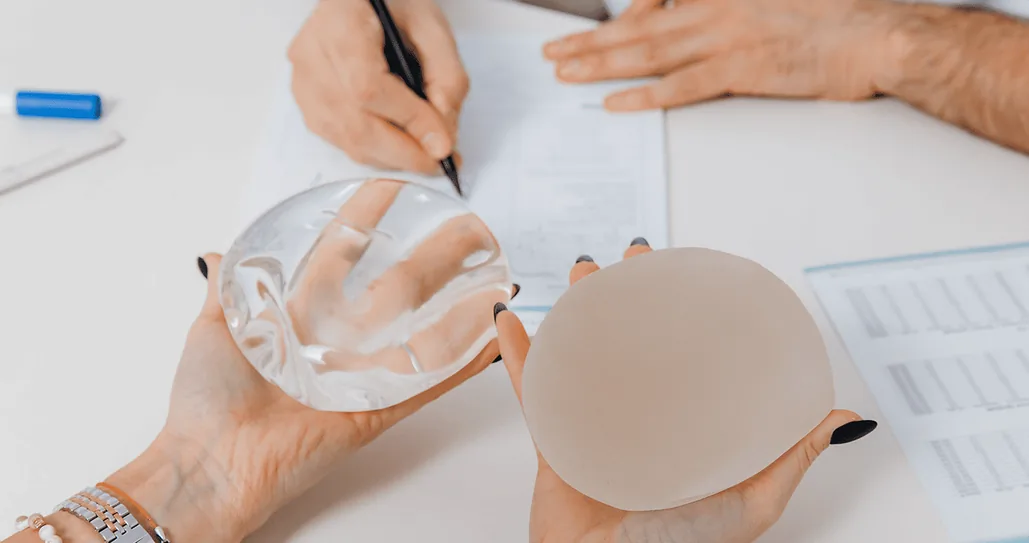
Breast implants can have either a
smooth or textured surface.
Each type interacts differently with the surrounding tissue, affecting the implant’s stability and how it moves and settles.
Smooth

Soft and smooth outer shell.
Implant can move more freely within the breast implant pocket, which may give a more natural movement of the breast.
Tends to have a longer lifespan due to less friction with the surrounding tissues.
Might have a higher chance of visible rippling, especially in patients with thin breast tissue.
Textured

Rougher surface prevents the implant from moving or rotating within the breast pocket
Texture reduces the risk of capsular contracture (see risks of breast implants)
For silicone breast implants there are 3 types of cohesivity, which determine how well the silicone gel sticks together and maintains its shape. It affects the feel and appearance of the implant, as well as its behaviour in the rare event of a rupture.
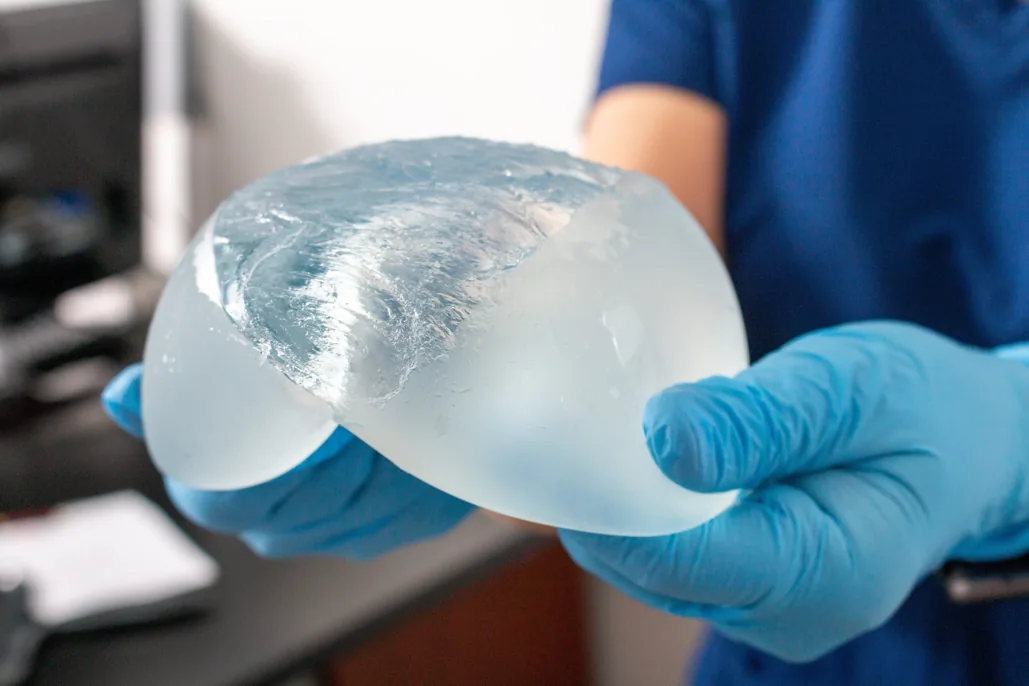
Low Cohesivity

Softer and providing a more natural feel.

More likely to spread in the case of a shell rupture.
Breast Implants
Diameter / Base Width
Diameter
The base width of a breast implant is the diameter or width of the implant’s base. This is the part that sits against the chest wall. The base width determines how an implant will fit to the patient’s chest width. Therefore it plays a crucial role in finding the right breast implant.
Profile / Projection
The profile of a breast implant describes its height in relation to its base width. When standing, it determines how far the breast projects forward from the chest wall. For the same implant volume, higher profiles have a smaller base width.
Low Profile
Minimal forward projection with a wider base. Creates a flatter, less noticeable look. Ideal for wider chests.
Moderate Profile
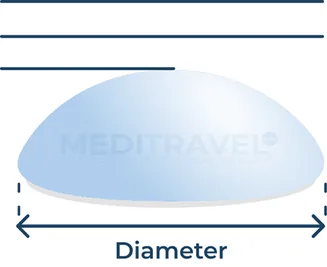
Good balance between projection and base width, for a very natural appearance. Ideal for small to medium chests.
High Profile
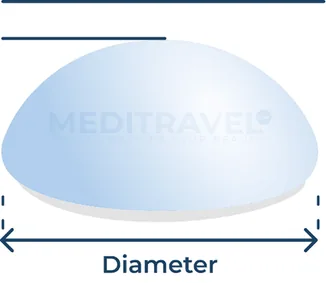
Pronounced forward projection with a narrower base width for a fuller look. Ideal for narrow chests.
Extra-High Profile
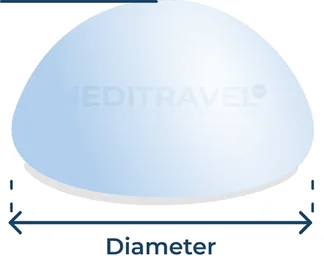
Maximum projection with the smallest base. Creates the most prominent appearance. Ideal for narrow chests.
Implant Volume / Size
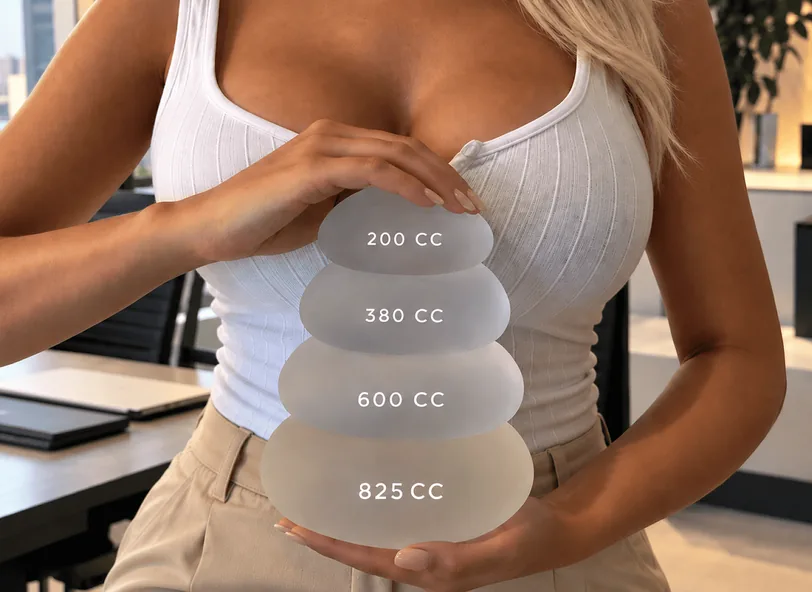
Breast implants are measured in volume, with the unit cubic centimetres (cc). The common usage of bra or cup sizes is not used in plastic surgery.
As most women are more familiar with cup or bra sizes, the following conversion can be used:
Implant Shapes
Breast implants come in two main shapes:
round and anatomical (teardrop).
Each creates a different breast shape and should be chosen based on the patient’s anatomy and aesthetic goals.
Round
A round breast implant has a symmetrically round shape that adds volume and fullness to the breast. The upper portion of the breast gets a more pronounced profile.
Anatomical / Teardrop
A teardrop shaped breast implant mimics the natural slope of the breast, with more volume at the bottom and a tapering towards the top. It creates a more subtly contoured, natural-looking silhouette.
Surface Texture
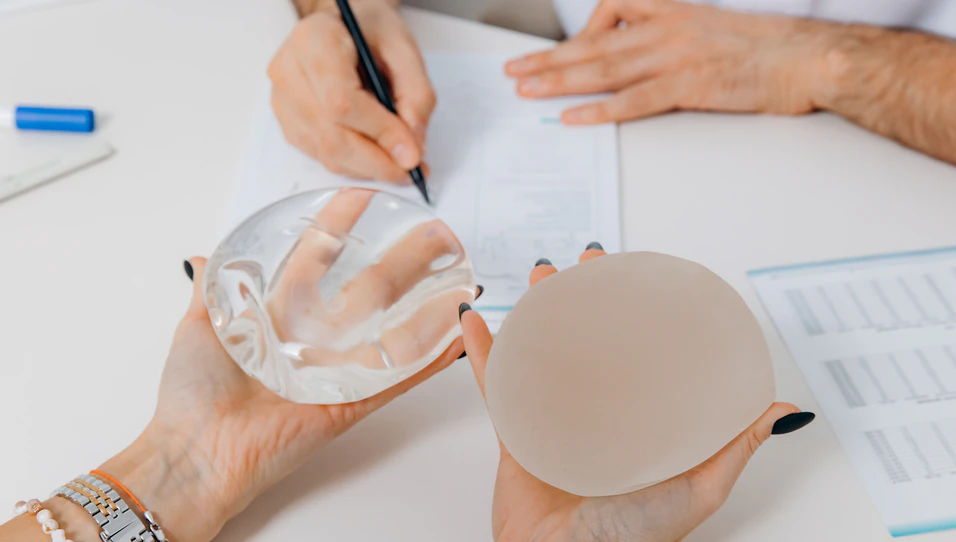
Breast implants can have either a
smooth or textured surface.
Each type interacts differently with the surrounding tissue, affecting the implant’s stability and how it moves and settles.
Smooth

Soft and smooth outer shell.
Implant can move more freely within the breast implant pocket, which may give a more natural movement of the breast.
Tends to have a longer lifespan due to less friction with the surrounding tissues.
Might have a higher chance of visible rippling, especially in patients with thin breast tissue.
Textured
Rougher surface prevents the implant from moving or rotating within the breast pocket
Texture reduces the risk of capsular contracture (see risks of breast implants)
Cohesivity
For silicone breast implants there are 3 types of cohesivity, which determine how well the silicone gel sticks together and maintains its shape. It affects the feel and appearance of the implant, as well as its behaviour in the rare event of a rupture.
Low Cohesivity
Softer and providing a more natural feel.More likely to spread in the case of a shell rupture.Breast Augmentation
Special Techniques
Hybrid Breast Augmentation
Hybrid breast augmentation combines breast implants with fat grafting to create fuller breasts that look and feel more natural.
Fat Grafting
Fat is taken from other parts of the body (such as the abdomen or thighs) and injected into the breasts to create fuller-looking breasts with a more natural shape.
Internal Bra
An internal bra is a hidden support, made of special material or the body’s own tissue, that helps hold the breast implant in place.
Mesh Bra
A mesh bra is a type of internal bra made from soft surgical mesh placed inside the breast. It provides extra support, helps maintain shape, and prevents sagging.
Suture Bra
A suture bra is a type of internal bra created using strong internal stitches instead of mesh. These stitches form a supportive sling that helps keep the breast lifted and in shape.
Expanders
Expanders are temporary inflatable devices used to slowly stretch the breast tissue by filling them with saline. This prepares the breast for the placement of permanent implants.
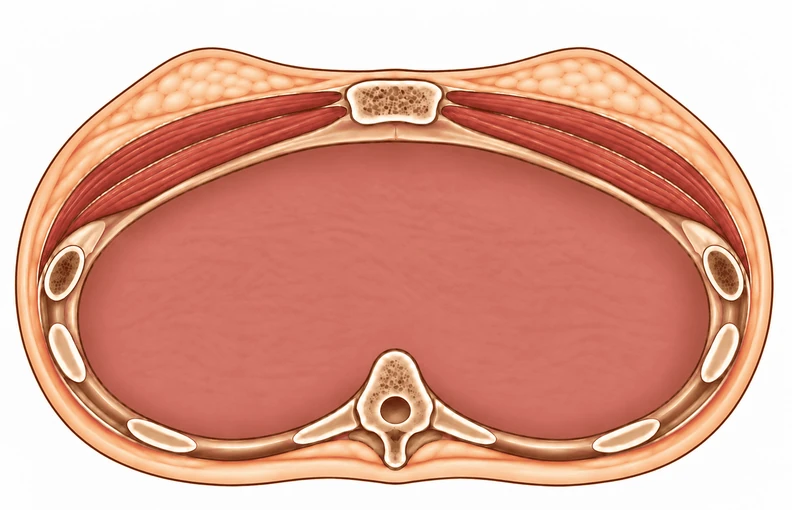
Cleavage Gap
The shape of the chest predetermines the gap between the breasts.
Sunken Chest
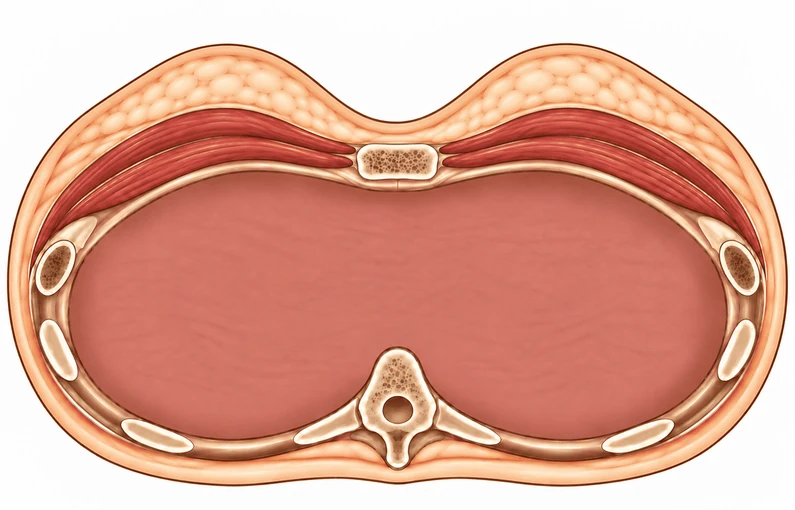
Tighter Gap
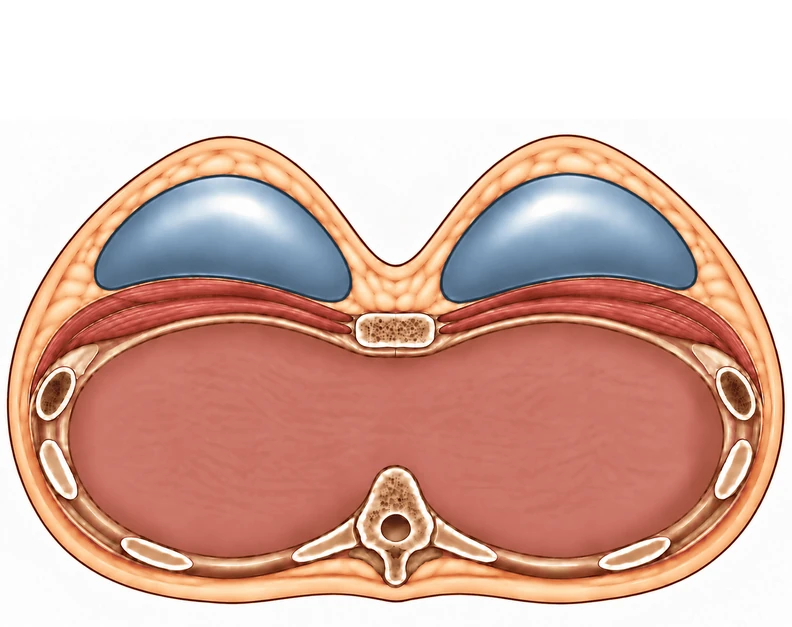
Flat Chest
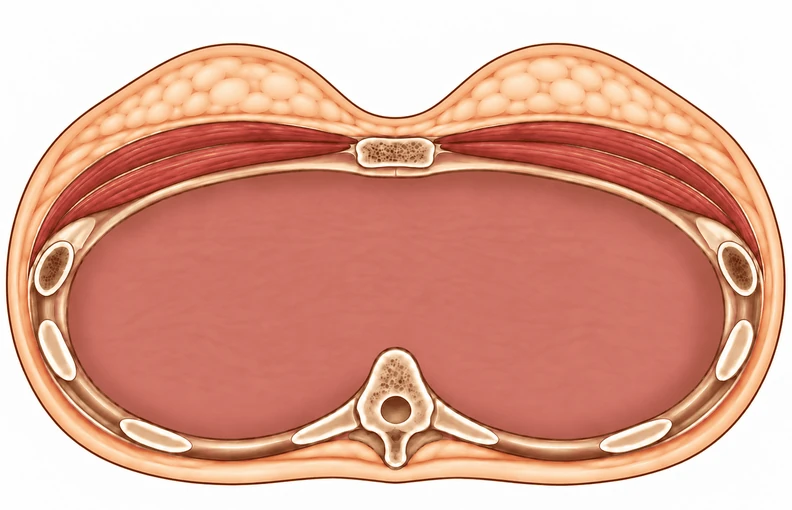
Normal Gap
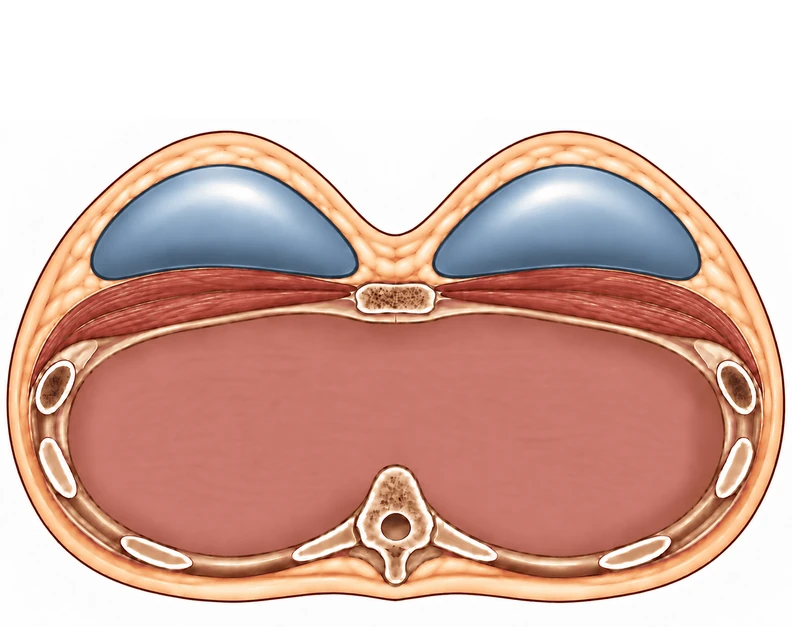
Protruding Chest
Wider Gap
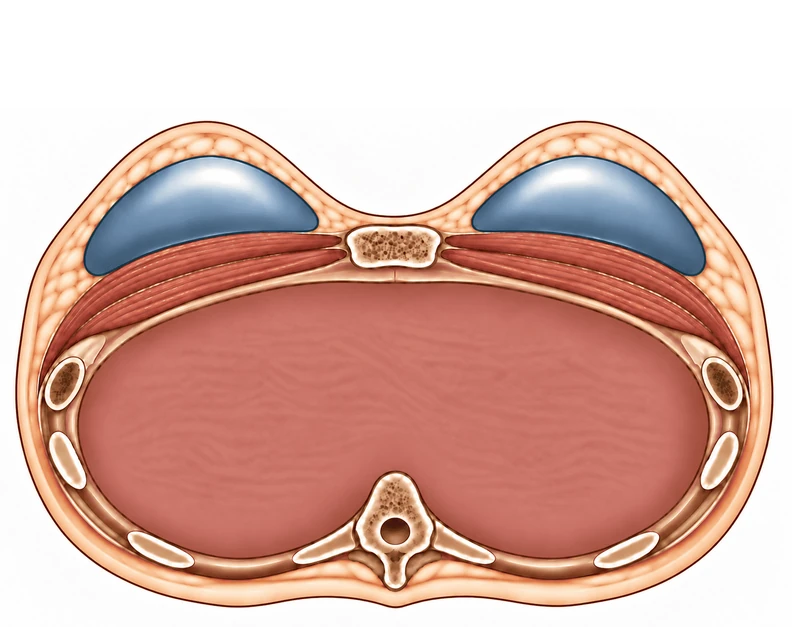
Breast Augmentation
Hybrid Breast Augmentation
Hybrid breast augmentation combines breast implants with fat grafting to create fuller breasts that look and feel more natural.
The shape of the chest predetermines
the gap between the breasts.
Flat Chest
Normal Gap
Breast Implants

The most used
Breast Implant Brands are:
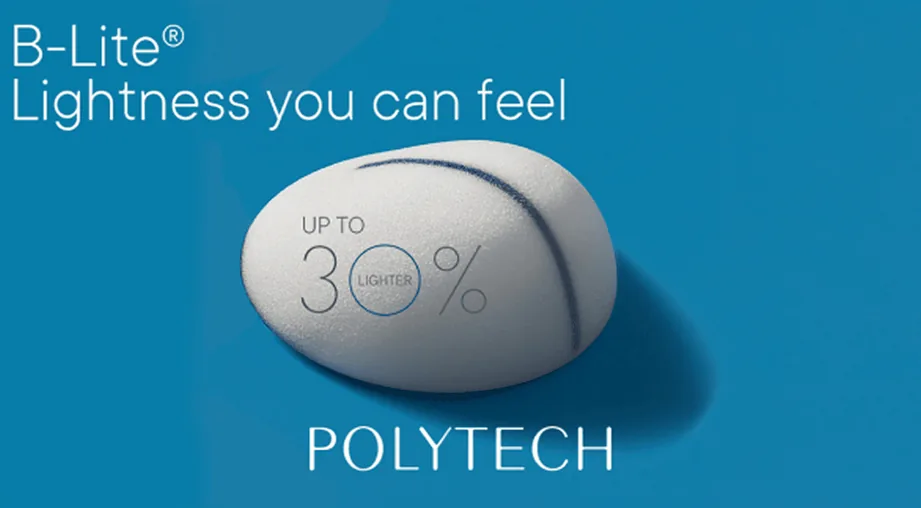
Polytech is a German brand with more than 30 years of experience in creating breast implants.
Breast Implants
The most used Breast Implant Brands are:
Ready for your Breast Surgery?
Breast Surgeries
Complications in Breast Surgeries are rare!
To minimize the likelihood of complications and
achieve optimal outcomes:

Follow instructions for surgery preparation and aftercare.
Understand possible complications.
Communicate any unusual symptoms or concerns promptly.
Scarring
Breast surgeries with implants typically leave scars. Depending on the chosen incision, these may appear in the breast fold, around the areola, or in the armpit. Although they may look red at first, they usually fade and become less noticeable over time. Scar reduction creams, treatments, or laser therapy can help improve their appearance.

If you have any questions regarding potential risks and complications in
Breast Surgeries, contact anytime your Meditravel consultant.
Breast Surgeries

Complications in
Breast Surgeries are rare!
To minimize the likelihood of complications and achieve optimal outcomes:

Follow instructions for surgery preparation and aftercare.
Understand possible complications.
Communicate any unusual symptoms or concerns promptly.
General
Possible in all operations
Some bleeding or bruising is normal after breast surgeries, but occasionally blood can collect inside the breast pocket and cause swelling, pain, or firmness. Large hematomas (blood collection under skin) may require drainage.
People who use blood thinners (anticoagulants) or have high blood pressure, may experience increased bleeding. Both during the surgery as well as during the healing. Advise in advance your Meditravel consultant and the clinic about high blood pressure or the usage of blood thinners.
Normal Side-Effects
Expected & Temporary
Early differences in breast size or position are common during swelling and typically even out over time.
Operation Specific
Mainly in Breast Surgeries
Breast surgeries with implants typically leave scars. Depending on the chosen incision, these may appear in the breast fold, around the areola, or in the armpit. Although they may look red at first, they usually fade and become less noticeable over time. Scar reduction creams, treatments, or laser therapy can help improve their appearance.
Implant-Related
Caused by Breast Implants
Modern breast implants are considered safe with regard to leakage or rupture. The gel of a modern silicone implant most likely remains within the implant shell due to its cohesivity. A small amount might escape into the breast implant pocket, but not into the body. Signs of rupture can include gradual changes in breast shape, swelling, or increasing discomfort over a period of weeks.
In saline implants, the saltwater solution is safely absorbed and naturally expelled by the body, making leaks immediately noticeable but harmless.
Breast Surgeries
It is essential to undergo regular check-ups!

After a breast augmentation, you should have a yearly check-up, including a mammogram or ultrasound. Especially if you notice any changes in your breasts (shape, lumps, infection, etc.)
You should also have a check-up after a strong impact or injury to the breasts, such as during sports, a fall from a height, or a car accident.
We recommend an annual routine examination with your general doctor to support your overall health.


If you have any questions regarding potential risks and complications in Breast Surgeries, contact anytime your Meditravel consultant.
Breast Surgeries
It is essential to undergo regular check-ups!


After a breast augmentation, you should have a yearly check-up, including a mammogram or ultrasound. Especially if you notice any changes in your breasts (shape, lumps, infection, etc.)
You should also have a check-up after a strong impact or injury to the breasts, such as during sports, a fall from a height, or a car accident.
We recommend an annual routine examination with your general doctor to support your overall health.
Ready for your Breast Surgery?
Frequently Asked Questions
Meditravel can help you arrange different types of breast surgery, including breast augmentation, breast lift, breast reduction, breast implant replacement, breast implant removal, fat transfer to the breasts, and combined breast procedures. The most suitable treatment depends on your body, your expectations, and the surgeon’s medical evaluation.
Yes, the initial consultation with Meditravel is free and non-binding. You can send us your request and, if needed, photos for a first evaluation. Our team will then help you understand which breast surgery options may be suitable for you.
Choosing the right clinic and surgeon is one of the most important steps before breast surgery. Meditravel works with selected clinics and experienced surgeons who regularly treat international patients. We help you compare treatment options, clinic standards, surgeon experience, communication, prices, and the overall travel package.
The cost of breast augmentation depends on the country, clinic, surgeon, implant brand, surgical technique, anesthesia, hospital stay, and included services. After your first consultation, Meditravel can provide you with a personal treatment offer based on your individual case.
Cosmetic breast surgeries are usually not covered by health insurance. In some cases, breast reduction may be partly or fully covered if it is medically necessary, for example due to back, neck, or shoulder pain. This depends on your insurance provider and country.
Financing options may be available depending on the country, clinic, and treatment package. Please ask your personal Meditravel advisor if you would like to pay for your breast surgery in installments.
Discounts may be available during special promotions or for selected treatment packages. Meditravel can check the current offers with our partner clinics and inform you if a discount is available for your breast surgery.
Breast surgery is a general term for surgical procedures that change the size, shape, position, or appearance of the breasts. Common breast surgeries include breast augmentation, breast lift, breast reduction, implant replacement, implant removal, and breast reconstruction.
Yes, breast surgery can often be combined with other procedures, such as liposuction, tummy tuck, mommy makeover, or other body contouring treatments. Whether a combined surgery is possible depends on your health, treatment goals, surgery duration, and the surgeon’s medical evaluation.
As with any surgery, breast surgery has risks and possible complications. These may include swelling, bruising, bleeding, infection, pain, delayed wound healing, visible scars, changes in nipple sensitivity, asymmetry, unsatisfactory results, and the need for revision surgery. Your surgeon will explain the specific risks of your chosen procedure before surgery.
If you notice a problem after returning home, you should contact Meditravel and your clinic as soon as possible. Depending on the situation, the clinic may request photos, arrange an online follow-up, recommend a local doctor, or advise you to return for an in-person check-up.
Yes, Meditravel works with clinics that are experienced in treating international patients. Many partner clinics offer multilingual support, airport transfers, hotel recommendations, patient coordinators, and structured aftercare instructions.
Most patients should stay in the destination country for several days after breast surgery. The exact length depends on the procedure, your healing, and the surgeon’s recommendation. Breast augmentation may require a shorter stay than more complex procedures such as breast lift, breast reduction, or combined surgeries.
In many clinics, a personal patient coordinator or translator is available to support you before, during, and after your treatment. They can help with communication, appointments, clinic visits, and general questions during your medical trip.
The safe time to fly after breast surgery depends on the procedure, your recovery, and your surgeon’s approval. Many patients can fly after several days, but more complex procedures may require a longer stay. You should only fly once your surgeon confirms that it is safe.
Yes, medical tests are usually required before breast surgery. These may include blood tests, an ECG, breast ultrasound, mammogram, or other examinations depending on your age, health, medical history, and the type of procedure.
If you are planning to lose a significant amount of weight, it is often better to do this before breast surgery. Weight loss after surgery can change the size, shape, and position of the breasts. The best timing should be discussed with your surgeon.
Weight changes can affect the result of breast surgery. Gaining weight may increase breast volume, while losing weight may reduce breast volume or cause sagging. For long-lasting results, it is best to be close to a stable and healthy weight before surgery.
Before breast surgery, you should follow your surgeon’s instructions carefully. This may include stopping smoking, avoiding alcohol, pausing certain medications or supplements, completing medical tests, arranging time off work, and preparing comfortable clothes for recovery.
For your breast surgery trip, you should pack comfortable loose clothing, button-up or zip-front tops, personal medication, travel documents, clinic documents, hygiene products, and comfortable shoes. It is also helpful to bring entertainment, chargers, and anything you may need during recovery.
Yes, it is helpful to have support at home after breast surgery, especially during the first few days. You may need help with shopping, cooking, childcare, carrying items, and daily activities while your movement is limited.
You should avoid lifting your arms too high or making strong movements during the first stage of recovery. Light arm movement is usually encouraged, but heavy lifting and stretching should be avoided until your surgeon allows it.
You can usually drink water shortly after breast surgery once you are fully awake and your medical team allows it. Start with small sips and follow the instructions of your surgeon and anesthesia team.
You can usually eat light food after surgery once you feel well and your medical team allows it. Many patients start with simple meals and avoid heavy or greasy foods in the first hours after anesthesia.
You should avoid sexual activity during the early recovery period, especially anything that puts pressure on the chest or raises blood pressure too much. Many patients wait a few weeks, but the exact timing depends on the procedure and your surgeon’s advice.
Smoking can reduce blood flow, slow healing, increase the risk of infection, and negatively affect scar healing. For this reason, patients are usually advised to stop smoking before and after breast surgery.
You should avoid smoking for as long as your surgeon recommends after breast surgery. Many surgeons recommend avoiding smoking for several weeks before and after surgery because nicotine can affect healing and increase the risk of complications.
You should avoid alcohol during the early recovery period, especially while taking pain medication or antibiotics. Alcohol can increase swelling, bleeding risk, and interfere with medication. Ask your surgeon when it is safe to drink alcohol again.
Some breast surgeries can affect breastfeeding, especially if gland tissue, milk ducts, or nerves are affected. Many patients can still breastfeed after breast surgery, but it cannot be guaranteed. If future breastfeeding is important to you, discuss this with your surgeon before surgery.
Breast surgery does not usually prevent pregnancy. However, pregnancy and breastfeeding can change the size and shape of the breasts, which may affect your surgical result. If you are planning pregnancy soon, your surgeon may recommend waiting until after pregnancy and breastfeeding.
Breast Augmentation
The results of breast augmentation are long-lasting, but they are not always permanent. Breast implants may need to be replaced in the future, and natural changes such as aging, pregnancy, breastfeeding, and weight changes can affect the result over time.
Breast augmentation can increase breast volume, improve shape, enhance symmetry, and create a fuller appearance. The goal is to achieve a result that fits your body and looks balanced. Your final result depends on your anatomy, implant choice, surgical technique, and healing process.
You will notice a change immediately after breast augmentation, but the final result takes time. Swelling must reduce, the implants need to settle, and the breast tissue needs to adjust. Many patients see a more natural final result after several months.
A natural-looking breast augmentation is possible when the implant size, shape, profile, and placement are chosen carefully. The most natural result depends on your body proportions, existing breast tissue, skin quality, and the surgeon’s technique.
The trip length for breast augmentation depends on the destination country, clinic, and surgeon’s recommendation. Many patients stay for several days after surgery to attend follow-up appointments before flying home.
There is no fixed number of breast augmentations a person can have in one lifetime. However, every surgery carries risks, and repeated breast surgeries can increase scarring and tissue changes. Revision surgery should only be done when medically or aesthetically necessary.
The possible size increase depends on your body, skin elasticity, chest width, existing breast tissue, and safety limits. Increasing too much at once can raise the risk of complications and unnatural results. Your surgeon will recommend a size that is safe and balanced.
The right implant size depends on your body proportions, chest width, breast tissue, skin quality, lifestyle, and personal goals. Your surgeon will help you choose a size that looks natural, fits your body, and reduces the risk of complications.
Breast augmentation is usually performed only on adults. In most countries, patients must be at least 18 years old. The exact minimum age may depend on local laws, clinic policies, and medical circumstances.
A good candidate for breast augmentation is generally healthy, has fully developed breasts, has realistic expectations, and wants to increase breast size or improve breast shape. The surgeon will check your health, anatomy, and goals before confirming suitability.
Breast augmentation may not be suitable for patients with certain medical conditions, untreated breast problems, active infections, unrealistic expectations, or unstable body weight. It may also be better to postpone surgery if you are pregnant, breastfeeding, or planning pregnancy soon.
Breast augmentation usually requires at least two clinic visits: one for the consultation and pre-operative preparation, and one or more follow-up visits after surgery. The exact number of visits depends on the clinic and your recovery.
Breast augmentation surgery usually takes around one to two hours. The exact duration depends on the implant placement, incision technique, whether additional procedures are performed, and the individual case.
Many breast augmentation patients can leave the clinic on the same day or after one night in the hospital. The required hospital stay depends on the clinic, anesthesia, your recovery, and the surgeon’s recommendation.
Breast augmentation is usually performed under general anesthesia. This means you are asleep during the procedure and do not feel pain during the surgery.
Breast augmentation is usually not painful during surgery because it is performed under anesthesia. After surgery, patients may feel tightness, pressure, swelling, soreness, or muscle discomfort. Pain medication is usually provided to help manage discomfort.
Yes, breast augmentation has risks and possible complications. These may include bleeding, infection, pain, swelling, scarring, asymmetry, changes in nipple sensitivity, implant rupture, implant displacement, capsular contracture, and the need for revision surgery.
Capsular contracture is a possible complication after breast implant surgery. It happens when the natural scar tissue around the implant becomes too tight or hard. This can cause firmness, pain, shape changes, or implant displacement, and in some cases revision surgery may be needed.
Yes, breast augmentation leaves scars because incisions are required to place the implants. However, scars usually fade over time. The final appearance depends on your skin, healing process, incision location, and scar care.
Scar creams should only be used once the incisions are fully closed and your surgeon allows it. Using products too early can irritate the wound or affect healing. Always follow your surgeon’s instructions for scar care.
A compression bra or surgical support bra is usually worn for several weeks after breast augmentation. The exact duration depends on your surgeon’s instructions and your healing progress.
Yes, nipple sensitivity can change after breast augmentation. Some patients experience increased sensitivity, reduced sensitivity, or temporary numbness. In many cases, sensation improves over time, but permanent changes are possible.
The nipples may look slightly different after breast augmentation because the breast shape and volume change. If there is major asymmetry or nipple position concerns before surgery, your surgeon will explain what can realistically be improved.
Many patients feel comfortable in social situations again after one to two weeks, depending on swelling, discomfort, and clothing choice. Full recovery and final confidence in the result may take longer.
Many patients return to office work after about one week, depending on how they feel and what type of work they do. Jobs involving lifting, physical activity, or long hours may require more time off.
Light walking is usually encouraged soon after surgery, but sports and intense exercise must be avoided during the early recovery period. Many patients resume more active exercise after several weeks, depending on the surgeon’s approval.
Silicone and saline implants both have advantages. Silicone implants often feel more natural, while saline implants are filled with sterile salt water. The better option depends on your body, goals, implant availability, and your surgeon’s recommendation.
Round implants can create more fullness in the upper breast and are commonly used for breast augmentation. Anatomical implants, also called teardrop implants, are shaped to follow a more natural breast slope. The best choice depends on your anatomy and desired result.
There is no single best placement for every patient. Implants can be placed under the muscle, over the muscle, or in a dual-plane position. The best option depends on your breast tissue, body shape, implant size, lifestyle, and surgeon’s recommendation.
Submuscular placement means the implant is placed under the chest muscle. Subglandular placement means the implant is placed above the muscle and under the breast tissue. Dual-plane placement is a combination, where the implant is partly under the muscle and partly under the breast tissue.
Implant profile describes how far the implant projects from the chest. Low-profile implants are wider and flatter, while high-profile implants are narrower and project more. The right profile depends on your chest width, desired shape, and body proportions.
Yes, implant size can usually be changed later through revision breast surgery. Patients may choose a larger or smaller size, or they may decide to remove implants completely. The surgeon will check your tissue, skin, and implant pocket before recommending the best option.
If you are unhappy with the size after breast augmentation, you should first wait until the swelling has reduced and the implants have settled. If you are still unhappy after healing, revision surgery may be possible to change the implant size.
Breast implants are long-lasting, but they are not lifetime devices. Some patients keep their implants for many years without problems, while others may need replacement earlier due to rupture, capsular contracture, implant movement, or personal preference.
Breast implants do not always need to be replaced after a fixed number of years. They usually only need to be replaced if there is a problem, a change in appearance, or if the patient wants a different size or type of implant.
Modern breast implants are widely used and tested, but they still carry risks. Possible complications include rupture, capsular contracture, infection, implant movement, and the need for revision surgery. Your surgeon should explain the benefits and risks before surgery.
No, breast implants cannot be reused. Once breast implants are removed, they are not placed back into the body. If implants need to be exchanged, new sterile implants are used.
Hybrid breast augmentation combines breast implants with fat transfer. The implant provides volume, while the transferred fat can help improve shape, softness, and contour in selected areas.
Fat grafting in breast augmentation means fat is taken from another area of the body with liposuction, processed, and injected into the breasts. It can be used alone for a small volume increase or together with implants to improve the shape.
An internal bra is a surgical technique used to give extra support to the breast tissue or implant. It may involve special sutures or supportive material to help improve breast shape, stability, and long-term support.
A mesh bra is a supportive surgical material placed inside the breast to help support the implant or breast tissue. It may be used in selected cases, especially in revision surgery, weak tissue, or when extra support is needed.
Expanders are temporary devices used to stretch the breast tissue gradually. They are more commonly used in breast reconstruction, but may also be used in selected complex cases where the tissue needs to be prepared before placing an implant.
Yes, breast augmentation can often improve breast asymmetry. Different implant sizes, fat transfer, or additional lifting techniques may be used to create a more balanced result. Perfect symmetry cannot always be guaranteed.
Tuberous breasts are a breast shape condition where the breasts may appear narrow, elongated, underdeveloped, or uneven, often with enlarged or puffy areolas. The condition can affect one or both breasts.
Yes, tuberous breasts can often be improved with breast augmentation, fat transfer, tissue release, areola correction, or a breast lift. The right treatment depends on the severity and the patient’s goals.
Breast augmentation with implants is usually better for patients who want a larger and more predictable size increase. Fat transfer may be better for patients who want a smaller, natural increase using their own body fat. The best option depends on your goals and anatomy.
The main advantages of fat transfer breast augmentation are that it uses your own fat, creates a natural look and feel, and does not require implants. It can also improve body contour in the area where fat is removed.
Fat transfer has limits. It usually allows only a moderate size increase, some of the transferred fat may be absorbed by the body, and enough donor fat is required. In some cases, more than one session may be needed.
Yes, breast implants can make mammograms more technically challenging because they may hide some breast tissue. You should always tell the radiology team that you have breast implants so they can use suitable imaging techniques.
Many patients can breastfeed after breast augmentation, but it cannot be guaranteed. The ability to breastfeed depends on the incision, implant placement, breast tissue, milk ducts, nerves, and individual factors.
Breast Lift
Breast lift surgery, also called mastopexy, is a procedure that lifts and reshapes sagging breasts. It removes excess skin, tightens the breast shape, and repositions the nipple and areola to a higher position.
A breast lift raises and reshapes sagging breasts, but it does not significantly increase breast size. Breast augmentation increases breast volume using implants or fat transfer. Some patients need both procedures for the best result.
Breast augmentation mainly increases breast size. A breast lift with implants both lifts the breasts and adds volume. This combination is often suitable for patients who have sagging and also want fuller breasts.
During breast lift surgery, the surgeon removes excess skin, reshapes the breast tissue, and moves the nipple and areola to a higher position. The exact technique depends on the amount of sagging, breast size, skin quality, and desired result.
The cost of a breast lift depends on the country, clinic, surgeon, anesthesia, hospital stay, and whether implants or other procedures are included. Meditravel can provide a personal offer after your consultation and medical evaluation.
The results of a breast lift are long-lasting, but they do not stop natural aging. Pregnancy, breastfeeding, weight changes, gravity, and skin quality can affect the result over time.
Yes, a breast lift is designed to correct sagging breasts. It lifts the breast position, improves shape, and repositions the nipples for a more youthful appearance.
Yes, breasts can sag again over time due to aging, gravity, pregnancy, breastfeeding, or weight changes. Maintaining a stable weight and wearing supportive bras can help preserve the result.
Not every patient needs another breast lift. However, some patients may choose a second lift years later if the breasts sag again or if their body changes after pregnancy, weight loss, or aging.
Yes, a breast lift can often improve breast asymmetry by reshaping the breasts and adjusting nipple position. In some cases, implants, reduction, or fat transfer may be recommended for a more balanced result.
Yes, the areola size can often be reduced during breast lift surgery. This is commonly done when the areolas are enlarged or stretched due to pregnancy, breastfeeding, weight changes, or sagging.
Yes, in most breast lift procedures, the nipples and areolas are repositioned to a higher and more natural position. They usually remain attached to the underlying tissue to preserve blood supply and sensation as much as possible.
Yes, a breast lift can be performed without implants. This is suitable for patients who are happy with their breast volume but want to improve sagging, shape, and nipple position.
Yes, a breast lift can sometimes be combined with fat transfer to add a small amount of natural volume and improve breast shape. The suitability depends on your body, available donor fat, and desired result.
A good candidate for a breast lift has sagging breasts, downward-pointing nipples, stretched skin, or loss of breast shape. Patients should be generally healthy, have realistic expectations, and ideally have a stable weight.
A breast lift may not be suitable for patients with certain medical conditions, active infections, unstable weight, unrealistic expectations, or plans for pregnancy in the near future. Your surgeon will assess your suitability during the consultation.
A breast lift does not significantly increase breast size. It mainly lifts and reshapes the existing breast tissue. If you want larger breasts, implants or fat transfer may be added.
Breast size can be increased during a breast lift by adding implants or fat transfer. A breast lift with implants is often chosen when patients want both more volume and a lifted breast shape.
A breast lift is usually performed under general anesthesia. This means you are asleep during the surgery and do not feel pain during the procedure.
A breast lift is not painful during surgery because anesthesia is used. After surgery, patients may feel soreness, tightness, swelling, and discomfort. Pain medication is usually provided to help control discomfort during recovery.
Yes, scars remain after breast lift surgery because incisions are required. The scar pattern depends on the technique used. Scars usually fade over time, but they do not disappear completely.
Yes, a breast lift has risks and possible complications. These may include bleeding, infection, swelling, bruising, delayed wound healing, visible scars, asymmetry, changes in nipple sensitivity, and the need for revision surgery.
Many patients return to office work after one to two weeks, depending on their recovery and type of job. Physically demanding work may require more time off.
Some patients can breastfeed after a breast lift, but it cannot be guaranteed. The ability to breastfeed depends on the surgical technique, nipple position, milk ducts, nerves, and individual healing.
Breast Reduction
Breast reduction surgery is a procedure that reduces the size and weight of large breasts. It removes excess breast tissue, fat, and skin, and reshapes the breasts to make them smaller, lighter, and more balanced.
During breast reduction surgery, the surgeon removes excess tissue, fat, and skin from the breasts. The breasts are reshaped, and the nipples are usually lifted to a higher position. The goal is to reduce size while improving shape and comfort.
Yes, breast reduction usually includes a lifting effect. Because excess tissue and skin are removed, the breasts are reshaped and the nipples are repositioned higher on the chest.
Yes, breast reduction can often help reduce back, neck, shoulder, and posture-related discomfort caused by heavy breasts. It may also improve comfort during sports, clothing fit, and daily activities.
The cost of breast reduction depends on the country, clinic, surgeon, anesthesia, hospital stay, and complexity of the procedure. Meditravel can provide a personal offer after your consultation and medical evaluation.
In some cases, health insurance may cover breast reduction if it is medically necessary. This usually requires medical documentation, symptoms such as pain or skin irritation, and approval from the insurance provider. Coverage depends on your country and insurance plan.
The results of breast reduction are usually long-lasting. However, aging, pregnancy, breastfeeding, hormonal changes, and weight changes can affect breast size and shape over time.
Yes, breasts can increase in size again after breast reduction due to weight gain, pregnancy, breastfeeding, hormonal changes, or natural body changes. Maintaining a stable weight can help preserve the result.
A good candidate for breast reduction has large or heavy breasts that cause discomfort, pain, skin irritation, posture problems, or difficulty with sports and clothing. Patients should be generally healthy and have realistic expectations.
Breast reduction may not be suitable for patients with certain medical conditions, active infections, unstable weight, unrealistic expectations, or plans for pregnancy soon. Your surgeon will check your health and goals before confirming suitability.
The amount of reduction depends on your breast size, body proportions, skin quality, blood supply, and your desired result. The surgeon will recommend a safe and realistic reduction that fits your body.
Yes, breast reduction can often improve breast asymmetry. The surgeon can remove different amounts of tissue from each breast to create a more balanced shape. Perfect symmetry cannot always be guaranteed.
Yes, in most breast reduction procedures, the nipples and areolas are repositioned higher on the breast. They usually remain attached to tissue underneath to preserve blood supply and sensation as much as possible.
Yes, the areola size can often be reduced during breast reduction surgery. This is commonly done when the areolas are stretched or enlarged.
Breast reduction is usually performed under general anesthesia. This means you are asleep during the surgery and do not feel pain during the procedure.
Breast reduction is not painful during surgery because anesthesia is used. After surgery, patients may feel soreness, swelling, tightness, and discomfort. Pain medication is usually provided during recovery.
Yes, breast reduction has risks and possible complications. These may include bleeding, infection, swelling, bruising, delayed wound healing, visible scars, asymmetry, changes in nipple sensitivity, breastfeeding difficulties, and the need for revision surgery.
Yes, scars remain after breast reduction surgery. The scar pattern depends on the surgical technique and amount of reduction. Scars usually fade over time but do not disappear completely.
Many patients return to office work after one to two weeks, depending on their recovery and job type. Physically demanding work or jobs involving lifting may require more time off.
There is no universal minimum breast size for breast reduction. Suitability depends on symptoms, body proportions, breast size, expectations, and the surgeon’s medical evaluation.
There is usually no fixed maximum breast size for breast reduction, but very large reductions may be more complex. The surgeon will evaluate your anatomy, health, and safety before recommending the best surgical plan.
Yes, breast reduction can often improve skin irritation, sweating, and rashes under the breasts by reducing breast weight and skin contact. If you have severe or ongoing skin irritation, this should be discussed during your consultation.
Some patients can breastfeed after breast reduction, but it cannot be guaranteed. Breast reduction can affect milk ducts, gland tissue, and nipple sensitivity. If future breastfeeding is important to you, discuss this with your surgeon before surgery.


