


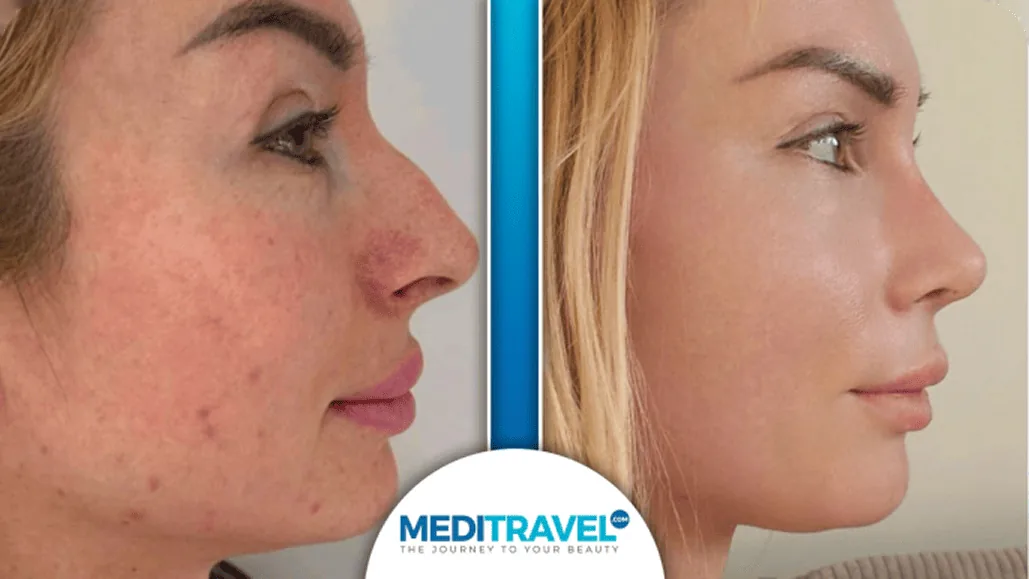
Rhinoplasty
Istanbul Aesthetic Centre
Nose Correction

 2,600 $14,700 $
From
To
 Trusted by10,000+Save up to70%Renowned ClinicsPersonal SupportFull organisation12 Months Aftercare
With Meditravel you will findyour ideal clinic - worldwide
 Trusted by10,000+Save up to70%Renowned ClinicsPersonal SupportFull organisation12 Months Aftercare
From
To
Benefits of Rhinoplasty:
Rhinoplasty improves the shape and proportions of the nose and can also improve breathing.
Benefits of Rhinoplasty:
Rhinoplasty improves the shape and proportions of the nose and can also improve breathing.
From your arrival at the clinic to
your recovery, you will be supported
throughout your journey.
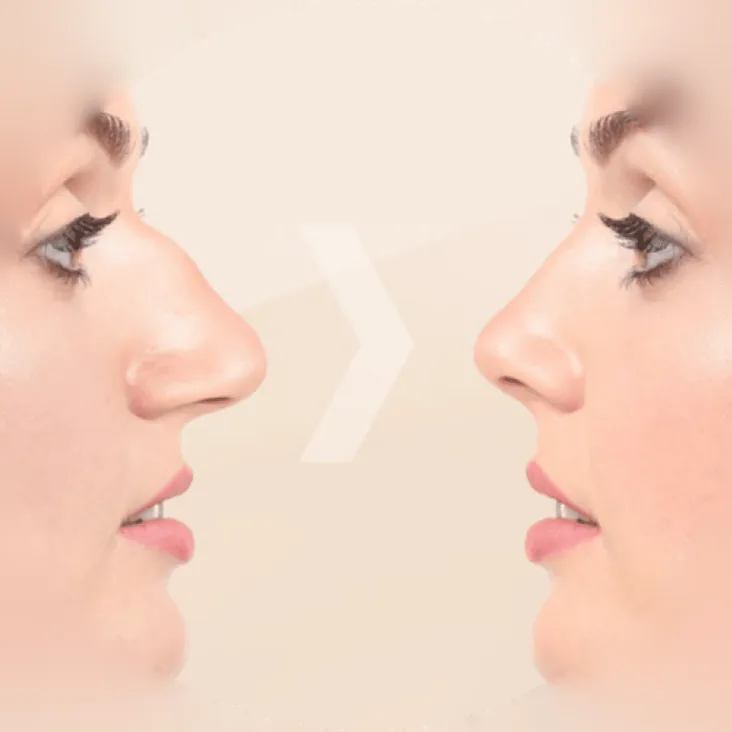
Rhinoplasty
Istanbul Aesthetic Centre
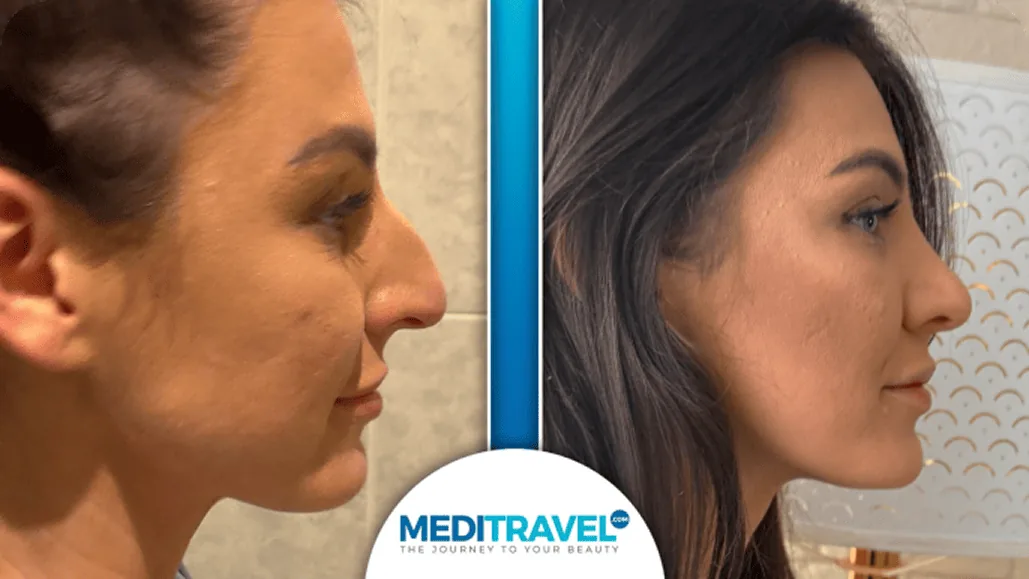
Rhinoplasty
Istanbul Aesthetic Centre
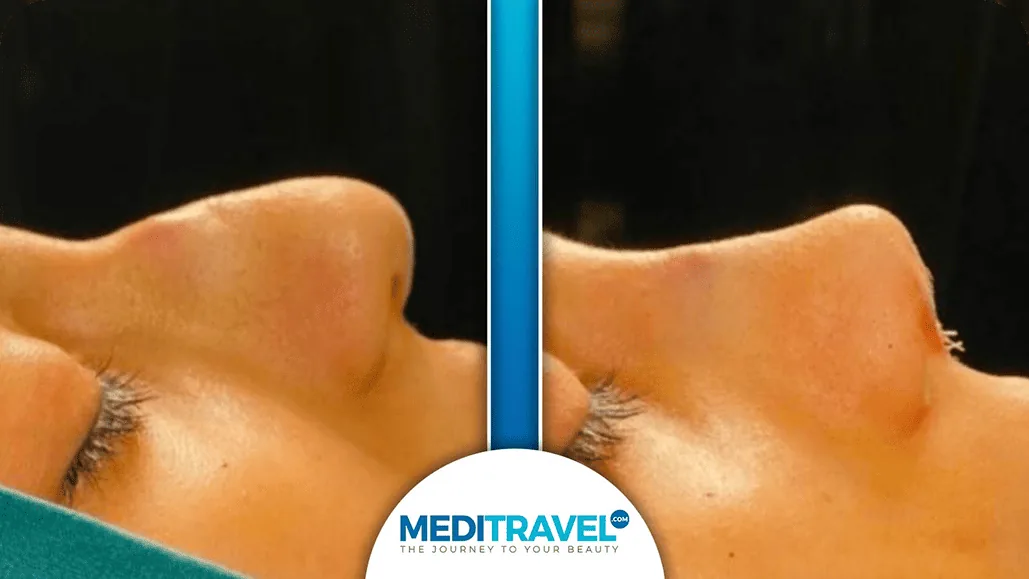
Rhinoplasty
AK Clinic
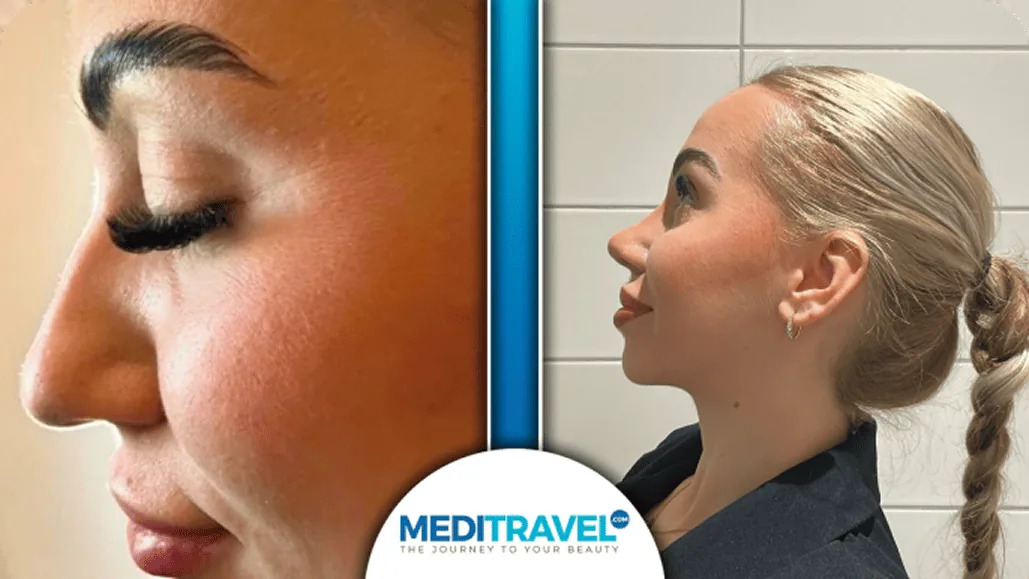
Rhinoplasty
Istanbul Aesthetic Centre
Rhinoplasty
Istanbul Aesthetic Centre
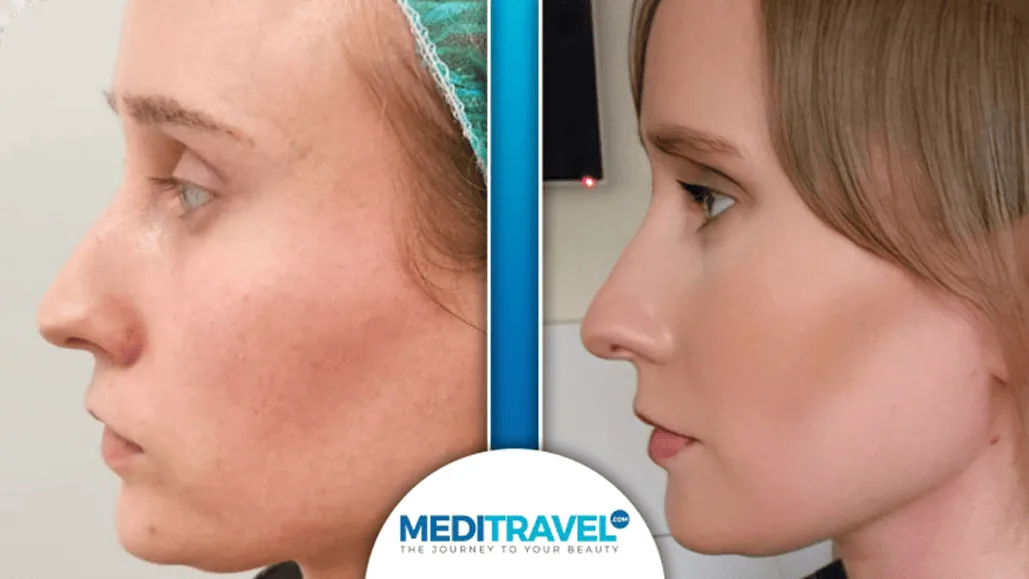
Rhinoplasty
Istanbul Aesthetic Centre
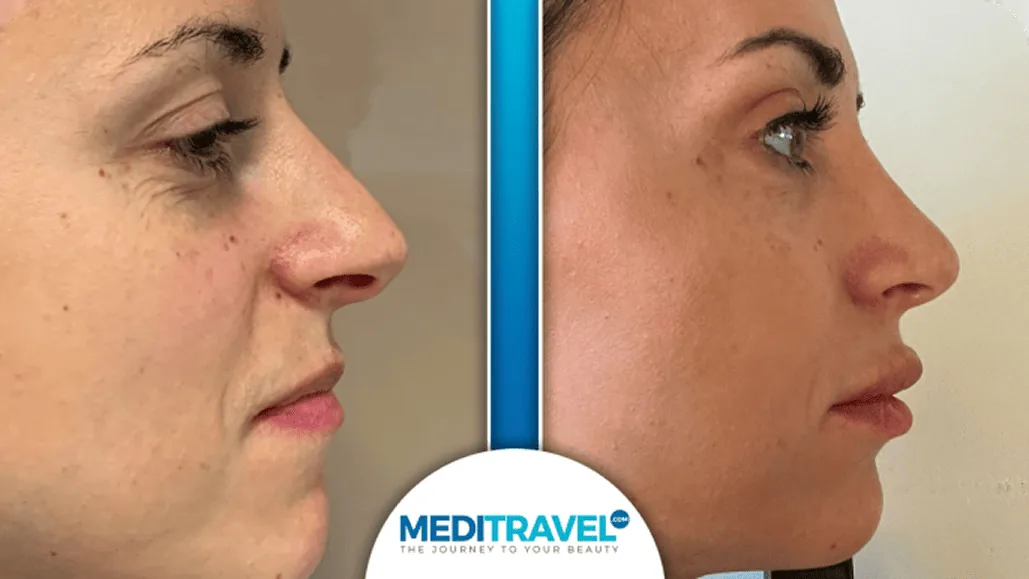
Rhinoplasty
Istanbul Aesthetic Centre
Our Offers
*Prices vary by country and clinic
 RhinoplastyTranslator1 night in the clinicDrugs / MedicationBlood TestQuality CertificatePersonal AftercareLuxurious HotelTransfersFlight Tickets
Our Offers
*Prices vary by country and clinic
Discounts
Friends - come with a friend

Students
*people below 25 years

Influencers

Group trips

Discounts
Friends - come with a friend

Students
*people below 25 years

Influencers

Group trips

Whether health insurance covers the costs, either fully or partially, depends on the medical necessity of the rhinoplasty. Patients should contact their health insurance prior to their rhinoplasty.

Covered
Corrections of the nasal septum due to breathing difficulties are often covered by health insurance.
Not Covered
Nose Corrections for purely aesthetic reasons are generally not covered by health insurance.

Whether health insurance covers the costs, either fully or partially, depends on the medical necessity of the rhinoplasty. Patients should contact their health insurance prior to their rhinoplasty.
Covered
Corrections of the nasal septum due to breathing difficulties are often covered by health insurance.
Not Covered
Nose Corrections for purely aesthetic reasons are generally not covered by health insurance.

Better breathing
Improved facial proportions and symmetry
Correction of nose deformations at birth
Repair of an altered nose from injury or trauma
Alleviation of sinusitis or other sinus issues
Better sleep in case of a deviated septum
Permanent results for lifelong improvement
Increased self-confidence and self-esteem
Beautiful people have more success
Benefits of a Nose Correction

Better breathing
Improved facial proportions and symmetry
Correction of nose deformations at birth
Repair of an altered nose from injury or trauma
Alleviation of sinusitis or other sinus issues
Better sleep in case of a deviated septum
Permanent results for lifelong improvement
Increased self-confidence and self-esteem
Beautiful people have more success
Excellent
Based on 1217 reviews
4.8
average rating

Olimpia bb
2026-10-09

I had my nose job with Dr. Yavuz and I wholeheartedly recommend him! He's a wonderful specialist with extensive experience and a keen eye for aesthetics, and the results are incredibly natural. I'd also like to thank Meditravel for the overall organization of the trip. Everything was taken care of down to the last detail, and the on-site care was top-notch, making me feel completely safe and comfortable from start to finish. I wholeheartedly recommend both Dr. Yavuz and working with Meditravel.

Patryk Ławniczek
2026-10-09
I'm satisfied with Meditravel's services. The communication and the entire organization are top-notch. If anyone is still hesitant about a hair transplant, I highly recommend them! The hotel is of a high standard, and the clinic where I had the procedure exceeded my expectations; it's clear that the specialists work there. I'm a few days after my procedure and it's healing beautifully. I can't wait to see the results! :)

krzysiu Studzinski
2026-10-08
What can I say, I'm happy that first of all I gave it, otherwise I went under the knife to Omar, I wouldn't go to anyone else, and above all, I'm very grateful to Meditravel, first of all, because there's no other way to get to you, so I'm happy, what can I say, and I heartily recommend it to everyone, efficiently, and the effect is as you can see in the photo.

Kornel Bosakowski
2026-10-08
Before signing the contract, a response is provided the same day. After signing the contract, you'll wait a few days for a response to any questions related to the upcoming procedure. Overall, this is a positive.

Maciej Sardakowski
2026-10-08
I would wholeheartedly recommend MediTravel to anyone considering getting their teeth done in Turkey. I'm truly EXTREMELY pleased with the overall result! Honestly, I didn't expect such a dramatic effect. My teeth turned out beautifully, and the final result exceeded my expectations. I'm truly impressed! The doctors are of the highest standard – complete professionalism, meticulous attention to detail, and a great approach to patients. The clinic is perfect, modern, and everything is organized to the highest standard. The service also deserves huge praise. From the very beginning, everything ran smoothly, professionally, and in a very pleasant atmosphere. You truly feel cared for. The entire stay and the teeth restoration process were fantastic. I'm very happy I chose MediTravel. The end result is a huge, positive surprise for me. Thank you to the entire MediTravel team for their professionalism, excellent care, and beautiful smile! I'm extremely satisfied and can wholeheartedly recommend you! ⭐⭐⭐⭐⭐

Michał Jurkiewicz
2026-10-07
The stay and care are 100/10. I recommend it to everyone, you won't find better!!!

Damian Tylutki
2026-10-03
High-quality consultation and advice. Thank you.

Mehmet Seyfettin Atılğan
2026-10-02
Good

Rafał Wyroslak
2026-10-01
Everything is at a very high level

BartoszRo
2026-09-30
I wholeheartedly recommend Meditravel! ❤️ From start to finish, everything was perfectly organized and planned. Everything was top-notch. I felt well-cared for throughout the entire trip; contact and assistance were always available when I needed them. The procedure itself went very smoothly, the staff was professional, friendly, and explained everything calmly. I've already had the procedure and have returned home—I feel very good, everything is fine, and I'm truly happy I chose Meditravel. I thank the entire team for their care, approach, and excellent organization. Now all I have to do is wait for the results 😊 I definitely recommend them to everyone wholeheartedly ❤️ ⭐⭐⭐⭐⭐
Excellent
Based on 1217 reviews
4.8
average rating
Olimpia bb
2026-10-09
I had my nose job with Dr. Yavuz and I wholeheartedly recommend him! He's a wonderful specialist with extensive experience and a keen eye for aesthetics, and the results are incredibly natural. I'd also like to thank Meditravel for the overall organization of the trip. Everything was taken care of down to the last detail, and the on-site care was top-notch, making me feel completely safe and comfortable from start to finish. I wholeheartedly recommend both Dr. Yavuz and working with Meditravel.
Patryk Ławniczek
2026-10-09
I'm satisfied with Meditravel's services. The communication and the entire organization are top-notch. If anyone is still hesitant about a hair transplant, I highly recommend them! The hotel is of a high standard, and the clinic where I had the procedure exceeded my expectations; it's clear that the specialists work there. I'm a few days after my procedure and it's healing beautifully. I can't wait to see the results! :)
krzysiu Studzinski
2026-10-08
What can I say, I'm happy that first of all I gave it, otherwise I went under the knife to Omar, I wouldn't go to anyone else, and above all, I'm very grateful to Meditravel, first of all, because there's no other way to get to you, so I'm happy, what can I say, and I heartily recommend it to everyone, efficiently, and the effect is as you can see in the photo.
Kornel Bosakowski
2026-10-08
Before signing the contract, a response is provided the same day. After signing the contract, you'll wait a few days for a response to any questions related to the upcoming procedure. Overall, this is a positive.
Maciej Sardakowski
2026-10-08
I would wholeheartedly recommend MediTravel to anyone considering getting their teeth done in Turkey. I'm truly EXTREMELY pleased with the overall result! Honestly, I didn't expect such a dramatic effect. My teeth turned out beautifully, and the final result exceeded my expectations. I'm truly impressed! The doctors are of the highest standard – complete professionalism, meticulous attention to detail, and a great approach to patients. The clinic is perfect, modern, and everything is organized to the highest standard. The service also deserves huge praise. From the very beginning, everything ran smoothly, professionally, and in a very pleasant atmosphere. You truly feel cared for. The entire stay and the teeth restoration process were fantastic. I'm very happy I chose MediTravel. The end result is a huge, positive surprise for me. Thank you to the entire MediTravel team for their professionalism, excellent care, and beautiful smile! I'm extremely satisfied and can wholeheartedly recommend you! ⭐⭐⭐⭐⭐
Michał Jurkiewicz
2026-10-07
The stay and care are 100/10. I recommend it to everyone, you won't find better!!!
Damian Tylutki
2026-10-03
High-quality consultation and advice. Thank you.
Mehmet Seyfettin Atılğan
2026-10-02
Good
Rafał Wyroslak
2026-10-01
Everything is at a very high level
BartoszRo
2026-09-30
I wholeheartedly recommend Meditravel! ❤️ From start to finish, everything was perfectly organized and planned. Everything was top-notch. I felt well-cared for throughout the entire trip; contact and assistance were always available when I needed them. The procedure itself went very smoothly, the staff was professional, friendly, and explained everything calmly. I've already had the procedure and have returned home—I feel very good, everything is fine, and I'm truly happy I chose Meditravel. I thank the entire team for their care, approach, and excellent organization. Now all I have to do is wait for the results 😊 I definitely recommend them to everyone wholeheartedly ❤️ ⭐⭐⭐⭐⭐
“I am so happy to have finally full hair.”
“Great team and smooth journey!”
“Everything was organized perfectly.”
“Highly recommend Meditravel.”
“The clinic choice was ideal.”
“Highly recommend Meditravel.”
“The clinic choice was ideal.”
“Highly recommend Meditravel.”
“The clinic choice was ideal.”
What our customers say
“I am so happy to have finally full hair.”

Don’t miss any exclusive offers!
Join our Newsletter:
Myths about Nose Corrections
Myth 1
Rhinoplasty results are instantly visible
Reality: The final result of rhinoplasty is only visible once the healing process is completely finished. This is the case after 1 to 2 years. Therefore some patience is required. Most of the facial swelling and bruising will be gone after around 14 days. After 3 months most of the nasal swelling will be subsided. Then the healing process will start to slow down.
Myth 2
Rhinoplasty only corrects aesthetic concerns.
Reality: Yes, it is true that rhinoplasty is very popular for aesthetic reasons. Still many people also decide for a rhinoplasty to improve nasal functions in case of breathing issues. Mostly this is done via septoplasty.
Myth 3
Rhinoplasty results always look fake
Reality: The majority of patients aim to get a natural looking nose, as their original nose is unproportional to the rest of their face. Modern techniques like preservation rhinoplasty don’t require the nasal bone to be cracked. This preserves the nasal bone and cartilages and results in a more natural look.
Myth 4
Is any nose shape possible with rhinoplasty?
Reality: The result of a rhinoplasty is completely unique and depends on the patient’s nasal characteristics. The nasal anatomy varies as much as the skin type, tissue thickness and bone structure. Therefore not every nose is possible for every person. The goal of a rhinoplasty should be to find the ideal nose for the facial proportions of each patient. And this leads to the most satisfying results.
Myth 5
Rhinoplasty is only for young people
Reality: In general there is no upper age limit for a rhinoplasty, as long as the patient is in good overall health. Improving breathing issues should be considered for any age. A rhinoplasty for aesthetic reasons is more popular for younger people, but that should not discourage from reaching own beauty goals.
Myth 6
The recovery process is extremely painful
Reality: In general a rhinoplasty is considered pain-free. During the operation a general anesthesia suppresses any pain. The recovery is also free of pain. Light headache and discomfort can occur in the first days.
Myth 7
Rhinoplasty leaves noticeable scars
Reality: A rhinoplasty is performed either with the closed or open rhinoplasty technique. In a closed rhinoplasty the incisions are made inside the nose, leaving no external scars. In an open rhinoplasty the incision is made right under the columella. The scar is normally not visible and fades after about 1 year.
Myth 8
Any plastic surgeon can perform rhinoplasty
Reality: It is important to choose a plastic surgeon who is specialized and experienced in facial and nasal plastic surgery. A rhinoplasty is a complex surgery and its results are directly visible. Meditravel offers its patients only surgeons who have much experience in rhinoplasty.
Ready for your Nose Correction?
Nose Correction
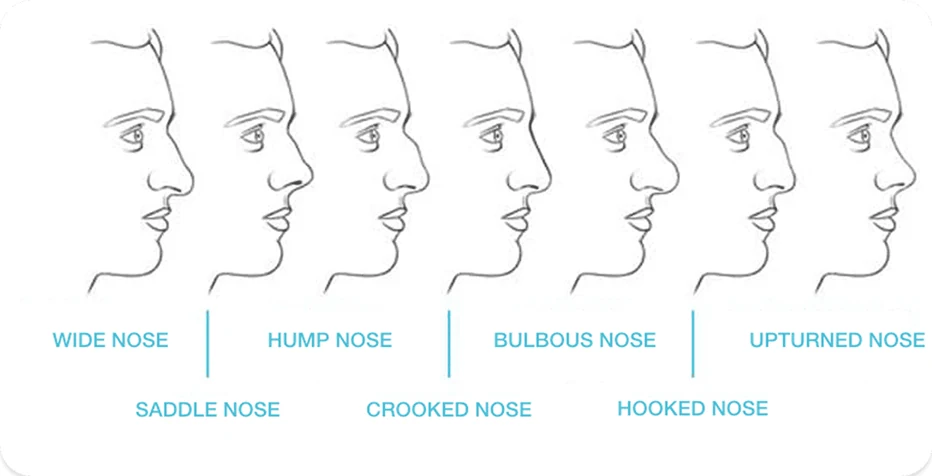
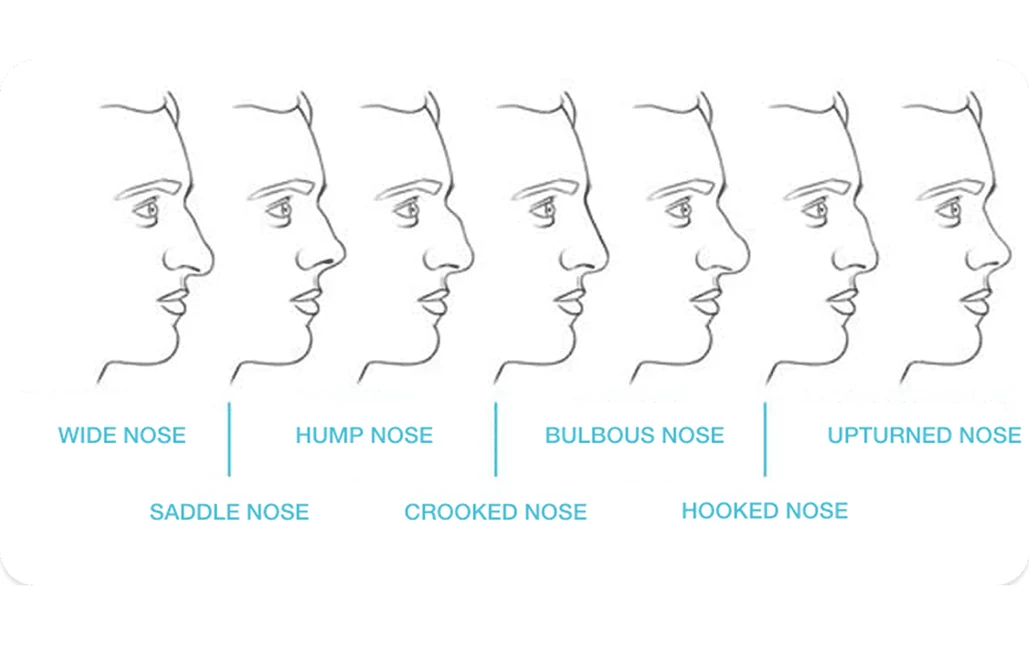
There is a variety of different nose deformities. Correction of the shape is particularly popular for the following indicators:
Wide Nose

A wide nose has a broad nasal bridge and wide nostrils. It's often characterized by a larger appearance that can dominate the face. The wideness can be in the nostrils, the bridge, or both. It is often influenced by genetic and ethnic backgrounds.
Saddle Nose (Snub nose)
A saddle nose is characterized by a noticeable dip in the nasal bridge. This forms a saddle-like appearance.
The saddle nose can be caused by trauma, previous surgeries or medical diseases (like granulomatosis with polyangiitis).

Hump Nose (Aquiline)

A hump nose is characterized by a prominent hump on the nasal bridge. It is one of the most common reasons for a rhinoplasty. The deformity can result from genetic factors or injuries.
Crooked Nose (Unsymmetrical)
The nasal bridge or septum are not symmetrical. Therefore the nose appears to be laterally shifted or crooked. A crooked nose is caused by development issues or injury.

Bulbous Nose

A bulbous nose is characterized by a rounded, enlarged nasal tip. The bulbous tip appears disproportionately large in relation to the rest of the nose and the face. The bulbous nose can either occur from a thicker underlying nasal cartilage, an excess in tissue at the tip of the nose or from inflammation of the nasal skin.
Hooked Nose
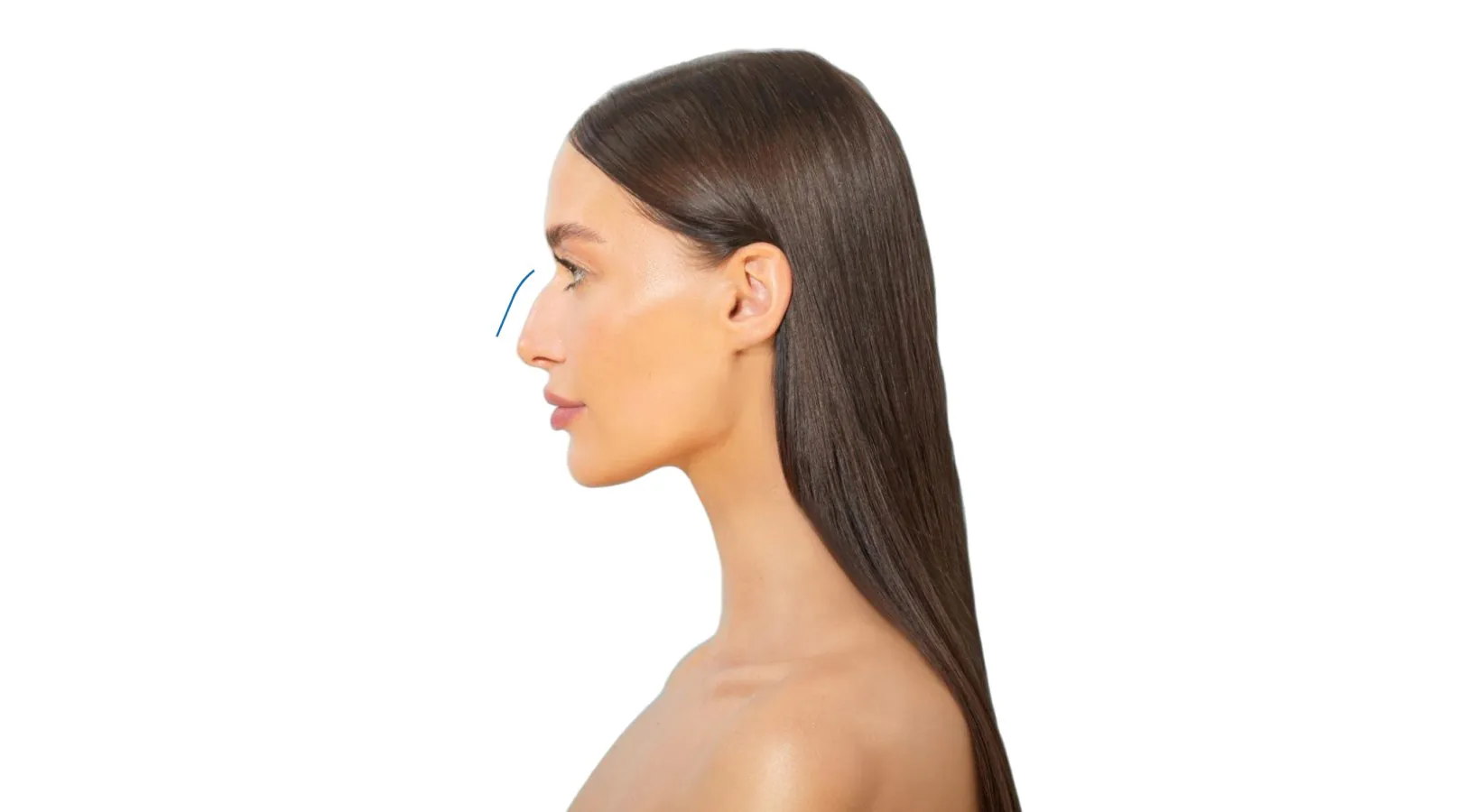
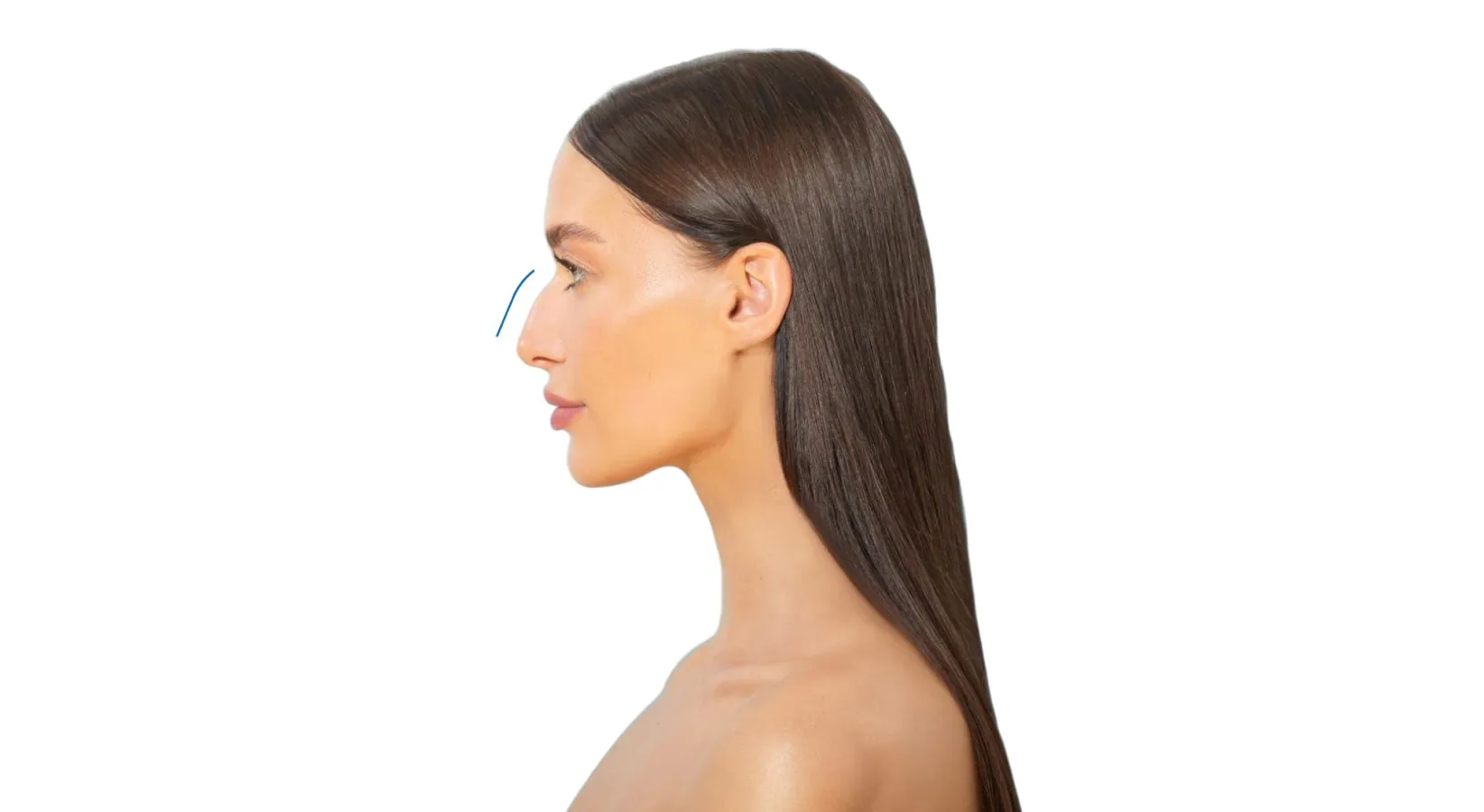
A hooked nose is characterized by a prominent bump on the nasal bridge, giving it a curved or hook-like appearance. This is particularly noticeable when viewed in profile. The bump often leads to a downward-pointing nasal tip. A hooked nose is common in various ethnicities and hereditary lines.

Upturned Nose

An upturned nose is characterized by a nasal tip that is tilted upwards more than an average nose. This typically leads to a shorter nasal profile. Depending on the degree of upturn, the nostrils can expose more than aesthetically preferred.
A nose with a short length and a small, slightly upturned tip, is called “snub nose”. This is often perceived as cute and associated in various cultural aesthetics with a youthful look.
Nose Correction
There is a variety of different nose deformities. Correction of the shape is particularly popular for the following indicators:
Before
After
A wide nose has a broad nasal bridge and wide nostrils. It's often characterized by a larger appearance that can dominate the face. The wideness can be in the nostrils, the bridge, or both. It is often influenced by genetic and ethnic backgrounds.
Before
After
A saddle nose is characterized by a noticeable dip in the nasal bridge. This forms a saddle-like appearance.
The saddle nose can be caused by trauma, previous surgeries or medical diseases (like granulomatosis with polyangiitis).
Before
After
A hump nose is characterized by a prominent hump on the nasal bridge. It is one of the most common reasons for a rhinoplasty. The deformity can result from genetic factors or injuries.
Before
After
The nasal bridge or septum are not symmetrical. Therefore the nose appears to be laterally shifted or crooked. A crooked nose is caused by development issues or injury.
Before
After
A bulbous nose is characterized by a rounded, enlarged nasal tip. The bulbous tip appears disproportionately large in relation to the rest of the nose and the face. The bulbous nose can either occur from a thicker underlying nasal cartilage, an excess in tissue at the tip of the nose or from inflammation of the nasal skin.
Before
After
A hooked nose is characterized by a prominent bump on the nasal bridge, giving it a curved or hook-like appearance. This is particularly noticeable when viewed in profile. The bump often leads to a downward-pointing nasal tip. A hooked nose is common in various ethnicities and hereditary lines.
Before
After
An upturned nose is characterized by a nasal tip that is tilted upwards more than an average nose. This typically leads to a shorter nasal profile. Depending on the degree of upturn, the nostrils can expose more than aesthetically preferred.
A nose with a short length and a small, slightly upturned tip, is called “snub nose”. This is often perceived as cute and associated in various cultural aesthetics with a youthful look.
Nose Correction
Plan your
Nose Correction
Meditravel will find the right clinic and prepare you properly for your Nose Correction.
Get your
Nose Correction
Meditravel will organize your entire journey and support you at
each step.
Enjoy having
a beautiful Nose
With Meditravel you will get the result you wish to have.


“Meditravel will
support you from
the preparation
until your
final result.”

Nose Correction
Nose Correction


Plan your
Nose Correction
Meditravel will find the right clinic and prepare you properly for your Nose Correction.
Get your
Nose Correction
Meditravel will organize your entire journey and support you at each step.
Enjoy having
a beautiful Nose
With Meditravel you will get the result you wish to have.
“Meditravel will support you from the preparation until your final result.”


Nose Correction
Arrival Day
Flight to the country of the clinic
Pick-Up at the Airport

Blood-Test in the clinic

Drop-Off at the hotel

Free-time (Sight seeing)

Operation Day
Drive from hotel to clinic

Live Consultation

Operation

Giving of after-care products

Drive to the hotel
Check-Up Day
Drive from hotel to clinic
Check-Up

Drive to the hotel
Return Trip
Drive to the airport
Return Flight


Flight to the country of the clinic

Pick-Up at the Airport

Blood-Test in the clinic

Drop-Off at the hotel

Free-time (Sight seeing)
Nose Correction
Here is how to prepare for your Nose Correction

Inform your medical consultant, if you have a slight infection (runny nose, flu) in the last three weeks prior to your rhinoplasty.

Fasting for at least 8 hours prior to your rhinoplasty is important (no solid foods/drinks).

Drinking of water is allowed 2 to 8 hours prior to your nose correction.

Don’t use any lotions, creams, or deodorant before your surgery.

Be well-rested before your nose correction.

Stop nicotine (smoking, vaping) at least 2 weeks before your nose surgery to reduce healing complications.

Don’t drink any alcohol for 1 week prior to your nose surgery.

Have your last coffee, tea or energy drink 24 hours before your nose surgery.

Don’t take any blood-thinning medication (e.g. Aspirin, Ibuprofen) for 10 days prior to your nose surgery.

Avoid for 2 weeks supplements/herbs that may thin blood (Ginkgo, Ginseng, Garlic, Vitamin E or Omega-3s).

Organize a support person for the first 24–48 hours after your nose surgery.
What to consider before Nose Correction
Requirements

Minimum age of 18 (exceptions possible for minors, once facial growth is complete).
Have stable reasons for your rhinoplasty.
Be realistic about the expected result.
Have emotional maturity.
Health
Inform your advisor about your medical history, past surgeries, medications, chronic sinusitis, allergies or breathing difficulties.
Be in good overall health, without any active infections or untreated illnesses.
Follow the Meditravel guidance on how to prepare your body for surgery (e.g. smoking, alcohol consumption).
Consider having a blood test before traveling to ensure you’re healthy.
Research
Compare prices, but focus on quality over the lowest cost. It’s still a medical procedure.
Find the right clinic. Meditravel is specialized in helping you with this (for free).
Discuss your goals, expectations, and questions during your consultation.
Learn about preparation, recovery, and possible complications.
Planning
Plan the timing of your rhinoplasty properly (e.g. pregnancy, stressful times during work or studies).
Depending on your job, get enough time off work for a proper recovery.
Consider travel requirements (e.g. Visa request).
Choose flight times that allow relaxed travel (Don’t arrive last minute).
Nose Correction
Here is how to prepare for your Nose Correction

Inform your medical consultant, if you have a slight infection (runny nose, flu) in the last three weeks prior to your rhinoplasty.
What to consider before
Nose Correction
Minimum age of 18 (exceptions possible for minors, once facial growth is complete).
Have stable reasons for your rhinoplasty.
Be realistic about the expected result.
Have emotional maturity.
If you have any questions regarding your recovery, contact anytime your Meditravel consultant.
The recovery process for nose correction varies by:
Individual healing capabilitiesAdherence to post-operative care instructionsExtent of the procedureDay 1-3:
Day 4-6:
1 week:
2-3 weeks:
1 month:
6 weeks - 3 months:
3-6 months:
6-12 months:
12-24 months:

*For a proper recovery, it is important to follow all given instructions carefully.
Back to work
After 7-14 days (office work)
Glasses
After 2-3 months
Final result
After 12-24 months
Nose Correction
If you have any questions regarding your recovery, contact anytime your Meditravel consultant.
The recovery process for
nose correction varies by:
Individual healing capabilitiesAdherence to post-operative care instructionsExtent of the procedureDay 1-3:
Day 4-6:
1 week:
2-3 weeks:
1 month:
6 weeks - 3 months:
3-6 months:
6-12 months:
12-24 months:

*For a proper recovery, it is important to follow all given instructions carefully.
Back to work
After 7-14 days (office work)
Glasses
After 2-3 months
Final result
After 12-24 months
Rest much to promote recovery. Especially directly after your operation.
Drink at least 2-3 liters of water daily to achieve optimal healing.
Follow a healthy and nutrient rich diet (Avoid processed food).
Avoid alcohol for at least 1-2 weeks.
Don’t smoke / vape for 4-6 weeks.
Take medications as prescribed.
Light walking is encouraged after a few days to promote blood circulation.
Moisturize your nose with a salt water nasal spray 3 times daily until the swelling goes down.
Sleep on your back with an elevated head for at least 6 weeks.
Avoid blowing your nose for 10-14 days.
Don’t tilt your head down or to the side for 10 days.
Apply a cold compress on the cheeks (not directly on the nose).
Minimize face movements in the first week (speak little, chew, laugh).
Avoid touching/pressure on your nose.
Normal Sports is possible after 6 weeks. Intense team sports after 3 months.
Tape your nose at night for as long as possible.
Don’t wear any glasses for 2-3 months.
Avoid heat (e.g. sauna, strong sun) for at least 2 months.
Ready for your Nose Correction?
Learn More
Nose Correction
Nose Correction
“Here you will learn everything about nose correction.”
Nose Correction
Septoplasty
A large number of people have breathing problems due to a deviated nasal septum
(the part that divides the two nostrils).
A simple intervention, called “Septoplasty” is the ideal solution.
Benefits of Septoplasty:

Better airflow
Easier breathing
More vital energy
Better performance during sports

Nose Correction

Septoplasty
A large number of people have breathing problems due to a deviated nasal septum
(the part that divides the two nostrils).
A simple intervention, called “Septoplasty” is the ideal solution.
Benefits of Septoplasty:
 Better airflowEasier breathingMore vital energyBetter performance during sports
Nose Correction
The Nose
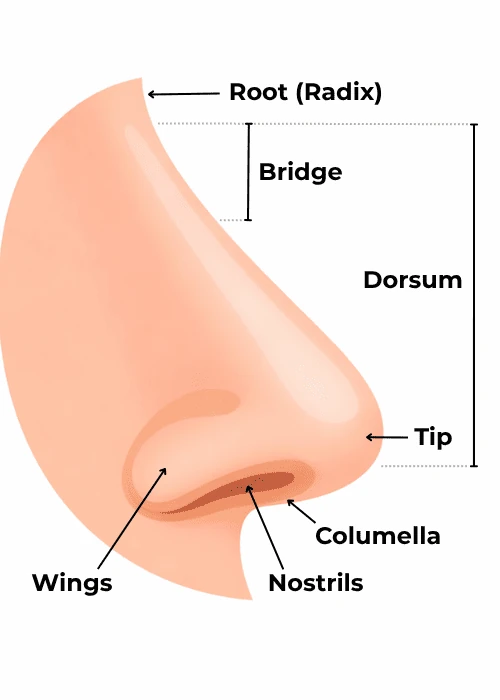
The outer nose begins with the root, located between the eyes. The dorsum forms the line down to the tip, while the upper bony part is called the bridge. On each side, the wings shape the nostrils for airflow and are separated by a small strip of tissue called the columella.
Parts of the Nose
Bone Structure
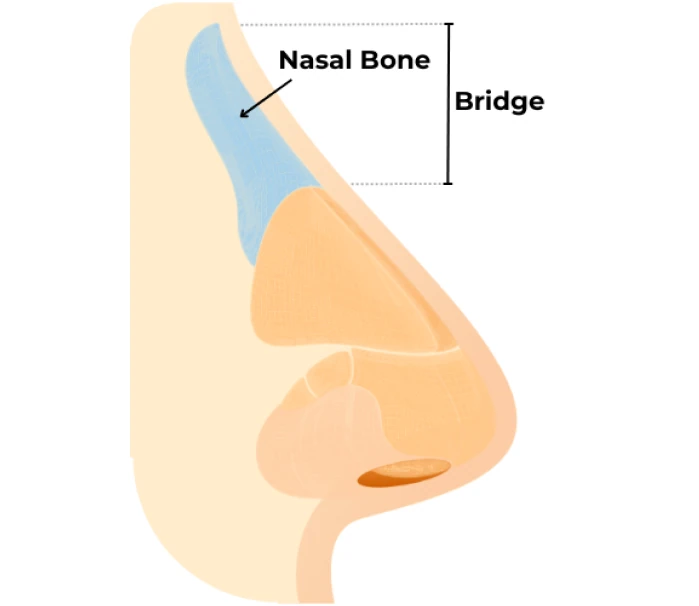
The nasal bones form the hard upper part of the nose and support its overall shape. The visible part is called “Bridge”.
Cartilage vs. Tissue Thickness
Important:
Some people are prone to stronger scar tissue formation, which can have an impact on the final result.

Cartilage
Cartilage is the firm but flexible structure that gives the sides and lower part of the nose their shape and support.
Thick cartilage can be harder to reshape precisely during rhinoplasty, but it keeps the new shape better over time. Recovery may take longer and the effect of rhinoplasty may appear less.
Thin cartilage is easier to sculpt but may not hold the new shape as firmly.
After rhinoplasty: Scar tissue forms around the cartilage, which can make the nose feel firmer and look thicker. Scar tissue reduces and softens over time (up to 18 months).
Tissue
Tissue is the soft layer that covers the cartilage and bone, protecting the nose and giving it its flexibility and movement.
Thick tissue can make the final result look softer and less defined. Swelling may last longer.
Thin tissue allows for clearer definition, but can also reveal small irregularities and edges more easily.
After rhinoplasty: Scar tissue forms under the skin, especially around the tip. This can make the nose feel firmer and look thicker. Scar tissue reduces and softens over time (up to 18 months).
Nose Correction
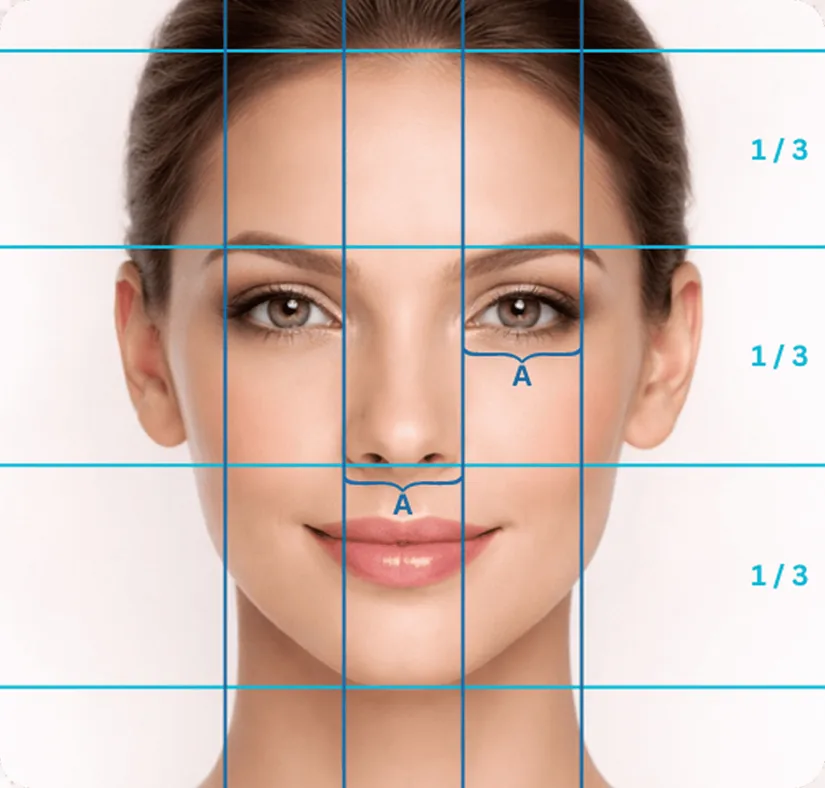
Width of the Nose
The ideal width of the nose is equal to the width of an eye.
Nose Correction
The Nose
The outer nose begins with the root, located between the eyes. The dorsum forms the line down to the tip, while the upper bony part is called the bridge. On each side, the wings shape the nostrils for airflow and are separated by a small strip of tissue called the columella.
Parts of the Nose
Bone Structure
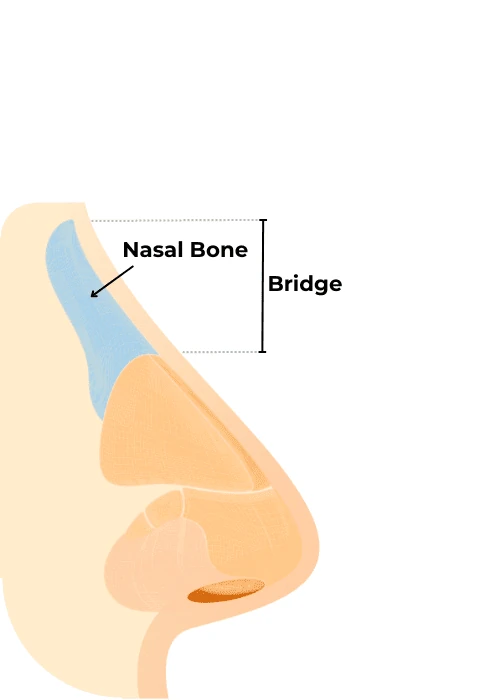
The nasal bones form the hard upper part of the nose and support its overall shape. The visible part is called “Bridge”.
Cartilage
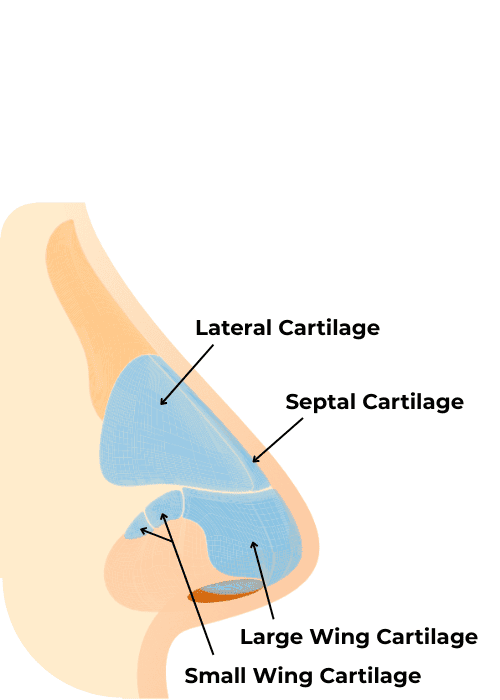
Cartilage is the firm but flexible structure that gives the sides and lower part of the nose their shape and support.
Nostrils
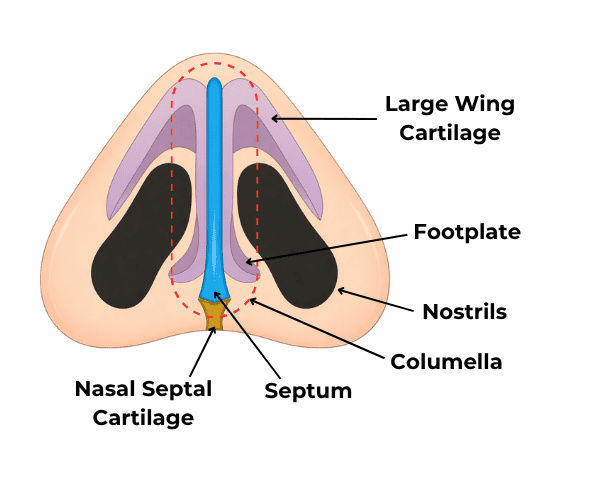
The nostrils are the two openings that allow air to enter and leave the nose. They are divided by the columella.
Turbinates
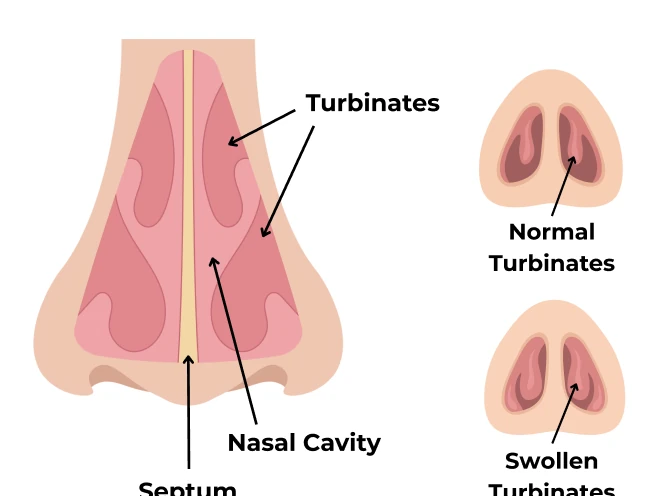
The nasal turbinates prepare the air you breathe by warming, humidifying, and filtering it before it reaches the lungs.
Cartilage vs. Tissue Thickness
Important:
Some people are prone to stronger scar tissue formation, which can have an impact on the final result.

Cartilage
Cartilage is the firm but flexible structure that gives the sides and lower part of the nose their shape and support.
Thick cartilage can be harder to reshape precisely during rhinoplasty, but it keeps the new shape better over time. Recovery may take longer and the effect of rhinoplasty may appear less.
Thin cartilage is easier to sculpt but may not hold the new shape as firmly.
After rhinoplasty: Scar tissue forms around the cartilage, which can make the nose feel firmer and look thicker. Scar tissue reduces and softens over time (up to 18 months).
Tissue
Tissue is the soft layer that covers the cartilage and bone, protecting the nose and giving it its flexibility and movement.
Thick tissue can make the final result look softer and less defined. Swelling may last longer.
Thin tissue allows for clearer definition, but can also reveal small irregularities and edges more easily.
After rhinoplasty: Scar tissue forms under the skin, especially around the tip. This can make the nose feel firmer and look thicker. Scar tissue reduces and softens over time (up to 18 months).
Nose Correction
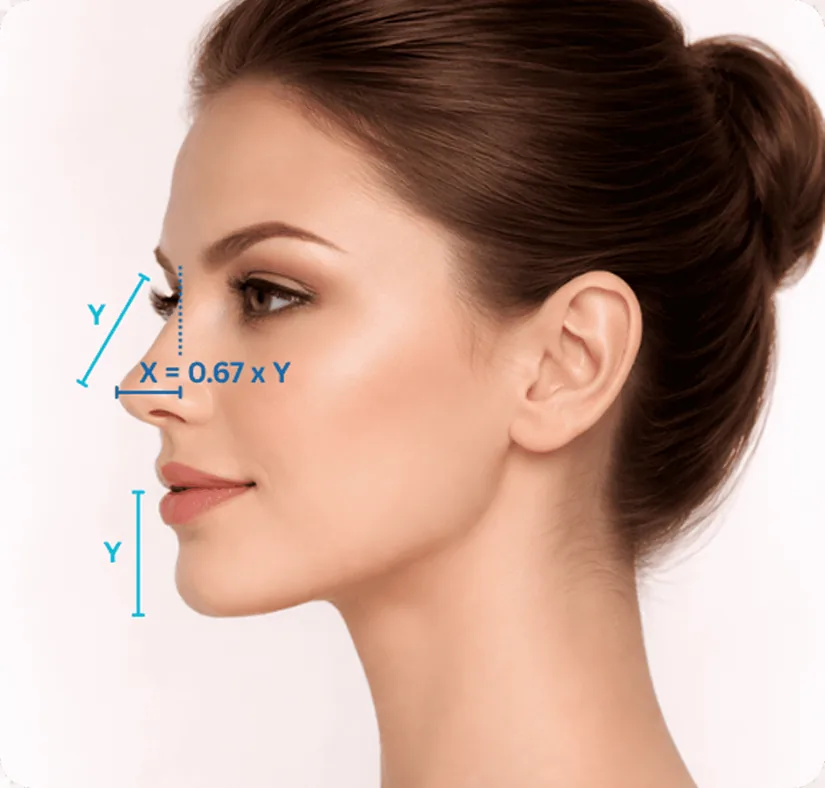
Width of the Nose
The ideal width of the nose is equal to the width of an eye.
Size of the Nose
The ideal length of the nose is equal to the distance from the chin to the midpoint of the lips.
Nose Correction
Septoplasty

Before
After
Septoplasty straightens the nasal septum - the wall between the two nostrils. This improves airflow and helps relieve breathing problems caused by a deviated septum.
Ideal for: People with chronic nasal blockage, difficulty breathing through the nose, or frequent sinus infections due to a crooked septum.
Turbinectomy

Before
After
Turbinectomy reduces the size of the nasal turbinates - narrow bone shells covered by soft tissue that help to warm, moisturize, and filter the air you breathe. Allergies and irritations can increase their size and lead to chronic airflow blockage.
Ideal for: People who suffer from chronic nasal congestion and breathing problems due to enlarged turbinates, especially when sprays or medication no longer help.
Tip Rhinoplasty

Tip Rhinoplasty reshapes or refines the nasal tip by sculpting or partially removing cartilage tissue. The nasal bridge is not altered.
Ideal for: People who have unproportional cartilage tissue at the tip of their nose. It will balance nasal proportions and harmonize the nose with the rest of the patient’s face.
Structural Rhinoplasty
Structural Rhinoplasty reshapes the nasal bones or cartilage - the “framework” of the nose. The nasal bridge, width, alignment, or structural deformities are corrected. It can also improve breathing.
Ideal for: People who want to change the overall shape or size of their nose. It is typically performed to remove humps, straighten a crooked nose, or fill structural gaps.

Augmentation Rhinoplasty
Augmentation Rhinoplasty increases the size or projection of the nose. It is typically used to enhance the nasal bridge or tip for better facial balance or to reach certain beauty desires.
Ideal for: People with a flat, low, or under-projected nose, or those who have had previous surgery or injury. It provides a stronger, more defined nasal structure.

Before
After
Nose Correction
Before
After
Septoplasty straightens the nasal septum - the wall between the two nostrils. This improves airflow and helps relieve breathing problems caused by a deviated septum.
Ideal for: People with chronic nasal blockage, difficulty breathing through the nose, or frequent sinus infections due to a crooked septum.
Duration:
45-90 min
Hospital stay:
0 nights
Anesthesia:
Sedation or General Anesthesia
Before
After
Turbinectomy reduces the size of the nasal turbinates - narrow bone shells covered by soft tissue that help to warm, moisturize, and filter the air you breathe. Allergies and irritations can increase their size and lead to chronic airflow blockage.
Ideal for: People who suffer from chronic nasal congestion and breathing problems due to enlarged turbinates, especially when sprays or medication no longer help.
Duration:
20-45 min
Hospital stay:
0 nights
Anesthesia:
Sedation or General Anesthesia
Tip Rhinoplasty reshapes or refines the nasal tip by sculpting or partially removing cartilage tissue. The nasal bridge is not altered.
Ideal for: People who have unproportional cartilage tissue at the tip of their nose. It will balance nasal proportions and harmonize the nose with the rest of the patient’s face.
Duration:
45-90 min
Hospital stay:
0 nights
Anesthesia:
Sedation or General Anesthesia
Structural Rhinoplasty reshapes the nasal bones or cartilage - the “framework” of the nose. The nasal bridge, width, alignment, or structural deformities are corrected. It can also improve breathing.
Ideal for: People who want to change the overall shape or size of their nose. It is typically performed to remove humps, straighten a crooked nose, or fill structural gaps.
Duration:
2-3 hours
Hospital stay:
1 night
Anesthesia:
General Anesthesia
Before
After
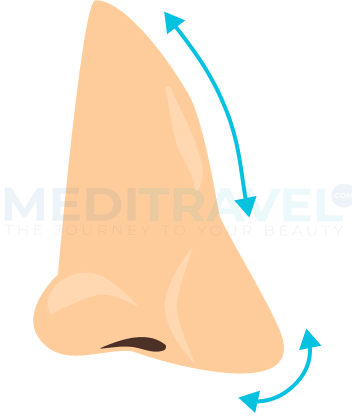
Augmentation Rhinoplasty increases the size or projection of the nose. It is typically used to enhance the nasal bridge or tip for better facial balance or to reach certain beauty desires.
Ideal for: People with a flat, low, or under-projected nose, or those who have had previous surgery or injury. It provides a stronger, more defined nasal structure.
Duration:
1.5-3 hours
Hospital stay:
1 night
Anesthesia:
General Anesthesia
Nose Correction
Exonasal rhinoplasty

Open rhinoplasty is a nose surgery technique in which the surgeon makes a small incision at the base of the nose, between the nostrils. This allows the skin to be lifted, making the entire nasal structure clearly visible and accessible.
Used for: Mainly for more complex or detailed nose corrections, or when external access is required for precise reshaping.
Endonasal Rhinoplasty
Closed rhinoplasty is a nose surgery technique in which all incisions are made inside the nostrils. This means the nasal skin isn’t lifted, while the surgeon can still access and reshape the nasal bone and cartilage.
Used for: Mainly for smaller and less complex operations, such as the correction of a deviated septum or cartilage removal at the nasal tip.

Nose Correction
Open rhinoplasty is a nose surgery technique in which the surgeon makes a small incision at the base of the nose, between the nostrils. This allows the skin to be lifted, making the entire nasal structure clearly visible and accessible.
Used for: Mainly for more complex or detailed nose corrections, or when external access is required for precise reshaping.
Closed rhinoplasty is a nose surgery technique in which all incisions are made inside the nostrils. This means the nasal skin isn’t lifted, while the surgeon can still access and reshape the nasal bone and cartilage.
Used for: Mainly for smaller and less complex operations, such as the correction of a deviated septum or cartilage removal at the nasal tip.
Nose Correction
Ultrasonic Rhinoplasty
The ultrasonic method is a modern surgical method to reshape the nasal bones. The surgeon uses a piezoelectric device that produces ultrasonic vibrations to precisely cut and sculpt the bone without damaging surrounding soft tissue. This allows controlled and accurate reshaping of the nasal structure.
Advantages
 Very precise bone cutting and shapingLess damage to surrounding soft tissueUsually less swelling and bruisingAllows smoother and more controlled results
Disadvantages
 Longer surgery timeHigher costNot necessary or suitable for every case
Osteotomy Rhinoplasty
The osteotomy method is a traditional surgical method to reshape the nasal bones. The surgeon uses small chisels and a surgical mallet to create controlled bone cuts, allowing the bones to be repositioned into the desired shape. This method changes the structure of the nose by carefully moving the nasal bones.
Advantages
Well-established and widely used techniqueEffective for major bone repositioningSuitable for many different nose shapesDisadvantages
Less precise than ultrasonic toolsMore trauma to surrounding tissueOften more swelling and bruisingPreservation Rhinoplasty
The preservation method is a rhinoplasty technique that changes the shape of the nose while keeping the nasal bridge intact. Instead of breaking the nasal bones, the surgeon makes internal adjustments and gently lowers or repositions the bridge as one piece. This keeps the natural structure of the nose in place.
Advantages
Maintains the natural nasal bridge structureCan give very natural-looking resultsLess disruption of bone and cartilageDisadvantages
Only suitable for selected nose typesNot ideal for large deformitiesRequires high surgical expertiseLiquid Rhinoplasty
The liquid rhinoplasty method is a non-surgical technique used to change the appearance of the nose using injectable fillers, usually hyaluronic acid. Instead of altering bone or cartilage, the practitioner injects filler into specific areas to smooth bumps, improve symmetry, or enhance the nasal profile. This method can’t make the nose smaller and results are temporary (6-18 months).
Advantages
Non-surgical, no incisions or anesthesiaQuick visible resultsNo recovery time or downtimeResults are often reversibleDisadvantages
Results are temporary (6–18 months)Cannot reduce nose sizeDoes not improve breathingRequires frequent treatmentsNose Correction
The ultrasonic method is a modern surgical method to reshape the nasal bones. The surgeon uses a piezoelectric device that produces ultrasonic vibrations to precisely cut and sculpt the bone without damaging surrounding soft tissue. This allows controlled and accurate reshaping of the nasal structure.
The osteotomy method is a traditional surgical method to reshape the nasal bones. The surgeon uses small chisels and a surgical mallet to create controlled bone cuts, allowing the bones to be repositioned into the desired shape. This method changes the structure of the nose by carefully moving the nasal bones.
The preservation method is a rhinoplasty technique that changes the shape of the nose while keeping the nasal bridge intact. Instead of breaking the nasal bones, the surgeon makes internal adjustments and gently lowers or repositions the bridge as one piece. This keeps the natural structure of the nose in place.
The liquid rhinoplasty method is a non-surgical technique used to change the appearance of the nose using injectable fillers, usually hyaluronic acid. Instead of altering bone or cartilage, the practitioner injects filler into specific areas to smooth bumps, improve symmetry, or enhance the nasal profile. This method can’t make the nose smaller and results are temporary (6-18 months).
Nose Correction
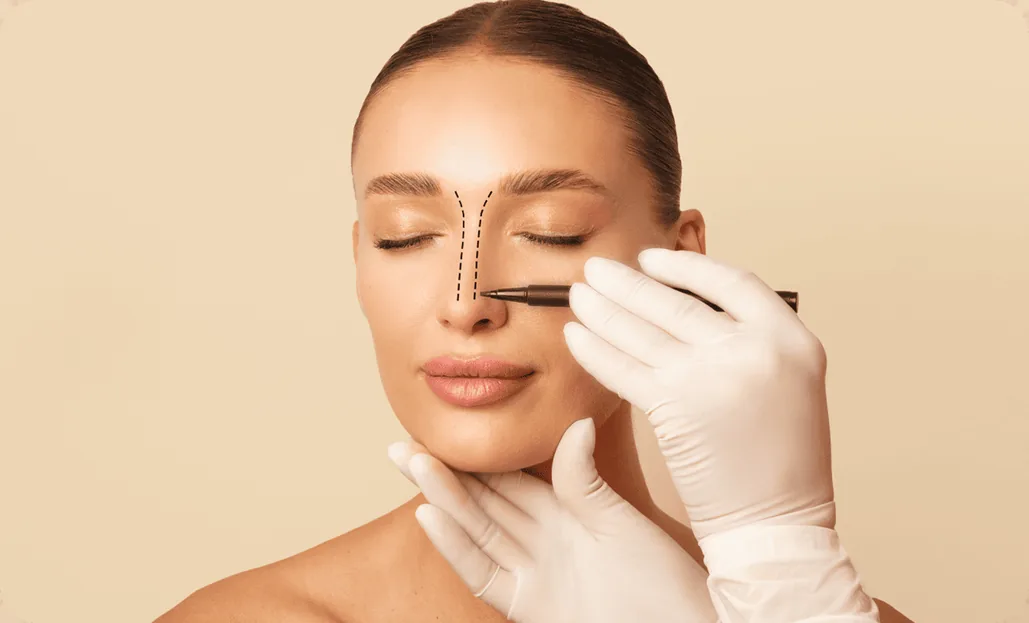
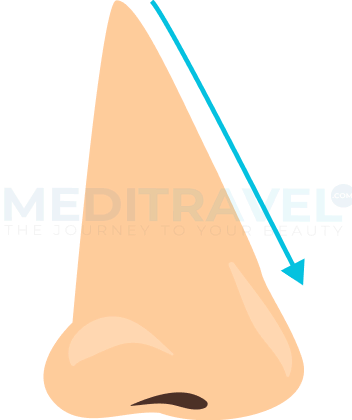
Revision rhinoplasty is a second nose surgery performed to fix problems from a previous nose operation. It can improve the look of the nose, correct breathing issues, or adjust changes that did not heal as expected. Because the nose was already operated on, the procedure is usually more complex.
Nose Correction
Revision rhinoplasty is a second nose surgery performed to fix problems from a previous nose operation. It can improve the look of the nose, correct breathing issues, or adjust changes that did not heal as expected. Because the nose was already operated on, the procedure is usually more complex.
Advantages
Can correct problems from a previous nose surgeryImproves breathing and nasal functionEnhances appearance and symmetryDisadvantages
More complex than first-time rhinoplastyLimited by existing scar tissueOften requires cartilage graftsLonger healing time in many casesNose Correction

Complications in Nose Correction are rare!
To minimize the likelihood of complications and
achieve optimal outcomes:

Follow instructions for surgery preparation and aftercare.
Understand possible complications.
Communicate any unusual symptoms or concerns promptly.
Bleeding
Minor nose bleeding is common during rhinoplasty and in the first 48 hours. Heavy bleeding or a blood collection inside the nose (septal hematoma) is rare and may require drainage. Careful postoperative rest helps reduce the risk.
People who use blood thinners (anticoagulants) or have high blood pressure, may experience increased bleeding. Both during the surgery as well as during the healing. Advise in advance your Meditravel consultant and the clinic about high blood pressure or the usage of blood thinners.

If you have any questions regarding potential risks and complications in Nose Correction, contact anytime your Meditravel consultant.
Nose Correction
Complications in
Nose Correction are rare!
To minimize the likelihood of complications and achieve optimal outcomes:

Follow instructions for surgery preparation and aftercare.
Understand possible complications.
Communicate any unusual symptoms or concerns promptly.
General
Possible in all operations
Minor nose bleeding is common during rhinoplasty and in the first 48 hours. Heavy bleeding or a blood collection inside the nose (septal hematoma) is rare and may require drainage. Careful postoperative rest helps reduce the risk.
People who use blood thinners (anticoagulants) or have high blood pressure, may experience increased bleeding. Both during the surgery as well as during the healing. Advise in advance your Meditravel consultant and the clinic about high blood pressure or the usage of blood thinners.
Normal Side-Effects
Expected & Temporary
It is normal to have some swelling of the nose and bruising around the eyes after rhinoplasty. It usually improves within 2–3 weeks, though minor swelling can last several months, especially of the nasal tip. The duration depends on the patient’s healing process and how carefully the recovery instructions are followed.
Operation Specific
Mainly in Nose Correction
A septal perforation is the development of a small hole inside of the septum. It typically occurs from injuries or long-term irritation inside of the nose and can cause symptoms like whistling when breathing, dryness, crusting, or nosebleeds. It can be repaired if needed.

If you have any questions regarding potential risks and complications in Nose Correction, contact anytime your Meditravel consultant.
Ready for your Nose Correction?
Frequently Asked Questions
Meditravel offers any kind of nose surgery, both closed and open methods, as well as septoplasty.
The cost of rhinoplasty varies depending on the clinic, the surgeon’s experience, geographic location, and the specific needs of the procedure. Ask your Meditravel consultant for more information.
If the nose job is required for medical purposes, such as in the event of impaired breathing or smell, the costs are usually covered by the health insurance at the agreed rates. In such case, a written confirmation from the health insurance company for a cost / partial cost reimbursement should be obtained before the operation. The health insurance does not cover costs for purely aesthetic interventions. Meditravel will provide you an affordable option depending on your requirements and financial budget.
The consultation is free and non-binding.
The consultation form is available on our website. It is enough to attach 4 photos of the nose: both profiles, the front of the face and photos with visible nostrils – with the head tilted back. It is also possible to arrange a free video consultation with a doctor.
During your initial consultation, your medical consultant from Meditravel will discuss your goals and medical history. The rhinoplasty with all its benefits and risks will be explained. All your open questions will be answered. During your final consultation in the clinic, your surgeon will evaluate your nasal structure, discuss your aesthetic and functional goals, explain the procedure, and outline potential risks and recovery expectations.
Ideal candidates for rhinoplasty are individuals who are in good general health, have completed facial growth, and have realistic expectations about the outcomes.
Most people decide for a rhinoplasty for aesthetic or for functional reasons. Aesthetic reasons are often underdevelopment or overgrowth of nasal parts. Functional reasons are mostly breathing issues that can be solved with a septoplasty.
Nose surgery is possible at the age of 18 for boys and 16 for girls, as the nose should be fully developed.
Ideal candidates for rhinoplasty are individuals who are in good general health, have completed facial growth, and have realistic expectations about the outcomes.
The nose should have reached its mature shape. In the event of an accident, nose injury or other medical indications, the doctor decides whether the operation can be performed in an earlier age.
In general there is no upper age limit for a rhinoplasty. The patient should be in good overall health. In higher age the medical history could affect the ability for a nose correction. The risks of general anaesthesia also increase with age.
Rhinoplasty, or a nose job, is a surgical procedure that alters the shape of the nose for either aesthetic enhancement or functional improvement.
A nose correction can change both the aesthetics of the nose and its breathing function. Both have a positive effect on quality of life, health, self-esteem and your own satisfaction.
A rhinoplasty is an operation that provides a permanent result, although the nose may undergo subtle changes due to aging over the years.
Before the operation, each patient must undergo a series of tests, only healthy patients are admitted to the operation.
Open Rhinoplasty: Involves a small incision on the columella (the tissue between the nostrils) for more comprehensive access to the nasal structure. It’s typically used for more complex modifications. Closed Rhinoplasty: All incisions are made within the nostrils, resulting in no visible external scarring. This approach is often chosen for less extensive alterations.
Many people think that a closed rhinoplasty is safer than an open rhinoplasty. If done properly, an open rhinoplasty is as safe as a closed rhinoplasty. Each method has its advantages and potential risks.
Depending on the condition of the patient’s nose, the type of surgery and its extent, a rhinoplasty takes 1 to 2 hours.
Nasal surgery can be performed under local or general anesthesia. In the case of a complete correction of the nose, the operation is performed only under general anesthesia, then it is necessary to stay overnight in the clinic. The nose can be operated using the closed method, then the incision is made in the nasal passages and is invisible, or the open method, in which an incision is made on the nose post.
A rhinoplasty is performed under general anesthesia. This means the patient is put to sleep. Throughout the procedure, the patient’s vital signs, including heart rate, blood pressure, and oxygen levels, are closely monitored for safety. Smaller interventions are in some cases possible under local anesthesia or in twilight sleep.
Initial swelling obscures the results, and while you will see changes as the swelling subsides over weeks to months, the final result may take up to 1 to 2 years to fully develop.
The final effect is visible 12-24 months after the surgery.
A revision rhinoplasty is possible after 1 year. The healing of the first rhinoplasty should be completed.
How often a revision rhinoplasty is possible, depends on the personal situation and complexity of each surgery. Every surgery leads to more scar tissue, which has an impact on the healing and cosmetic results. We recommend not more than one revision rhinoplasty.
The results of a revision rhinoplasty are more difficult to predict. Inside of the nose is some scar tissue from the first rhinoplasty. Therefore the revision rhinoplasty is more difficult and associated with higher risks.
A rhinoplasty is usually completely painless. During the operation nothing will be felt due to the anesthesia. After the operation there is usually no pain, except for some mild discomfort and headache, which can be subsided with painkillers. If pain occurs, the doctor should be contacted immediately.
A modern rhinoplasty leaves no visible scars. A rhinoplasty is performed either with the closed or open rhinoplasty technique. In a closed rhinoplasty the incisions are made inside the nose, leaving no external scars. In an open rhinoplasty the incision is made right under the columella. The scar is normally not visible and fades after about 1 year.
Yes, rhinoplasty can improve breathing by correcting structural abnormalities such as a deviated septum or nasal valve collapse.
As a rule, breathing should not be impaired after a rhinoplasty. The goal is to improve breathing. During the first few weeks swellings can lead to temporary breathing impairments.
As with any surgery, risks include infection, bleeding, breathing difficulties, dissatisfaction with aesthetic results, and the need for revision surgery.
In the first two weeks after the operation, nasal bleeding can occur. This should be treated immediately. For the first days tamponades are placed inside of the nose to absorb bleeding. They can be removed after 1-5 days.
14 days before the procedure, the most important thing is to perform the tests, without which it will not be possible to admit the patient to the clinic for the procedure. The tests can also be performed at the Clinic the day before the surgery. On the day of admission to the Clinic, you cannot have painted nails. In the evening and in the morning before the procedure, all personal hygiene procedures should be carefully performed.
The results of preoperative tests should be brought to the clinic, not older than 14 days, without which it will be impossible to admit the patient to the clinic for the procedure. The tests can also be performed at the Clinic the day before the procedure, ID card and health insurance card, information on regularly taken medications – after admission to the clinic, they should be provided to the ward nurse. The patient will receive these medications in a regimen that will not interfere with medications given in connection with the procedure, toothbrush, paste and cosmetics.
The trip takes between 3 & 8 days, depending on the clinic and complexity of the surgery. Usually the patient spends the first night in the hotel. 1 or 2 nights after the surgery are spent in the hotel. A few more nights in a hotel next to the clinic might be required at some clinics, so the initial recovery days can be observed.
For operations performed under general anesthesia, we recommend an overnight stay in the clinic. This ensures proper care by medical professionals and guarantees optimal healing.
Recovery typically involves a few weeks of noticeable swelling and bruising, with most patients returning to normal activities within 2-3 weeks. However, minor swelling may persist for up to a year.
First Week: Swelling, bruising, and discomfort, with a nasal splint in place. First Month: Major swelling decreases, and most patients can return to work and normal activities. Long-Term: Complete healing with final results may take 1 to 2 years, especially for the resolution of minor swelling.
Swelling is visible in the first few days and the face may also develop puffiness and bruising. After removing the plaster, 8-10 days after the surgery, the bruising should disappear. The nose, however, may be swollen all the time.
Head should be elevated in a higher position while sleeping for one month. You’ll need to sleep upright for 6 weeks. Use two pillows or a foam wedge. sleep on your side. This will increase your bruising and swelling, and it can displace your repaired nose.
In the first week after the procedure, you should refrain from physical activity, and later you can do light office work. Normal exercise is not recommended within 2 weeks of the procedure.
Depending on the type and extent of the surgery, a bandage with a splint is required for 1-2 weeks. After removal, the skin needs a few days to "breathe" and regenerate. Generally, you are socially acceptable after about 2 weeks.
Swelling and bruising may be visible for 2-3 weeks, so it is advisable to take a vacation during this period.
Light sport can be started after 1 month (easy cardio, pilates). Sports like heavy weight lifting, team sports or contact sports can be started after 2 months.
Especially in the first two weeks sun exposure should be minimized. In the first year sunscreen protector (SPF) and a hat shall be worn when being outside for longer times.
After about 1 year it is possible to tan after a rhinoplasty.


